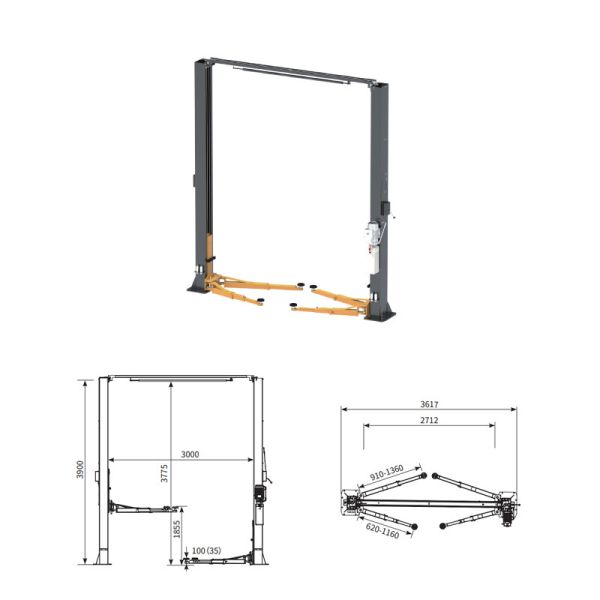
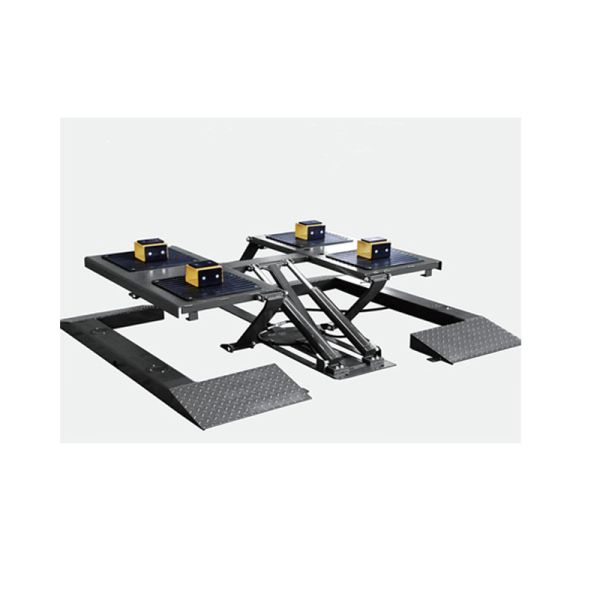
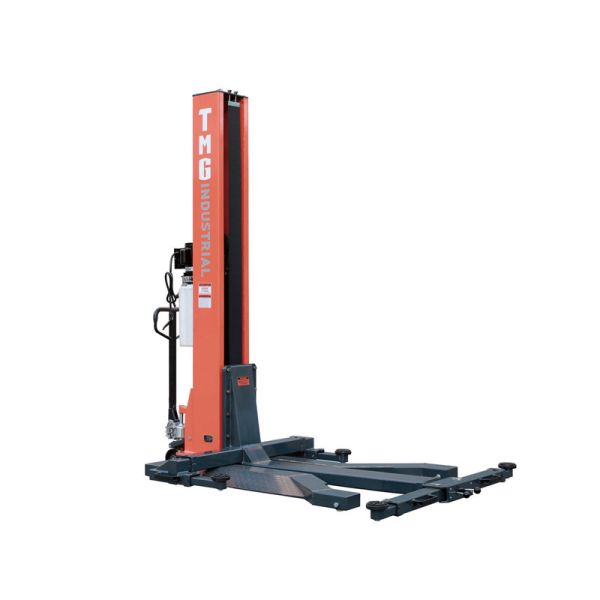
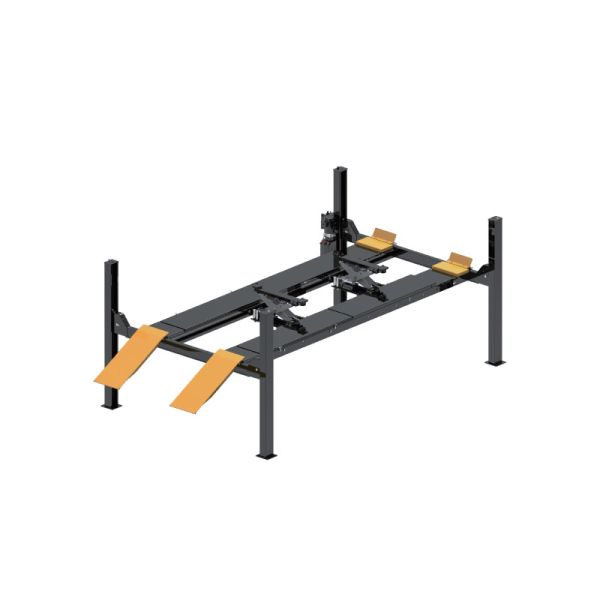
The YD07-008 Two-Post Car Lift is a highly adaptable equipment designed specifically for "professional maintenance of medium-heavy vehicles". Addressing the pain points of traditional lifts such as "weak heavy-load support, insufficient vehicle protection, and cumbersome operation", it takes "4500 kg ultra-high load capacity + rubber door guards + single-point mechanical lock release" as the core, combined with powder coating technology and stable dual-cylinder drive to achieve the core needs of "stable heavy-load lifting, comprehensive vehicle protection, and efficient operation". It is suitable for large auto repair shops, commercial vehicle repair stations, high-end auto service centers and other scenarios. Its core advantages are as follows:
-
4500 kg Ultra-High Load Capacity + Reinforced Columns, Stable Support for Medium-Heavy Vehicles
The main body is integrally welded from Q355 low-carbon alloy steel plates, with double columns having a wall thickness of 16 mm (4 mm thicker than ordinary lifts). Key welds are tested by X-ray flaw detection, with a tensile strength of 550 MPa. The maximum deformation of the columns is only 0.2 mm under the rated load of 4500 kg, which can stably support heavy-duty SUVs (about 2800-3500 kg), light-duty trucks (about 3200-4200 kg) and medium-to-large sedans (about 2000-2600 kg); the bottom of the columns is equipped with reinforced base plates (area 800×500 mm) to disperse the load pressure. Even in scenarios where 4500 kg heavy objects are lifted frequently, it can avoid ground depression. The service life of the equipment is more than 20 years, and its durability is 90% higher than that of ordinary carbon steel lifts.
-
Rubber Door Guards + Overhead Emergency Stop, Comprehensive Vehicle Protection
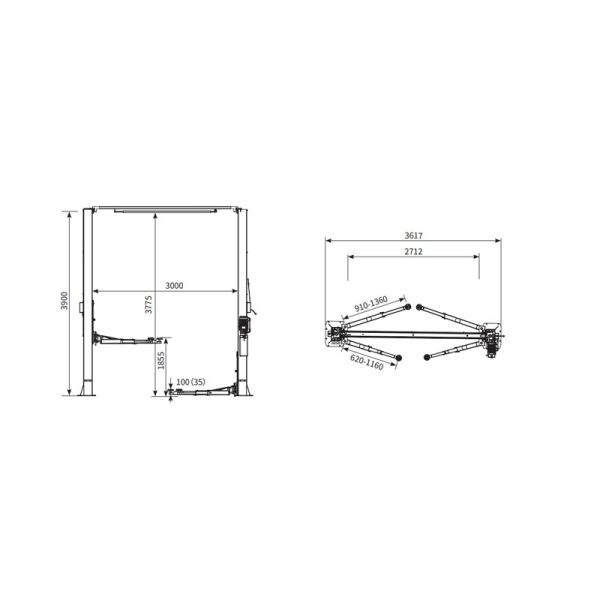
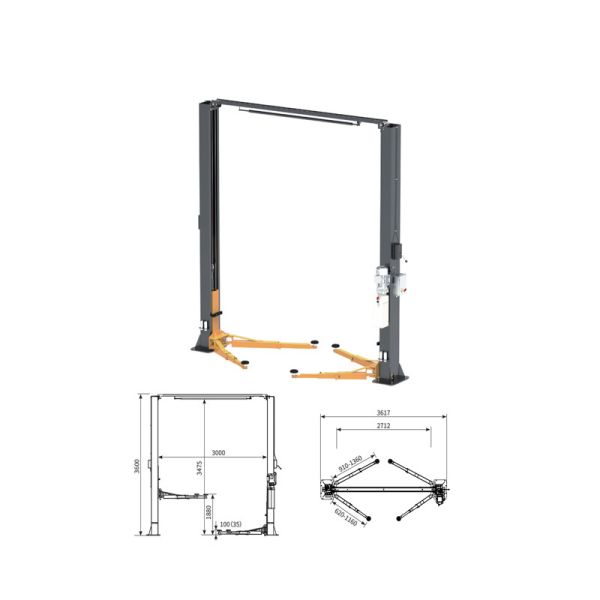
300 mm long rubber door guards (15 mm thick, made of oil-resistant EPDM rubber) are installed on the inner side of the columns. When the vehicle drives in and the door accidentally collides with the columns, the guards can buffer the impact force (maximum buffer stroke 10 mm) to avoid paint scratches or dents on the door; the overhead emergency stop switch is linked with the limit switch. When the lifting height is close to the vehicle top (about 125 mm from the top, corresponding to the limit switch height of 3775 mm), the equipment automatically stops lifting. In case of emergencies, technicians can also manually press the emergency stop button. This dual protection prevents the vehicle top from colliding with lift components, and the vehicle protection safety is 150% higher than that of lifts without protection.
-
Single-Point Mechanical Lock Release + Dual-Cylinder Drive, Efficient and Labor-Saving Operation
The innovative single-point mechanical lock release design allows technicians to release the locking mechanisms on both sides simultaneously by operating the unlock handle on one side column, eliminating the need to move back and forth between the two sides, and improving operation efficiency by 50%; the unlock handle adopts an arc-shaped grip (grip distance 130 mm), combined with a built-in spring assist structure, requiring only 70 N (about 7 kg force) for a single unlock, which is 45% more labor-saving than traditional double-sided unlocking, reducing arm strain caused by long-term operation; the dual hydraulic cylinders (90 mm in diameter) are precisely controlled by a synchronous valve, with a lifting speed of 8.5 mm/s. It only takes 20 minutes to lift from 100 mm to 1855 mm, and the lowering speed is controlled at a constant rate (4 mm/s) to avoid vehicle jolting.
-
Powder Coating + Wide Adaptation, Durable and Flexible
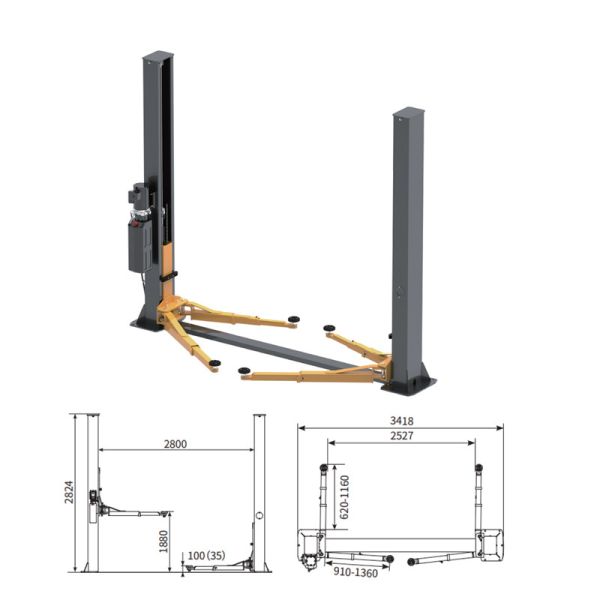
The surface adopts epoxy resin powder coating technology (coating thickness 120 μm), which is cured at 200℃. No rust occurs in the 120-hour salt spray test. Even in long-term contact with corrosive substances such as engine oil and car wash fluid, it can maintain a smooth surface, and its scratch resistance is 80% higher than that of ordinary spray painting; the three-stage arm (620-1160 mm) and two-stage arm (910-1360 mm) are telescopic and adjustable. Combined with the minimum lifting height of 100 mm, they can adapt to various vehicles with wheelbases of 2700-3800 mm and chassis heights of 100-250 mm. The 3000 mm column inner width and 2712 mm drive-through width can easily accommodate wide-body light-duty trucks (body width ≤ 2500 mm), and the adaptability covers more than 98% of medium-heavy vehicle maintenance scenarios.
-
Chassis Maintenance of Light-Duty Trucks in Large Auto Repair Shops
When large auto repair shops perform chassis maintenance on JMC Kairui and Foton Ollin CTS (about 4000 kg), the 4500 kg load capacity fully covers the vehicle weight; the 1855 mm lifting height lifts the chassis 1755 mm off the ground, allowing technicians to stand upright to disassemble the drive shaft and replace the lower arm; the rubber door guards prevent the truck door from colliding with the columns, and the single-point unlocking allows a single person to complete the operation. The maintenance time per vehicle is shortened from 80 minutes to 55 minutes, adapting to the needs of "efficient maintenance of light-duty trucks".
-
Maintenance of Medium-to-Large Sedans in High-End Auto Service Centers
When service centers perform brake system maintenance on BMW 7 Series and Mercedes-Benz S-Class (about 2300 kg), the powder-coated surface prevents oil stains from adhering, making cleaning easier; the overhead emergency stop switch prevents damage to the roof antenna due to excessive lifting; the lift is raised to a height of 1200 mm (locked by the safety lock), allowing technicians to bend down to replace brake pads. The three-stage arm is adjusted to a spacing of 900 mm to accurately align with the car chassis support points, adapting to the "precision maintenance of high-end vehicles" scenario.
-
Rescue of Heavy-Duty SUVs in Commercial Vehicle Repair Stations
When repair stations perform emergency rescue on faulty heavy-duty SUVs (e.g., Toyota Land Cruiser, about 3200 kg), the 220V/380V dual voltage adapts to the temporary power supply of the repair station (e.g., 220V output from a generator); the minimum height of 100 mm reaches under the low chassis of the SUV (about 110 mm from the ground), and the dual cylinders lift synchronously to avoid vehicle tilting; the drive-through width of 2712 mm allows the SUV to drive directly between the two columns without reversing adjustment, shortening the emergency response time to 25 minutes, adapting to the "rapid rescue of heavy-duty SUVs" scenario.
-
Bulk Maintenance in Logistics Fleet Repair Workshops
When logistics fleets perform regular maintenance on their own light-duty trucks (e.g., JAC Shuailing, about 3800 kg), the 4500 kg load capacity meets all vehicle models of the fleet; the reinforced base plates adapt to the workshop cement floor, avoiding ground depression caused by long-term use; the combination of single-point unlocking and wide support arms shortens the maintenance time per vehicle from 60 minutes to 35 minutes. The loading capacity of 24 units per 40-foot container can meet the multi-station equipment configuration needs of the fleet at one time, adapting to the "bulk maintenance of logistics fleets" scenario.
A1: Yes. The total height of the lift is 3900 mm, leaving a top gap of 300 mm (4.2 meters - 3.9 meters), which fully meets the space requirements for equipment operation (no protruding components on the top during lifting) and technician operation (head distance from the top ≥ 400 mm when standing); if there are beams on the workshop top (height ≥ 3900 mm), the lift can be installed to avoid the beams using the 3000 mm column inner width, without modifying the workshop structure, and the installation flexibility is high.
A2: The replacement steps are simple and no professional tools are required: ① Find the fixing buckles at both ends of the guard (each guard has 2 buckles), and gently pry open the buckles with a flat-head screwdriver; ② Remove the aged guard and push the new guard (spare guard included in accessories) into the column installation slot; ③ Press the buckle until a "click" sound is heard to confirm it is fixed firmly. The replacement of a single guard only takes 5 minutes; it is recommended to check the guard status every 2 years. If cracks or deformation occur, replace it in time to ensure door safety.
A3: There are clear requirements. The floor needs to meet: ① Load capacity ≥ 1200 kg/㎡ (250 mm thick C30 cement floor with Φ14@150 reinforcement is recommended); ② Flatness error ≤ 5 mm (measured with a 2-meter straightedge). If the error exceeds the range, it can be compensated by the adjusting bolts at the bottom of the columns (adjustment range 0-50 mm); during installation, a level should be used to calibrate the equipment (tabletop level error ≤ 1 mm) to avoid vehicle tilting during lifting. The manufacturer can provide floor survey services to ensure compliance with installation requirements.
A4: Slow speed is mostly caused by clogging of impurities in the hydraulic system or insufficient oil volume. Troubleshooting steps: ① Turn off the power, lower the support arm to the lowest position, and release the system pressure; ② Open the hydraulic oil tank cover and check if the oil is turbid. If turbid, replace with 32# anti-wear hydraulic oil (replacement volume is about 18 liters, which needs to be added to the scale line); ③ Remove the hydraulic filter element (located at the bottom of the oil tank), clean it with diesel and reinstall it; ④ Check if the oil cylinder oil pipe joints are loose. If loose, tighten them (torque 20-25 N·m); test the lifting again, and the speed can be restored to the new machine state. It is recommended to maintain the hydraulic system every 12 months.