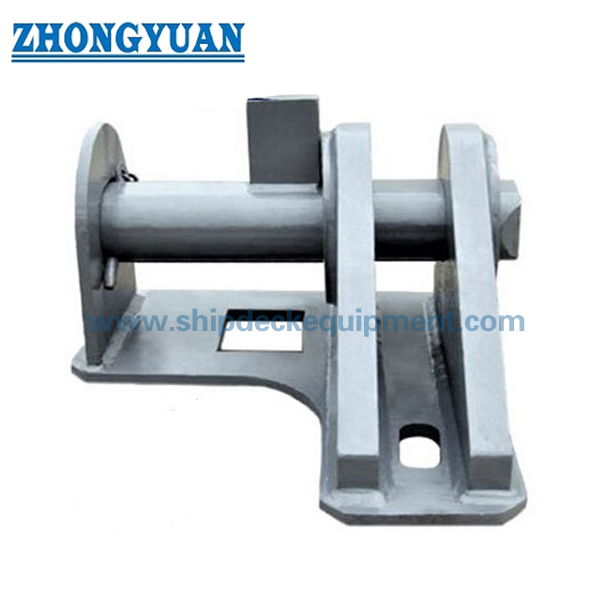
100 t & 200 t SPM Bow Chain Stopper for Tanker Chafe Chain Mooring | OCIMF-Type
Product Overview
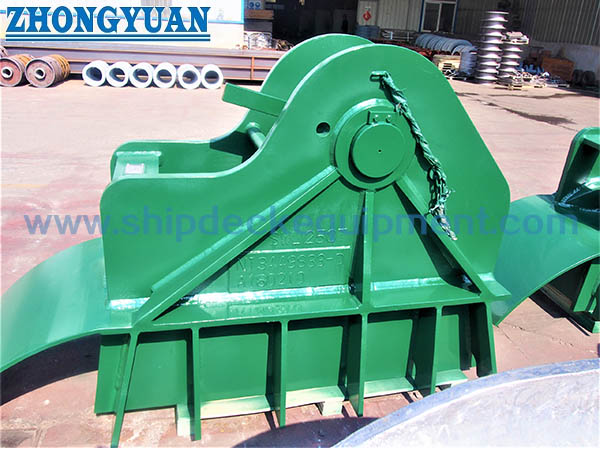
The OCIMF-type single point mooring chain stopper is a welded bow-deck fitting used to secure the tanker-end chafe chain of an SPM mooring hawser. Installed in line with the bow fairlead and the approved mooring lead, it engages the designated chain link and transfers the mooring force through the stopper body, welded foundation, and reinforced vessel structure.
Two reference configurations are provided for nominal chain diameters 54-56 mm and 76-78 mm, with supplied reference SWL values of 100 t and 200 t. Chain link geometry, load direction, foundation type, deck reinforcement, material grade, welding details, test requirement, and certificate scope must be confirmed against the vessel
mooring arrangement and the applicable project-approved OCIMF reference.
Quick Specifications
Main Technical Parameters
| Nominal Chain Dia. (mm) |
SWL | Dimensions (mm) | Weight (KG) |
||||
| L | B | H | H1 | b | |||
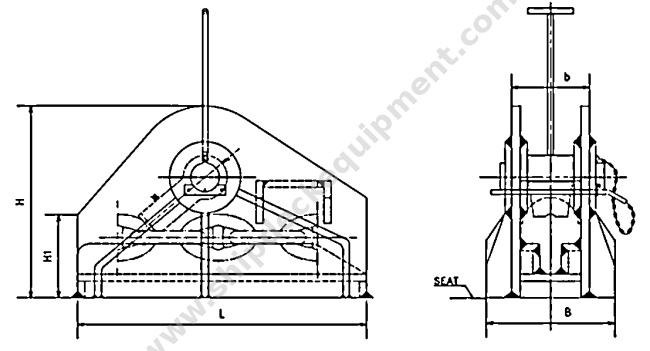
| 54-56 | 100T | 1,336 | 474 | 631 | 481 | 400 | 488 |
| 76-78 | 200T | 1,800 | 640 | 850 | 648 | 540 | 1,421 |
Selection & Inquiry Guide
Step 1: Confirm the SPM mooring arrangement, tanker bow layout, applicable OCIMF reference, and required chain stopper quantity.
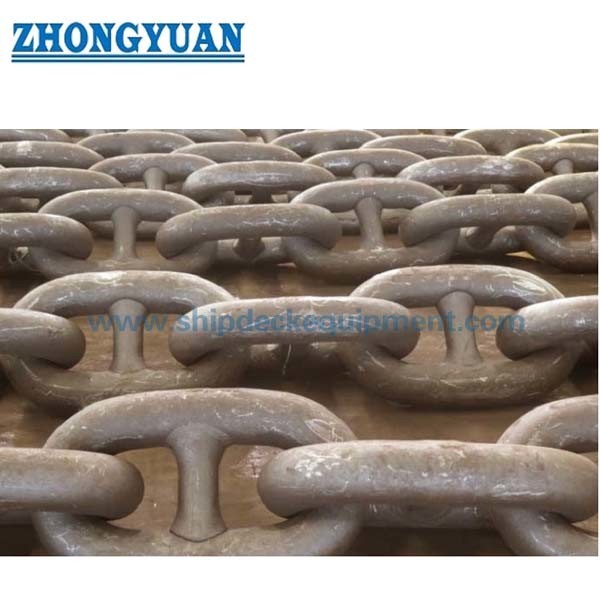
Step 2: Confirm nominal chafe chain diameter, complete chain link dimensions, chain grade, stud configuration, and the exact link position to be engaged.
Step 3: Confirm required SWL and clearly separate it from chain MBL, proof load, test load, and breaking load requirements.
Step 4: Provide bow fairlead position, chain lead direction, deck elevation, available footprint, welded foundation type, and vessel structural drawings.
Step 5: Confirm material grade, welding specification, NDT scope, coating system, material traceability, class society, and witness inspection requirement.
Step 6: Provide quantity, delivery destination, required delivery time, approved GA drawing, and existing equipment photos for replacement projects.
Structure
Chain engagement mechanism | Load-bearing stopper body | Welded mounting base | Optional project foundation | Pin / locking components to confirmed design | Deck structural interface | Project coating system
Mooring, Foundation & Quality Advantages
Custom Attributes
How It Works
SPM hawser approaches the tanker bow → Chafe chain passes through the bow fairlead → Designated chain link enters the chain stopper → Stopper mechanism engages and retains the link → Mooring load transfers through the welded foundation to the reinforced vessel structure → Chain is released only after the mooring load is controlled
Applications
Crude oil tankers | Product tankers | Shuttle tankers | CALM buoy tanker mooring | Single point mooring terminals | Newbuilding and replacement projects
Certifications & Advantages
Certificates and inspection can be arranged according to project requirement, approved drawing, material traceability, class society procedure, and agreed inspection scope.
Certification: CCS, NK, BV, ABS, DNV, LR, KR, IRS, RS, RINA, CRS, Makers Test Certificate.
Drawing & Photos


FAQ
Q1: How should the 100 t and 200 t chain stopper sizes be selected?
A1: Start with the required stopper SWL and nominal chafe chain diameter, then verify the complete chain link geometry, fairlead alignment, deck footprint, foundation arrangement, and vessel-approved mooring drawing. Nominal diameter alone is not sufficient.
Q2: Does “OCIMF type” automatically confirm full OCIMF compliance?
A2: No. The applicable OCIMF publication and edition, vessel arrangement, chain specification, load basis, testing, and class approval scope must be stated in the project documents. The final product should be released against an approved drawing and agreed inspection plan.
Q3: What information is required before quotation?
A3: Provide the required SWL, chain diameter and full link dimensions, vessel type, bow fairlead and chain lead arrangement, foundation drawing, material and coating requirements, class society, test and NDT scope, quantity, destination, and delivery schedule.