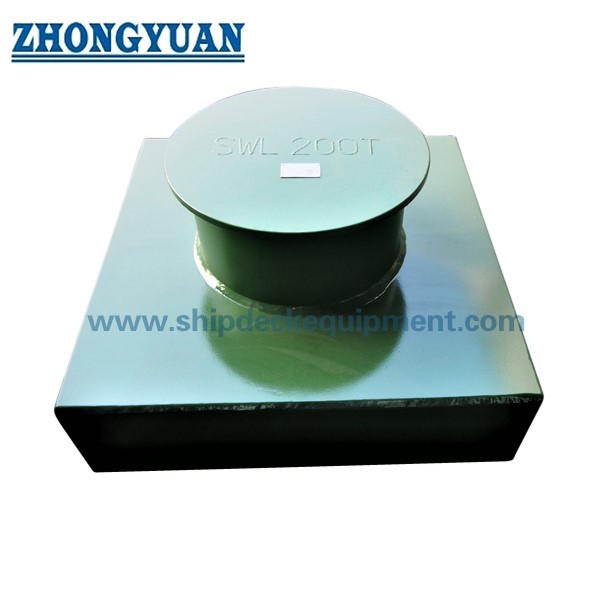
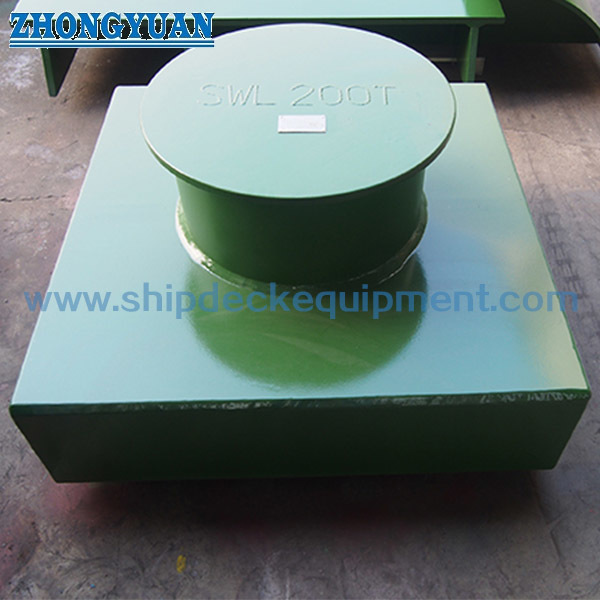
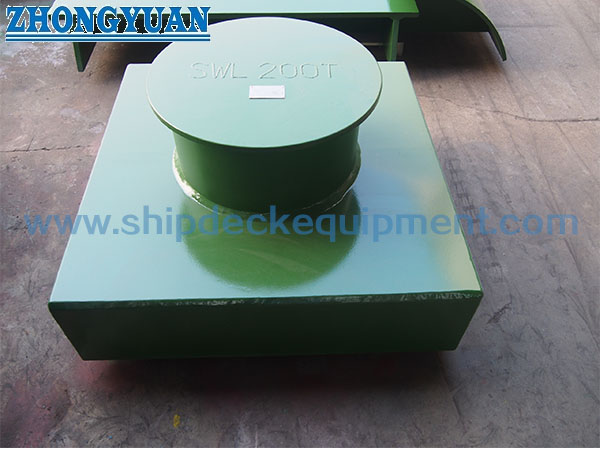
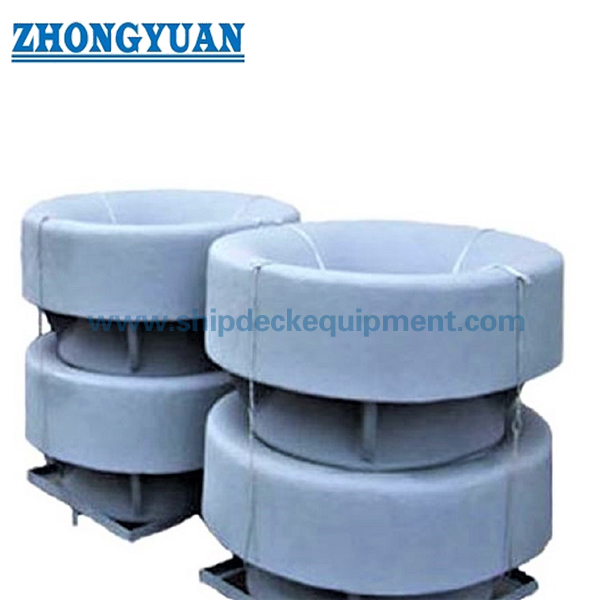
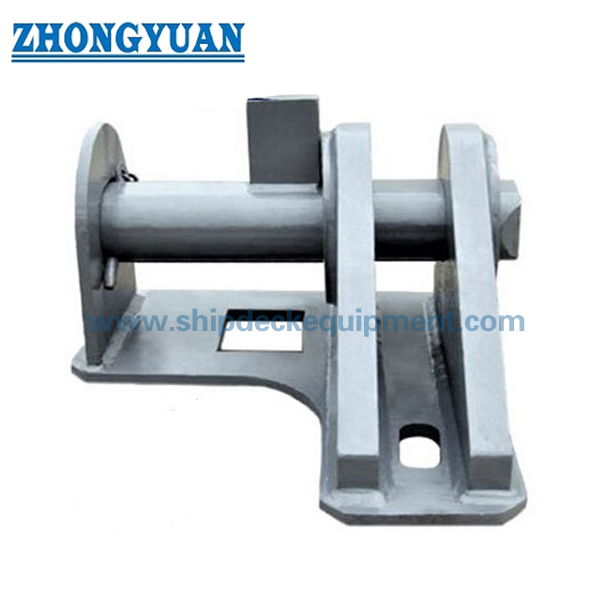
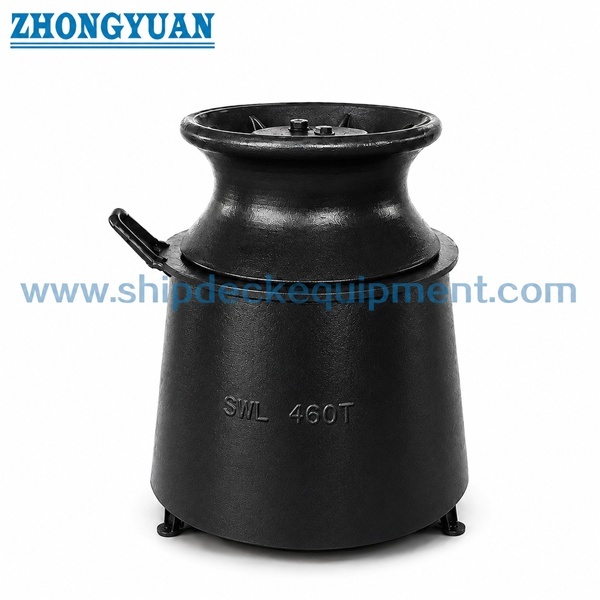
Recessed Side-Shell Mounted Towing Bitt | Steel Plate Fabricated Type B for Large Ship Towing (ISO 13798)
Product Overview
The ISO 13798 Type B recessed ship towing bitt is a steel plate fabricated towing and mooring fitting installed in a recess of the vessel side shell. It provides a lower line-attachment position when high freeboard or an elevated mooring deck limits access to deck fittings. Selection should consider SWL, towline lead, shell opening, local reinforcement, and class or flag requirements.
ISO 13798 covers nominal sizes 200, 250, 400A, and 400B; Type A uses steel pipe and Type B uses steel plate. The supplied Type B data cover SWL values of 294–1,177 kN, reference rope diameters of 30–60 mm, and calculated weights of 16.1–96.1 kg. Material, welds, load direction, marking, drainage, and certificate scope remain project-specific.
Quick Specifications
Main Technical Parameters
| Nominal size Dn |
Type | D | Dl | R | H | T | SWL | Calculated weight kg |
|
| kN | t | ||||||||
| 200 | Type A | 216,3 | 250 | 80 | 140 | 10,3 | 294 | 30 | 16,5 |
| Type B | 210,0 | 10,0 | 16,1 | ||||||
| 250 | Type A | 267,4 | 305 | 100 | 160 | 12,7 | 491 | 50 | 26,7 |
| Type B | 260,0 | 12,0 | 25,7 | ||||||
| 400A | Type A | 406,4 | 480 | 140 | 300 | 12,7 | 687 | 70 | 69,7 |
| Type B | 410,0 | 12,0 | 68,0 | ||||||
| 4008 | Type A | 406,4 | 480 | 140 | 330 | 21,4 | 1177 | 120 | 99,7 |
| Type B | 410,0 | 20,0 | 96,1 | ||||||
| Nominal size Dn |
Rope diameter d |
| 200 | 30 |
| 250 | 35 |
| 400A | 40 |
| 4008 | 60 |
Selection & Inquiry Guide
Step 1: Confirm ISO 13798 Type B and nominal size 200, 250, 400A, or 400B according to the required SWL and vessel towing arrangement.
Step 2: Confirm the intended towing or mooring function, towline direction, maximum lead angle, reference rope diameter, and whether the fitting is for newbuilding or replacement.
Step 3: Provide the side-shell opening, recess arrangement, surrounding structure, internal reinforcement, and shipyard welding interface drawing.
Step 4: Confirm material grade: C-Mn steel plate, stainless steel, or special low-temperature / ice-service material, together with traceability and impact-test requirements.
Step 5: Confirm surface treatment, coating repair after installation, SWL marking, inspection scope, and classification society requirement before quotation.
Step 6: Provide quantity, vessel type, installation position, delivery destination, required delivery time, and an approved drawing or reference photo if available.
Structure
Steel plate fabricated recessed body | Rounded rope-contact contour | Side-shell welded interface | Connection to local hull reinforcement | SWL identification area | Drainage and corrosion-protection details to project drawing
Fabrication, Installation & Engineering Advantages
Custom Attributes
How It Works
Towline is led to the recessed side-shell position → Line is secured around the bitt contact surface → The approved towing load is transferred through the fabricated fitting and welded interface → Local hull reinforcement distributes the load into the vessel structure → Fitting is inspected and maintained as part of the towing arrangement
Applications
High-freeboard vessels | Cargo ships | Tankers | Bulk carriers | Ship-assistance and harbor towing positions | Side-shell towing stations | Newbuilding and replacement projects
Certifications & Advantages
Certificates and inspection can be arranged according to project requirement, material traceability, approved drawing, test scope, and classification society procedure. Compliance should not be assumed until the required documentation and witnessing scope are confirmed.
Certification: CCS, NK, BV, ABS, DNV, LR, KR, IRS, RS, RINA, CRS, Makers Test Certificate.
Drawing & Photos


FAQ
Q1: What is the difference between ISO 13798 Type A and Type B recessed bitts?
A1: Type A is manufactured from steel pipe, while Type B is fabricated from steel plate. The same nominal size may therefore have different outside diameter, wall thickness, and calculated weight. This page and its main table apply to Type B.
Q2: Can the listed SWL be used for any towline direction?
A2: No. The SWL must be applied within the load direction and installation conditions defined by the applicable standard and approved vessel arrangement. Side-shell reinforcement, weld details, towline lead angle, and supporting structure must be checked before use.
Q3: What information is required before quotation?
A3: Confirm ISO 13798 Type B, nominal size, SWL, vessel type, side-shell installation drawing, towline direction and rope diameter, material grade, surface treatment, quantity, class requirement, destination, and required delivery time.