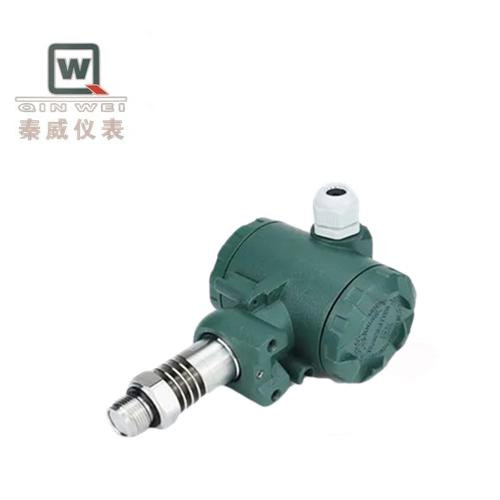
Pneumatic pressure transmitter is a pressure measurement instrument that uses compressed air (instrument air) as the power source and signal carrier.
Core Advantages (and Applicable Scenarios)
- Intrinsic Safety and Explosion-proof: This is its most fundamental and enduring advantage. The working medium is compressed air, without electrical sparks or heat sources, making it naturally suitable for the most dangerous flammable and explosive environments (such as Zone 0 hazardous areas in oil, chemical, and coal mining industries), without the need for complex explosion-proof certifications.
- Simple Structure, Robust and Reliable: Predominantly mechanical in structure, it has strong tolerance to harsh environments (high temperatures, high humidity, strong electromagnetic interference, and nuclear radiation), and maintenance is straightforward.
- Strong Anti-interference Capability: Pneumatic signals are not affected by electromagnetic interference, ensuring stability in strong electromagnetic fields (such as near large motors and frequency converters).
- Strong Driving Capacity: Pneumatic signals can directly drive pneumatic actuators (such as diaphragm control valves) without the need for electro-pneumatic converters, providing direct system response.
Typical application scenarios
- Old plants and equipment: Some petrochemical and chemical plants built in the last century still use them in some circuits to maintain system consistency and avoid large-scale renovations.
- Specific safety requirement scenarios: In certain hazardous areas with extremely high intrinsic safety requirements and simple operating conditions (such as some old isolation areas in oil refineries and offshore platforms), they are still designated for use.
- Strong electromagnetic interference environments: In a few special industrial environments with extreme electromagnetic interference and low requirements for response speed.
- As a sensor for pneumatic systems: In fully pneumatic control systems (for example, some special production lines where electricity is not allowed), they are used as the measurement link in closed-loop control.
- Teaching and training: Due to their intuitive principle, they remain a classic teaching aid for understanding control principles (especially force balance and feedback) in the field of automation.
Summary of Comparison with Electric Pressure Transmitters
| Comparison Dimension |
Pneumatic Pressure Transmitter |
Electric Pressure Transmitter |
| Energy and Signal |
Compressed air / 20-100 kPa air pressure |
24V DC power supply / 4-20 mA current |
| Intrinsic Safety |
Naturally intrinsically safe |
Requires dedicated explosion-proof design (intrinsically safe / explosion-proof) |
| Response Speed |
Slow (seconds) |
Fast (milliseconds) |
| Transmission Distance |
Short (hundreds of meters), requires repeaters |
Long (several kilometers), strong anti-interference |
| System Complexity |
High (requires a complete instrument air system) |
Low (wiring only) |
| Accuracy |
Low (typically ±0.5% to 1%) |
High (up to ±0.04% to 0.1%) |
| Integration with Modern Systems |
Difficult, requires air-to-electric conversion |
Seamless integration, supports digital communication |
| Maintenance Cost |
High (maintaining air source system, dealing with air leakage in pipelines) |
Low |
| Mainstream |
Legacy/special applications |
Absolutely mainstream |
The pneumatic pressure transmitter is a milestone technology in the history of industrial automation. It was the first to achieve long-distance, standardized transmission and automatic control of process pressure, laying the foundation for modern process industry automation.