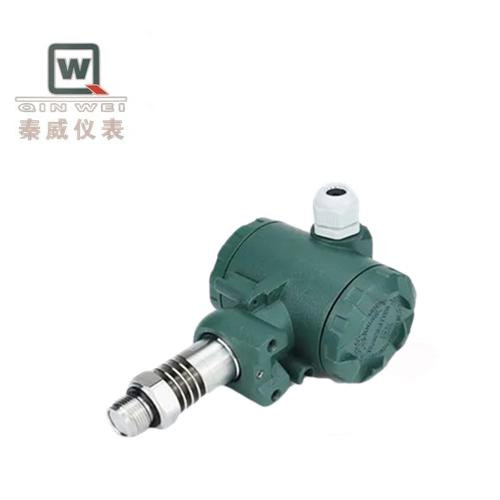
Single Flange Level Gauge With ±0.1% FS Accuracy 150LB To 300LB
Working Principle
The single flange level gauge is a common industrial liquid level measurement instrument, also known as a single flange level transmitter. It measures the height of the liquid in the container based on pressure or differential pressure principles and outputs a standard signal (such as 4-20mA) for use by the control system.
Structural composition
- Flange: Directly connected to the measured container, the diaphragm material can be selected from 316L, Hastelloy, tantalum, etc., to adapt to different media.
- Capillary tube: Filled with liquid such as silicone oil to transmit pressure.
- Transmitter body: Contains the δ chamber and amplification circuit, converting the pressure signal into a standard current signal.
Product Advantages
-
Materials and Corrosion Resistance
- The wetted diaphragm material is selected based on the medium: 316L stainless steel is suitable for general corrosive environments, Hastelloy C-276 is resistant to strong acids and alkalis, and tantalum can withstand strong corrosives such as aqua regia.
- Food-grade silicone oil filling (customizable) meets FDA certification and is suitable for the dairy and beverage industries.
-
Temperature and Pressure Adaptability
- High-temperature compensation: Built-in temperature transmitter or capillary design reduces temperature influence. Some models support environments from -40°C to 150°C.
- High-pressure scenarios: Flange ratings are available from 150LB (2.5MPa) to 300LB (5.0MPa), suitable for pressure vessels.
-
Accuracy and Stability
- Analog accuracy is typically ±0.2% FS, and intelligent models can reach ±0.1% FS, with a maximum range ratio of 100:1.
- Long-term stability: ±0.25% FS (60 months), vibration resistance (±0.5% FS/g at 200Hz), and radio frequency interference resistance (30V/m field strength).
Typical Applications
- Chemical and Petrochemical: Liquid level monitoring of reactors and storage tanks, suitable for high temperature, high pressure and corrosive media (such as sulfuric acid, crude oil).
- Food and Pharmaceutical: Liquid level control of fermentation tanks and infusion bottles, meeting EHEDG and 3-A certifications, supporting CIP/SIP cleaning.
- Water Treatment: Liquid level measurement of sewage ponds and clear water tanks, with anti-silt blockage design to ensure long-term stable operation.
Selection Comparison
| Parameters |
Single Flange Level Gauge |
Dual Flange Level Gauge |
| Installation Complexity |
Simple (single flange) |
More complex (two flanges + capillary tube) |
| Cost |
Low |
High (including capillary tube and dual flanges) |
| Applicable Scenarios |
Open or low-pressure containers, with relatively clean medium |
Closed containers, high pressure or high viscosity medium |
| Accuracy |
High (±0.1-0.2% FS) |
Slightly lower due to capillary tube (±0.25% FS) |
| Temperature Impact |
Requires temperature compensation |
Thermal expansion of capillary tube may introduce error |
Installation Points
- Location Selection: Avoid areas with vibration and extreme temperature changes to ensure accurate measurement.
- Flange Installation: Ensure a good seal and keep it parallel to the container wall.
- Wiring and Debugging: Wire according to the specifications and complete zero and full-scale calibration.
- Maintenance: Regularly check the seal and diaphragm condition to prevent medium corrosion or blockage.