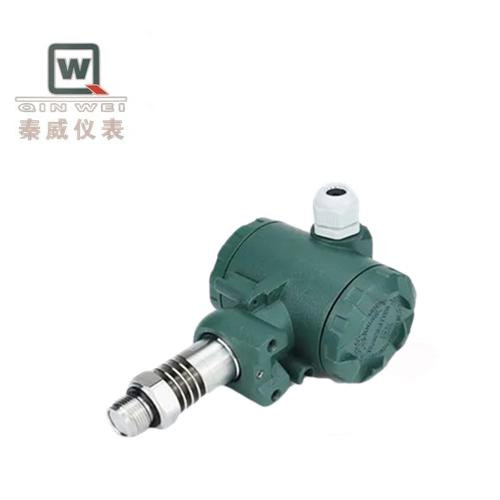
Double Flange Level Gauge With 316L Stainless Steel And Hastelloy C-276
The double flange level gauge operates based on the differential pressure principle. It measures the pressure difference between the two flanges at the top and bottom of the container to calculate the liquid level height.
Product Advantages
-
Materials and Corrosion Resistance
- Diaphragm Materials: 316L stainless steel is suitable for general corrosive media, Hastelloy C-276 is resistant to strong acids and alkalis, and tantalum can withstand aqua regia. For the food and pharmaceutical industries, 316L diaphragms with FDA-certified electropolishing are required.
- Seals: Fluororubber (FKM) is suitable for -20°C to +85°C, and PTFE can withstand -40°C to +260°C. The choice should be based on the medium temperature.
-
Pressure and Temperature Adaptability
- High-pressure scenarios: Flange ratings can be selected from Class 150 (2.5 MPa) to Class 600 (10 MPa), with a maximum pressure capacity of 16 MPa (e.g., SP30 type).
- High-temperature compensation: The outer layer of the capillary is covered with insulation or heating tape to reduce the impact of environmental temperature fluctuations. For example, when the environmental temperature changes by ±20°C, temperature compensation can keep the error within ±0.05% FS.
-
Accuracy and Stability
- Measurement Accuracy: Intelligent types can achieve ±0.1% FS (e.g., LRS66YCL series), and analog types are ±0.2% FS. The range ratio is typically 100:1, and some models reach 200:1.
- Long-term Stability: ±0.25% FS (5 years), resistant to vibration (20g peak-to-peak, 5-1000Hz) and radio frequency interference (30V/m field strength).
Application scenarios
The double-flange level gauge is particularly suitable for the following situations:
- Liquid level measurement in closed containers: such as reaction vessels, storage tanks, and tank trucks, etc.
- High-temperature, high-pressure, and highly corrosive media: such as in the chemical, petroleum, and pharmaceutical industries.
- Media prone to crystallization or scaling: such as DMAC, ammonia water, dilute sulfuric acid,etc.
- Media containing solid particles or suspended matter.
- Situations requiring high-precision measurement: such as liquid level control, alarm, inventory management, etc.
Installation Points
- Installation Position: The upper flange should be close to the top of the container, and the lower flange close to the bottom to ensure accurate measurement.
- Flange Alignment: Ensure the flanges are properly aligned and sealed during installation to prevent leakage.
- Capillary Protection: Avoid excessive bending or pressure on the capillary to prevent the leakage of the filling liquid.
- Electrical Connection: The cable should be bent downward to prevent moisture from entering the transmitter.
- Debugging and Calibration: Perform zero and full-scale calibration after installation to ensure measurement accuracy.
Common Fault Diagnosis
- Output signal fluctuation: It may be due to air bubbles in the capillary or membrane deformation. Exhaust air through the exhaust valve. If it is ineffective, replace the membrane.
- Zero drift: Caused by environmental temperature changes or aging of silicone oil. Recalibrate the zero point and check the temperature compensation parameters.
- No signal output: Check the power supply voltage (24VDC ± 10%), cable insulation (≥ 20MΩ), and whether the HART communication protocol is matched. If the transmitter displays a fault code, refer to the manual to troubleshoot the circuit board or sensor.