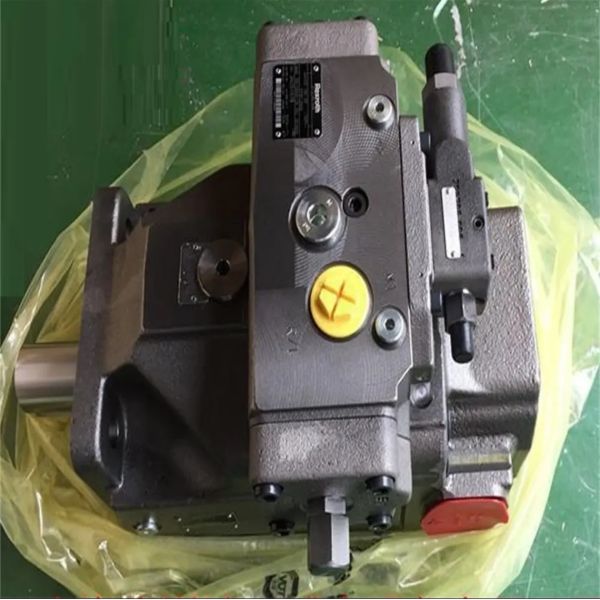
A4VSO125DRG/22R-PPB13N00 A4VSO40LR2G/10L-PPB13N00 A4VSO71LR2/10R-VPB25N00 German Rexroth mechanical industrial equipment hydraulic axial piston pump imported with original packaging
| Item | Specification |
| Brand Name | Rexroth |
| Place of Origin | Fujian, China |
| Warranty | 12 Months |
| Video Outgoing-Inspection | Provided |
| Machinery Test Report | Provided |
| Application | Machinery Repair Shops |
| Material | Iron |
| Condition | Original |
| Function | Filter Diesel Oil |
| Power | Hydraulic Power |

| A4VSO355DFR/30R-PPB13N00 |
| A4VSO355LR2G/30R-VPB25N00 |
| A4VSO355LR2G/30R-VZB13N00 |
| A4VSO355LR2G/30R-PZB13N00 |
| A4VSO355LR2G/30R-VPB13N00 |
| A4VSO355LR2G/30R-PPB13N00 |
| A4VSO355DR/30R-VPB25N00 |
| A4VSO355DR/30R-VZB13N00 |
| A4VSO355DR/30R-PZB13N00 |
| A4VSO355DR/30R-VPB13N00 |
| A4VSO355DR/30R-PPB13N00 |
| A4VSO355EO1/30R-PZB13N00 |
| A4VSO250EO1/30R-PZB13N00 |
| A4VSO250EO1/30R-VZB13N00 |
| A4VSO250DR/30R-VPB25N00 |
| A4VSO250DR/30R-VZB13N00 |
| A4VSO250LR2G/30R-VPB13N00 |
| A4VSO250DFR/30R-VPB13N00 |
| A4VSO250DFR/30R-PZB13N00 |
| A4VSO250DFR/30R-VZB13N00 |
| A4VSO250DRG/30R-PPB13N00 |
| A4VSO250DRG/30R-PZB13N00 |
| A4VSO250LR2/30R-VPB13N00 |
| A4VSO250LR2/30R-VZB13N00 |
| A4VSO250LR2/30R-VPB25N00 |
| A4VSO250EO1/30R-PPB13N00 |
| A4VSO250EO1/30R-VPB25N00 |
FAQ;
1. Fault Diagnosis & Root Cause Analysis (Advanced)
Q1: How to distinguish between LR2 control valve failure and piston-cylinder pair wear using only pressure and flow data?
A1: Use the “pressure-flow characteristic curve” method for differentiation without disassembly: ① Data Collection: Measure pressure (p) and flow (Q) at 5 load points (0%, 25%, 50%, 75%, 100%) using a portable hydraulic tester (Rexroth VT-HACD-1-1X); ② LR2 Control Valve Failure Pattern: The p-Q curve deviates from the hyperbolic power curve (P=p×Q=constant) — e.g., at 50% load, pressure is 10% lower than expected while flow is normal, indicating the valve cannot restrict displacement properly; ③ Piston-Cylinder Wear Pattern: The p-Q curve is hyperbolic but shifted downward — volumetric efficiency drops (e.g., 100% load flow is 85 L/min instead of 106.5 L/min), and pressure builds slowly (≥2s to reach 350 bar); ④ Verification Test: For control valve suspicion — bypass the LR2 valve and use a manual control valve; if the p-Q curve returns to normal, the LR2 valve is faulty. For piston wear suspicion — measure case drain flow (exceeds 3 L/min at 350 bar indicates internal leakage). This method identifies the root cause with 90% accuracy.
Q8: The pump’s volumetric efficiency drops to 80% after 8000 hours — how to restore it without full replacement?
A2: Targeted restoration based on wear analysis (costs 40% less than full replacement): ① Wear Assessment: Disassemble the pump and measure key components: 1) Piston-cylinder clearance (normal ≤0.02mm; replace if >0.03mm); 2) Valve plate contact area (replace if <80% contact); 3) Swashplate surface roughness (Ra ≤0.4μm; lap if Ra >0.8μm); ② Restoration Steps: 1) Replace piston-cylinder pairs (Rexroth R900909645) and valve plates (R900912345); 2) Lap the swashplate with 400-grit then 800-grit abrasive paper until Ra ≤0.4μm; 3) Replace all seals with FKM kits and apply a thin layer of assembly grease (Rexroth LT 31) to moving parts; ③ Post-Restoration Testing: Run the pump at 1500 rpm and 350 bar — measure flow (≥101 L/min indicates volumetric efficiency ≥95%); check for pressure stability (fluctuation ≤5 bar); ④ Preventive Measures: Upgrade to NAS 8 class filtration and shorten oil change intervals to 4 months to maintain restored efficiency. This process extends pump life by 4000-6000 hours.