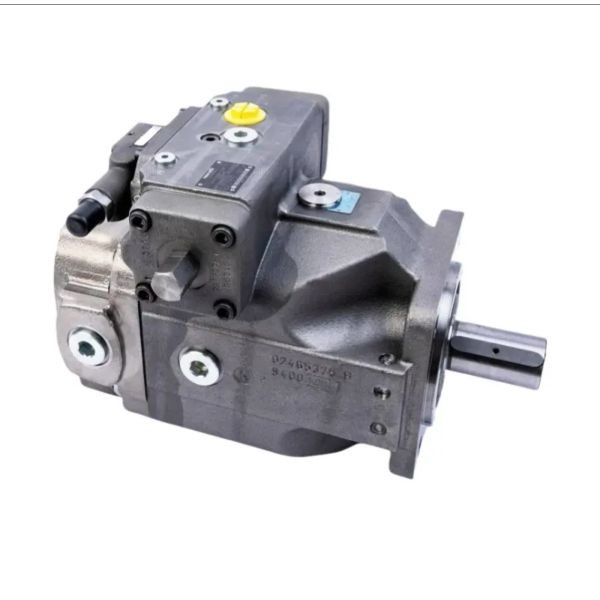
A4VSO40LR2/10L-PPB25N00 A4VSO40LR2/10L-PPB13N00 A4VSO40DRG/10L-PPB25N00 German Rexroth industrial equipment hydraulic axial piston pump imported with original packaging
| Item | Specification |
| Brand Name | Rexroth |
| Place of Origin | Fujian, China |
| Warranty | 12 Months |
| Application | Machinery Repair Shops |
| Material | Iron |
| Condition | Original |
| Certification | ISO |
| Feature | Long Life, Low Noise |
| Function | Filter Diesel Oil |
| Power | Hydraulic Power |

| A4VSO250DFR/30R-VZB13N00 |
| A4VSO250DRG/30R-PPB13N00 |
| A4VSO250DRG/30R-PZB13N00 |
| A4VSO250LR2/30R-VPB13N00 |
| A4VSO250LR2/30R-VZB13N00 |
| A4VSO250LR2/30R-VPB25N00 |
| A4VSO250EO1/30R-PPB13N00 |
| A4VSO250EO1/30R-VPB25N00 |
| A4VSO250EO1/30R-VPB13N00 |
| A4VSO250EO2/30R-PPB13N00 |
| A4VSO250LR2G/30R-PPB13N00 |
| A4VSO250DRG/30R-VPB13N00 |
| A4VSO250DRG/30R-VPB25N00 |
| A4VSO250LR2/30R-PPB13N00 |
| A4VSO250EO2/30R-VPB13N00 |
| A4VSO250LR2G/30R-PZB13N00 |
| A4VSO250LR2G/30R-VZB13N00 |
| A4VSO250LR2G/30R-VPB25N00 |
| A4VSO250DFR/30R-PPB13N00 |
| A4VSO250DFR/30R-VPB25N00 |
| A4VSO250DRG/30R-VZB13N00 |
| A4VSO250LR2/30R-PZB13N00 |
| A4VSO250EO2/30R-PZB13N00 |
FAQ;
1. Life Cycle Cost Control & Digital Management
Q10: How to formulate a predictive maintenance plan using vibration and temperature data?
A1: Predictive maintenance replaces scheduled maintenance, reducing costs by 30%: ① Sensor Installation: Mount a triaxial vibration sensor (Rexroth VS 300) on the pump housing (near bearings) and a PT100 temperature sensor in the case drain line; connect to a cloud gateway (Rexroth IoT Gateway R911338664); ② Baseline Establishment: During commissioning, record “normal” data: vibration ≤3 mm/s (10-1000Hz), temperature ≤85°C, pressure fluctuation ≤5 bar; ③ Alarm Thresholds: Set tiered alarms in the cloud platform (Rexroth Connected Hydraulics): 1) Warning: Vibration 3-4 mm/s or temperature 85-90°C (send email alert); 2) Critical: Vibration ≥4 mm/s or temperature ≥90°C (trigger SMS and HMI alarm); ④ Predictive Algorithms: Use AI-based algorithms to analyze vibration harmonics — a 2x increase in bearing frequency (e.g., from 150Hz to 300Hz) predicts failure in 2-3 weeks; ⑤ Action Plan: For warning alarms, schedule maintenance within 7 days; for critical alarms, shut down the pump for inspection within 24 hours. This plan reduces unplanned downtime by 50%.
Q2: When is it more economical to rebuild the pump versus replacing it, and what is the rebuild process?
A2: Rebuild vs. replace decision and process: ① Economic Threshold: Rebuild is cost-effective if: 1) Rebuild cost ≤60% of a new pump; 2) Core components (cylinder block, swashplate) have wear ≤30% of allowable limits; 3) The pump has operated ≤12,000 hours (before structural fatigue); ② Rebuild Process: 1) Disassembly: Use specialized tools (Rexroth T 400 kit) to avoid damaging the housing; label all parts for reverse assembly; 2) Cleaning: Ultrasonic clean all metal parts (30 minutes, 40kHz) and dry with compressed air; 3) Component Replacement: Replace bearings, seals, piston shoes, and valve plates; lap swashplate and cylinder block; 4) Assembly: Torque bolts to specifications (flange:75 N·m, cylinder block:45 N·m); 5) Testing: Perform pressure, flow, and efficiency tests (meets new pump standards); ③ Cost Comparison: Rebuild cost ≈$3,000 vs. new pump ≈$8,000 (saves 62.5%); rebuild service life ≈8,000 hours vs. new ≈12,000 hours (cost per hour: $0.375 vs. $0.667). Rebuild is preferred for pumps with intact housings and drive shafts.