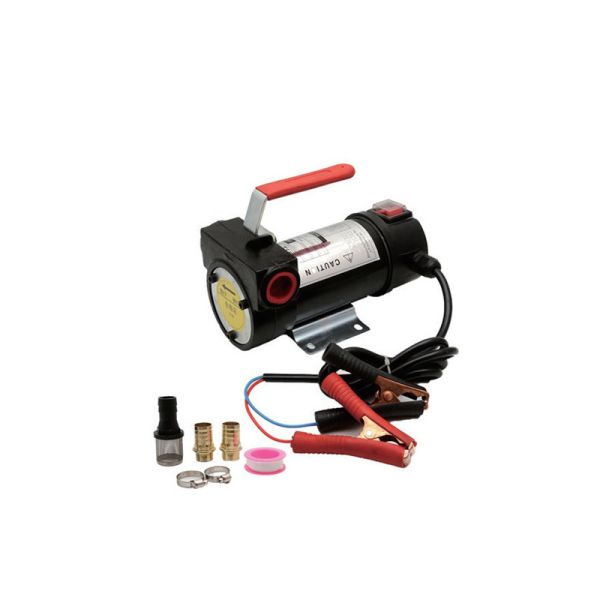
YD51-006A Electric Oil Pump & Kit (DC) addresses the inefficiencies of manual pumps: "slow transfer, high labor effort, and limited mobility". With "dual-voltage flexibility + 50 L/min high flow + cast iron durability" as core strengths, it redefines efficiency for diesel/kerosene transfer in mobile and industrial settings, offering key advantages as follows:
- 100% Full-Copper Motor: The 175W full-copper motor generates strong torque for fast liquid suction, while its low heat generation allows continuous operation for 2+ hours (critical for construction sites or farms with batch refueling tasks). Unlike aluminum-coil motors that overheat after 30 minutes, this motor extends service life to 10+ years.
- 12V/24V Dual Voltage: Compatible with both vehicle batteries (12V for cars/trucks, 24V for heavy-duty machinery) and industrial power supplies. This flexibility eliminates the need for separate pumps for different power sources, making it ideal for mobile scenarios like boat refueling or on-site construction equipment.
- Cast Iron Casing & Components: The cast iron casing, steel rotor, and cast iron impeller resist wear from diesel/kerosene and withstand accidental impacts (e.g., tool collisions on construction sites). The material also resists corrosion from long-term oil exposure, avoiding the "rust and leak" issue of plastic pumps.
- Built-In Safety & Convenience: The bypass valve prevents pump damage from overpressure (e.g., when transferring to high tanks); the easily accessible filter traps debris to avoid clogging; the dirty oil viewer lets operators monitor oil quality in real time (critical for preventing contaminated oil from damaging machinery). The handheld switch design allows one-hand operation, improving usability.
- 50 L/min Rapid Transfer: At 50 L/min, the pump empties a 200-gal diesel drum in ~15 minutes – 3x faster than manual pumps. This cuts refueling time for a fleet of 10 agricultural tractors (each 100L) from 5 hours (manual) to 30 minutes (electric).
- 3m Self-Priming Suction: The self-priming function skips pre-filling steps, while the 3m suction head reaches the bottom of tall barrels, minimizing residual oil waste (only 2-4L left per 200-gal drum vs. 10-15L with shallow-suction pumps).
Scenario Requirement: A construction site refuels 8 excavators (each needing 150L diesel) daily from 200-gal drums. The site uses 24V machinery batteries for power.
Operation Process:
- Setup: Connect YD51-006A to a 24V excavator battery via the 2m cable; attach the 25mm inlet to the drum and outlet to the excavator’s fuel tank;
2. Refueling: Activate the handheld switch – 150L diesel transferred per excavator in ~3 minutes;
3. Efficiency: 8 excavators refueled in 24 minutes; continuous operation (2 hours) with no motor overheating;
4. Safety: Bypass valve prevents overpressure when filling high tanks; dirty oil viewer confirms oil cleanliness.
Effect: Dual-voltage fits site power; high flow saves time; durable build withstands site impacts.
Scenario Requirement: A farm with 12 tractors (each needing 80L diesel) uses 12V vehicle batteries. The farm needs a portable pump for field refueling.
Operation Process:
- Mobility: 2 workers carry the 23kg pump to the field drum storage area;
2. Power Connection: Plug into a tractor’s 12V battery; the 2m cable allows flexible placement;
3. Refueling: Transfer 80L diesel per tractor in ~1.6 minutes; 12 tractors processed in 19.2 minutes;
4. Convenience: Self-priming skips pre-filling; the built-in filter traps dirt from farm drums.
Effect: Portable for field use; 12V fits tractor batteries; fast flow meets fleet needs.
Scenario Requirement: A marina refuels 10 small boats (each needing 60L diesel) from 200-gal drums. Boats use 12V batteries, and fuel tanks are 5m above drum level.
Operation Process:
- Setup: Connect the pump to a boat’s 12V battery; extend the outlet hose to the 5m-high fuel tank (7m head supports vertical transfer);
2. Refueling: Transfer 60L diesel per boat in ~1.2 minutes; the bypass valve prevents pressure buildup;
3. Safety: The pump’s cast iron casing resists saltwater corrosion; gasoline prohibition avoids fire risks;
4. Completion: 10 boats refueled in 12 minutes; dirty oil viewer ensures no water contamination.
Effect: High head fits boat tanks; corrosion resistance suits marina use; safe for diesel-only transfer.
A1: Yes, minor flow differences are normal. At 12V, the motor runs at slightly lower torque, reducing flow to ~45 L/min (vs. 50 L/min at 24V). This is within design specifications and still 2x faster than manual pumps. To optimize 12V performance: 1) Ensure the battery is fully charged (low voltage worsens flow); 2) Keep the inlet/outlet hoses straight (no kinking); 3) Clean the filter regularly.
A2: No. Modifying the pump for gasoline is extremely dangerous: 1) Flammability Risk: Gasoline vapors are highly explosive, and the pump’s electrical components (motor, switch) can generate sparks that ignite vapors; 2) Material Incompatibility: Gasoline degrades the pump’s seals and cast iron over time, causing leaks; 3) Warranty Void: Modifications void the product warranty and may lead to equipment failure or injury. The pump is strictly for diesel/kerosene only.
A3: Self-priming failure is usually due to air leaks or clogged components: 1) Check Hoses & Connections: Ensure the inlet/outlet hoses are tightly attached to the 25mm ports (air leaks break the vacuum); 2) Clean the Filter: A clogged filter restricts suction – remove and rinse it with diesel; 3) Prime Manually (Temporary): Pour 200ml of diesel into the inlet to create initial vacuum; the self-priming function will take over. These steps restore suction.
A4: Key maintenance steps: 1) Post-Use Cleaning: After each use, run 5L of clean diesel through the pump to flush residual oil; remove and clean the filter monthly; 2) Motor Care: Keep the full-copper motor dry (IP54 rating resists dust/water, but avoid full submersion); check the power cable for fraying quarterly; 3) Storage: Store in a dry, ventilated area; apply anti-rust oil to cast iron components if unused for >1 month; 4) Component Replacement: Replace worn seals or filters with original parts to maintain performance. Following these steps extends the pump’s life to 10+ years.