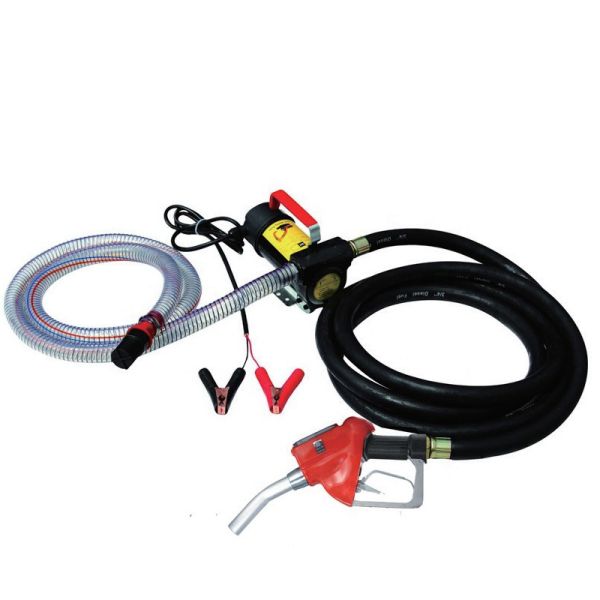
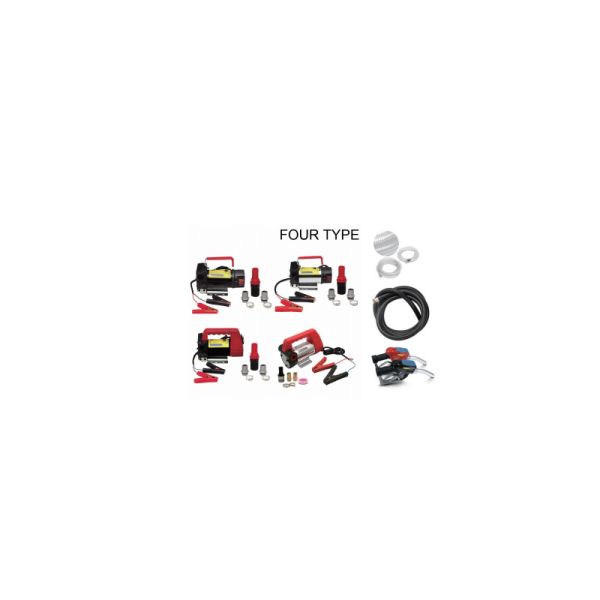
This 12V/24V DC Self-Priming Diesel Electric Fuel Transfer Pump solves mobile fueling pain points: "power incompatibility, imprecise measurement, and harsh environment damage". With "IP55 protection + cast iron build + metering nozzle" as core strengths, it delivers reliable performance:
- 12V/24V Compatibility: Works with 12V vehicles (vans, small tractors) and 24V heavy machinery (excavators). Eliminates need for multiple pumps, cutting costs.
- IP55 Weather Resistance: Shields from dust, rain, and water jets—critical for outdoor farms/sites. Outperforms IP44 pumps, ensuring year-round use.
- Rugged Cast Iron Construction: Casing and impeller resist impacts and diesel corrosion. Service life 8+ years—twice that of plastic pumps.
- Bypass Valve & Metering Nozzle: Bypass valve prevents overpressure damage; nozzle’s auto-shutoff reduces fuel waste by 15% vs. manual nozzles.
- Accurate Metering Nozzle: Tracks fuel volume for cost accounting (e.g., fleet fuel usage). Flow control enables precise dispensing, avoiding spills.
- Ready-to-Use Kit: 2m suction hose reaches barrels, 4m delivery hose enables remote refueling. No extra parts needed—unbox and use.
Scenario: A farm with 12 tractors (12V, 100L each) and 8 harvesters (24V, 150L each) refuels in fields, tracking fuel usage.
Process: 1. Connect pump to machine batteries; 2. Use metering nozzle to transfer fuel (100L in ~2min/tractor, 150L in ~3min/harvester); 3. Record volumes for cost tracking.
Effect: Dual voltage fits mixed machinery; metering enables cost control; portability suits fields.
Scenario: A site with 6 excavators (24V, 200L each) and 10 loaders (12V, 80L each) refuels quickly to avoid delays.
Process: 1. Deploy 3 pumps; 2. Transfer 200L in ~4min/excavator, 80L in ~1.6min/loader; 3. IP55 handles dust/rain.
Effect: Fast flow meets deadlines; rugged build resists site impacts; metering avoids waste.
Scenario: A delivery company with 15 vans (12V, 60L each) refuels from a depot tank, optimizing fuel costs.
Process: 1. Connect to van batteries; 2. Use nozzle to fill 60L in ~1.2min/van; 3. Analyze metered data to cut excess consumption.
Effect: Metering tracks usage; no fixed station cost; efficient flow reduces refuel time.
A1: Yes. Use a 10L known-volume container: 1) Dispense fuel and check the nozzle’s reading; 2) Adjust the calibration screw to align with the container’s volume. Repeat until accuracy is ±0.5L.
A2: Gasoline vapors are explosive (pump parts may spark), and it degrades cast iron seals. Use only diesel/kerosene—gasoline use voids the warranty and causes safety hazards.
A3: 1. Clean the nozzle/filter (debris blocks flow); 2. Check for kinked hoses; 3. Ensure the battery is fully charged (low voltage reduces flow). These steps restore max flow.
A4: 1. Drain residual fuel (prevents freezing); 2. Clean the nozzle/hoses; 3. Coat cast iron parts with anti-rust oil; 4. Store in a dry area above 0℃.