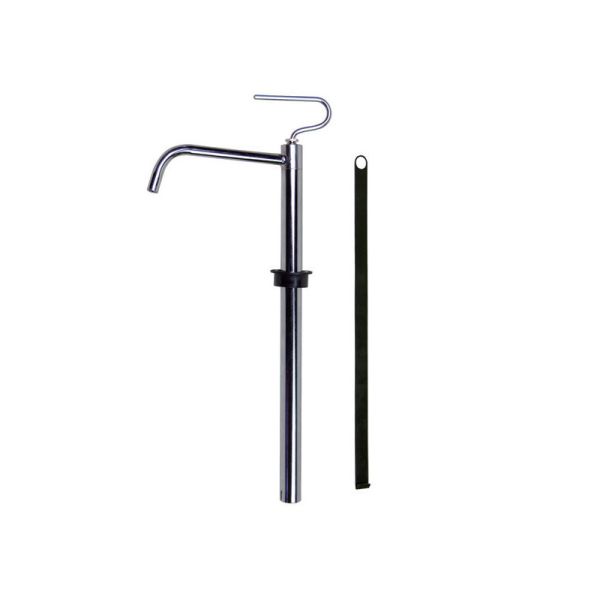
YD51-004B Manual Drum Hand Pump addresses the pain points of traditional drum pumps: "heavy weight, difficult installation, and leaky seals". With "ultra-lightweight design + rust-resistant chrome plating + precise flow control" as core strengths, it stands out for 200-gallon drum liquid transfer, offering key advantages as follows:
- 0.6kg Portable Build: Weighing only 0.6 kg, the pump is 40% lighter than standard steel drum pumps. This allows anyone to install it on a 200-gallon drum without heavy lifting, making it ideal for small workshops or home garages where labor resources are limited.
- Tool-Free Installation: The 2" G-thread drum adaptor screws directly into standard drum bungs – no wrenches or additional tools required. Installation takes less than 1 minute, and removal is just as quick, enabling easy switching between multiple drums.
- Chrome-Plated Steel Pipe: The main pipe features chrome plating over steel, which forms a protective barrier against rust and scratches. Unlike unplated steel pipes that corrode in humid environments, this design ensures the pump remains functional for 7+ years, even with outdoor storage (under a shelter).
- Oil-Resistant Nitrile Seal: The Buna N/nitrile seal ring is specially selected for oil compatibility. It resists swelling or hardening when exposed to diesel, engine oil, or gasoline – a common issue with generic rubber seals that fail after 1,000 strokes. This seal maintains leak-proof performance for 5,000+ strokes.
- Smooth PP Piston: The PP piston moves seamlessly inside the pipe, reducing friction and stroke effort. It does not absorb liquids, so there is no residual contamination when switching between compatible liquids (e.g., from diesel to gasoline).
- Controlled 6.5 L/min Flow: The 130 cc per stroke flow rate and 12.7mm narrow outlet prevent over-pouring – perfect for tasks like topping up small machinery (e.g., adding 3L engine oil to a lawnmower) or filling small containers (e.g., 5L gasoline cans). This reduces liquid waste by 25% compared to high-flow pumps that are hard to regulate.
- 390mm Suction Head: The long suction head reaches the bottom of 200-gallon drums, extracting 98% of the liquid and eliminating the 5-8L of residual waste that short suction pipes leave behind. This maximizes the value of each drum and reduces disposal costs.
Scenario Requirement: A small auto shop uses a 200-gallon drum of engine oil to service 30 cars monthly (each needing 4L oil). The shop has 1 technician and limited storage space.
Operation Process:
- Installation: The technician screws YD51-004B’s 2" G-thread adaptor into the drum bung (1 minute);
2. Dispensing: Operate the pump at 50 strokes/min – dispense 4L oil per car (≈31 strokes per car), taking 30 seconds per vehicle;
3. Efficiency: 30 cars serviced in 15 minutes; the 390mm suction head empties the drum completely;
4. Storage: After use, remove the pump and store it in a small toolbox (occupies ≤0.05㎡ space).
Effect: Lightweight design suits single-person operation; precise flow avoids oil spills; rust-resistant build handles long-term oil use.
Scenario Requirement: A homeowner uses a 200-gallon drum of gasoline to refuel a backup generator (needs 10L gasoline per week). The garage has no electricity for electric pumps.
Operation Process:
- Setup: Attach YD51-004B to the gasoline drum – the 0.6kg weight makes installation easy for the homeowner;
2. Refueling: Operate the pump at 50 strokes/min – 10L gasoline transferred in ~1.5 minutes;
3. Safety: The nitrile seal prevents gasoline leakage; the narrow outlet controls flow to avoid splashing;
4. Convenience: After refueling, remove the pump and store it on a shelf; no heavy equipment to move.
Effect: No electricity needed; lightweight for home use; precise flow ensures safe refueling.
Scenario Requirement: A small farm has 5 tractors (each needing 25L diesel per day) and uses a 200-gallon drum of diesel. The farm has no power near the drum storage area.
Operation Process:
- Mobility: Carry YD51-004B (0.6kg) to the diesel drum, install it quickly;
2. Refueling: Operate the pump to transfer 25L diesel per tractor (≈38 strokes, 45 seconds per tractor);
3. Durability: The chrome-plated pipe resists outdoor dust and humidity; the pump works normally in 0-35℃ farm temperatures;
4. Completion: 5 tractors refueled in 3.75 minutes; the drum is emptied fully after 30 days of use.
Effect: Portable for farm use; durable for outdoor conditions; efficient flow meets daily refueling needs.
A1: Stiff strokes are usually due to gasoline residue or dry seals. Solutions: 1) Clean the Piston: Remove the pump from the drum, pour 100ml of gasoline into the inlet, and work the stroke 10 times to flush residue from the piston; 2) Lubricate the Seal: Apply a small amount of gasoline to the nitrile seal ring – this reduces friction between the seal and piston; 3) Check for Debris: Inspect the inlet for small dirt particles (common in farm or garage environments) and remove them with a soft brush. These steps restore smooth strokes.
A2: Yes, but adjust the suction head length first. The 390mm suction head is too long for 55-gallon drums (≈584mm tall) and will hit the drum bottom, causing the pipe to bend. To adapt: 1) Cut the chrome-plated main pipe to 300mm (ensure it still reaches the drum bottom); 2) Smooth the cut end with sandpaper to avoid damaging the PP piston; 3) Reattach the pipe to the pump. The 2" G-thread adaptor still fits 55-gallon drum bungs, so no other modifications are needed.
A3: Leakage from tilting is due to an incomplete seal between the adaptor and bung. Fixes: 1) Tighten the Adaptor: Use your hand (no tools) to gently tighten the 2" G-thread adaptor until it is snug – over-tightening may damage the thread or pipe; 2) Add Teflon Tape: Wrap 2 layers of Teflon tape around the adaptor’s threads before installation – this fills small gaps and enhances the seal; 3) Limit Tilt Angle: Keep the drum tilt ≤10° – excessive tilting (≥15°) may exceed the nitrile seal’s capacity.
A4: It is not recommended. Leaving the pump attached for extended periods risks: 1) Seal Damage: The nitrile seal may harden if exposed to liquid or air for too long, reducing its leak-proof performance; 2) Contamination: Dust or debris may enter the pump through the outlet, contaminating the liquid in the drum; 3) Chrome Plating Wear: Outdoor or humid conditions may cause minor rust on the chrome-plated pipe if left unattended. Instead, remove the pump after use, clean it with the liquid it transfers (e.g., diesel), and store it in a dry place.