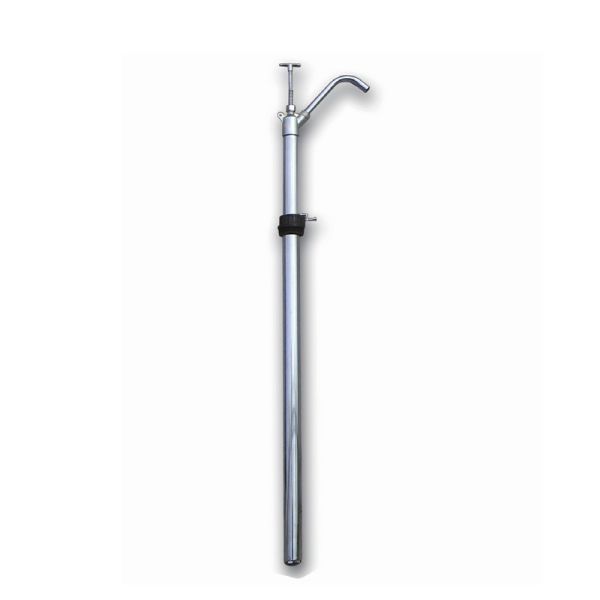
YD51-004C Heavy-Duty Manual Drum Pump addresses the limitations of lightweight pumps: "slow flow, shallow suction, and fragile build". With "34 L/min high flow + 925mm deep suction + rugged chrome steel" as core strengths, it is built for large-scale 200-gallon drum transfer tasks, offering key advantages as follows:
- 34 L/min Rapid Transfer: The 850 cc per stroke flow rate and 40 strokes per minute speed enable transferring 34L of liquid per minute – enough to empty a 200-gallon drum (≈757L) in just 22 minutes. This cuts transfer time by 80% compared to 6.5 L/min lightweight pumps, critical for busy industrial workshops or farms with multiple vehicles to refuel.
- Wide Inlet/Outlet Design: The φ38.6mm inlet and φ19mm outlet work together to minimize flow resistance. Even with high-viscosity liquids like hydraulic oil, the pump maintains consistent flow, avoiding the "slow-down" issue common with narrow-caliber pumps.
- Thickened Chrome-Plated Steel Pipe: The main pipe uses thickened steel with chrome plating, which not only resists rust and scratches but also withstands accidental impacts (e.g., tool collisions in workshops). Unlike thin steel pipes that bend under pressure, this design supports long-term heavy use (15,000+ strokes) without deformation.
- Reinforced Nitrile Seal: The Buna N/nitrile seal ring is thicker than standard seals (2mm vs. 1mm), ensuring it can handle high-flow pressure without leaking or hardening. It resists swelling from oil and gasoline, maintaining a tight seal for 8,000+ strokes – double the lifespan of generic seals.
- Sturdy PP Piston: The high-strength PP piston is designed to withstand the pressure of 850 cc per stroke. It moves smoothly inside the chrome-plated pipe, reducing friction and stroke effort, even for operators working long shifts.
- 925mm Extra-Long Suction Head: The ultra-long suction head reaches the bottom of tall 200-gallon drums, extracting 96% of the liquid. This eliminates the 20-30L of residual oil that shallow suction heads leave behind, maximizing the value of each drum and reducing waste disposal costs.
- 2" G-Thread Reinforced Adaptor: The adaptor features reinforced threads that lock securely into standard drum bungs. Even under high-flow transfer (34 L/min), it does not slip or loosen, a common safety hazard with lightweight pump adaptors. The adaptor is also easy to clean, preventing cross-contamination when switching between liquids.
Scenario Requirement: A manufacturing workshop transfers 500L of hydraulic oil daily from 200-gallon drums to 10 pieces of machinery (50L each). The workshop needs a fast, durable pump to meet production deadlines.
Operation Process:
- Installation: 2 workers attach YD51-004C to the drum (2 minutes), ensuring the 925mm suction head reaches the bottom;
2. Transfer: Operate the pump at 40 strokes/min – 50L hydraulic oil transferred per machine in ~1.5 minutes;
3. Efficiency: 10 machines serviced in 15 minutes; the high-flow design cuts transfer time by 70% vs. lightweight pumps;
4. Durability: The chrome-plated pipe withstands workshop impacts; the pump operates smoothly for 8 hours daily.
Effect: High flow meets production needs; rugged build handles heavy use; deep suction minimizes waste.
Scenario Requirement: A farm with 20 tractors (each needing 100L diesel per day) uses 200-gallon drums of diesel. The farm needs a pump that can refuel tractors quickly.
Operation Process:
- Setup: Install YD51-004C on the diesel drum – the reinforced adaptor stays secure during high-flow transfer;
2. Refueling: Transfer 100L diesel per tractor in ~3 minutes (34 L/min flow rate); 20 tractors processed in 1 hour;
3. Convenience: The 925mm suction head empties the drum completely, so no residual diesel is wasted;
4. Outdoor Use: The chrome-plated pipe resists farm humidity and dust; the pump works normally in -5℃ to 40℃ temperatures.
Effect: Fast refueling saves time; durable for outdoor use; deep suction maximizes diesel use.
Scenario Requirement: A construction site has 5 large generators (each needing 200L gasoline weekly) and uses 200-gallon drums of gasoline. The site needs a pump that handles high volumes and rough conditions.
Operation Process:
- Mobility: 2 workers carry the 2kg pump to the gasoline drum (easy to transport between sites);
2. Fueling: Operate the pump to transfer 200L gasoline per generator in ~5.9 minutes;
3. Safety: The nitrile seal prevents gasoline leakage; the wide outlet controls flow to avoid splashing;
4. Durability: The pump withstands construction site vibrations and impacts; no damage after 1 month of use.
Effect: High-volume transfer fits generator needs; rugged build adapts to rough sites; safe for gasoline use.
A1: High viscosity increases flow resistance – solutions: 1) Warm the Oil: Heat the hydraulic oil to 40-50℃ (using a drum heater) to reduce viscosity; this restores flow rate to ~30 L/min; 2) Adjust Stroke Speed: Increase strokes to 45 per minute (within comfortable range) to compensate for slow flow; 3) Clean the Inlet: Check the φ38.6mm inlet for debris (common in hydraulic oil) and remove it with a soft brush – clogs reduce suction efficiency. These steps improve flow for high-viscosity liquids.
A2: Yes, but verify the drum’s bung size and height first. The 2" G-thread adaptor fits most 300-gallon drum bungs, but the 925mm suction head may not reach the bottom of extra-tall 300-gallon drums (≈1200mm tall). To adapt: 1) Extend the suction head with a compatible chrome-plated steel pipe (φ38.6mm inner diameter); 2) Ensure the extended pipe is securely connected to avoid leaks; 3) Test suction to confirm it reaches the drum bottom. This modification allows use with larger drums.
A3: Heavy handles are due to friction or improper alignment – fixes: 1) Lubricate the Piston: Apply a small amount of the liquid being transferred (e.g., diesel) to the PP piston – this reduces friction between the piston and pipe; 2) Check Pipe Alignment: Ensure the main pipe is straight (not bent) – bent pipes increase stroke resistance; 3) Rotate Operators: For long tasks, rotate operators every 20 minutes to avoid fatigue. These steps make the handle easier to operate.
A4: Yes, but take extra safety precautions: 1) Secure the Drum: Use drum chocks to keep the 200-gallon drum stable – wind can tip the drum if it’s not secured; 2) Use a Splash Guard: Attach a plastic splash guard to the φ19mm outlet to prevent wind from blowing gasoline splashes; 3) No Open Flames: Ensure no open flames, sparks, or hot equipment (e.g., running generators) are within 10 meters of the pump; 4) Ground the Drum: Connect the drum to a ground wire to prevent static electricity buildup. Following these steps ensures safe outdoor use.