Clear Blue Static Cling Protective Anti Static Shrink Film 20μm
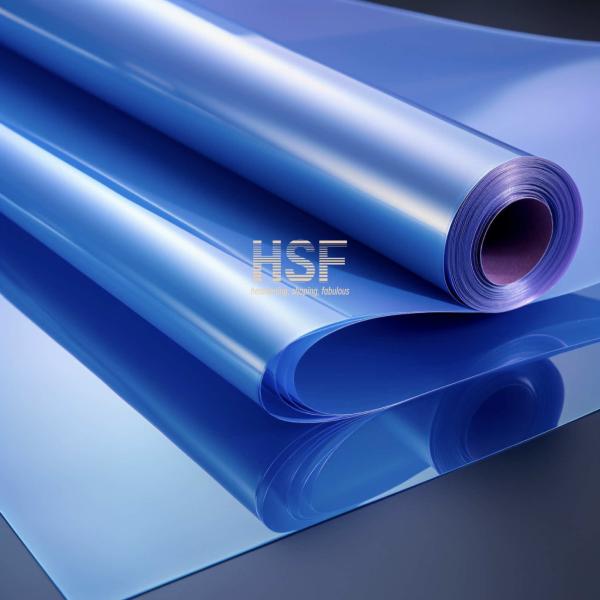
20 μm blue PET anti static film, available in multiple colors, designed for electronics, medical, automotive, and printing applications.
Technical Specifications
| S/N |
Item |
Value |
Test Method |
| 1 |
Backing Film Type |
Blue PET |
DIN EN ISO 10677 |
| 2 |
Release Force (gf/25mm) |
8 |
DIN EN 1464 |
| 3 |
Sub-sequent Adhesion Rate (%) |
89 |
DIN EN 1943 |
| 4 |
Total Thickness (μm) |
20 |
DIN EN ISO 4593 |
| 5 |
Sheet Resistance |
10^6-10^11 Ω/sq |
DIN EN 1149-1 |
| 6 |
Tensile Strength |
MD: 198 MPa TD: 216 MPa |
DIN EN ISO 527-3 |
| 7 |
Elongation @ break (%) |
MD: 107% TD: 96% |
DIN EN ISO 527-3 |
Application Areas
- Optics and Lens Protection: Protects lenses, camera filters, and optical equipment from static charges that attract dust or cause scratches, ensuring clear optics with minimal maintenance.
- Graphic Design and Printing: Provides protective covering during production and transportation of printed materials, preventing static-related issues like ink smudging or paper sticking.
- Stationery and Packaging: Serves as protective layer for notebooks, folders, and packaging boxes, preventing static charges while adding aesthetic appeal through blue coloration.
- Electronic Component Manufacturing: Protects PCBs and sensitive electronic circuits from static damage during handling and assembly processes.
- Museum Exhibitions: Protects delicate artifacts and displays from static charges that could attract dust or cause damage to valuable objects.
Please note that suitability for specific applications should be verified based on industry requirements, manufacturer guidelines, and available customization options.
Key Features
The primary feature of PET anti-static coated film is its ability to prevent static electricity buildup. With a conductive coating on one or both sides, charges dissipate effectively, preventing static accumulation. This results in improved handling, processing, and protection of sensitive components and products.
While transparent or translucent films are commonly used, various colors including pink, blue, and yellow are available for identification purposes and quality control differentiation.
Manufacturing Process
The coating process involves unwinding PET film from its original roll and passing it through a coating applicator that applies antistatic fluid. Various coating methods such as gravure, reverse gravure, Mayer rod, or air knife are employed based on fluid viscosity and desired coating thickness.
Following coating application, the film passes through a drying oven to remove solvents, after which it is rewound onto new rolls. Process effectiveness depends on antistatic fluid type and compatibility with PET film, requiring careful control to maintain consistent coating thickness and avoid defects.