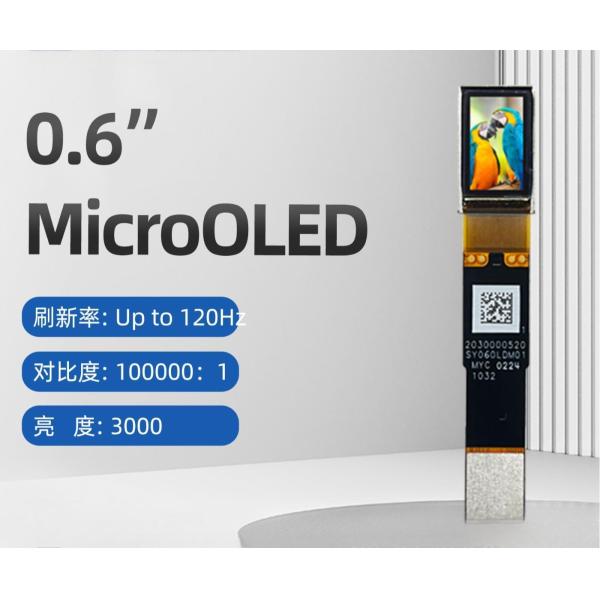
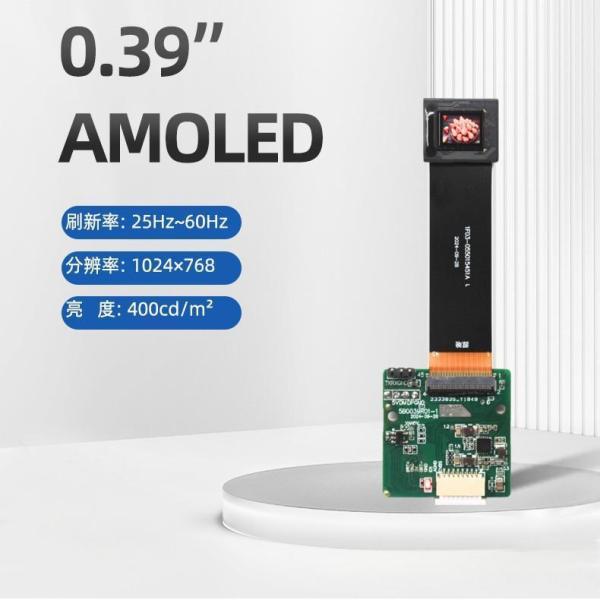
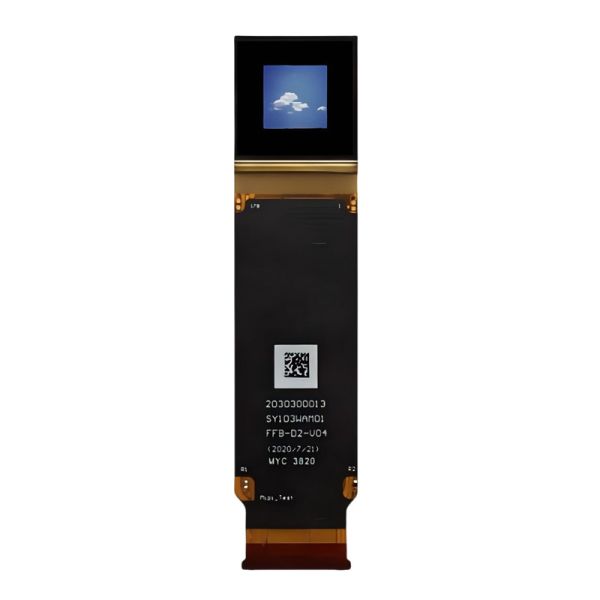
【0.60-inch Micro OLED】Display Screen, 3000 High Brightness, 120Hz High Refresh Rate, Dual Interfaces (I2C/MIPI), Suitable for Outdoor Equipment / High-Speed Interaction Scenarios, Self-Luminous and High-Definition
Technical Specifications
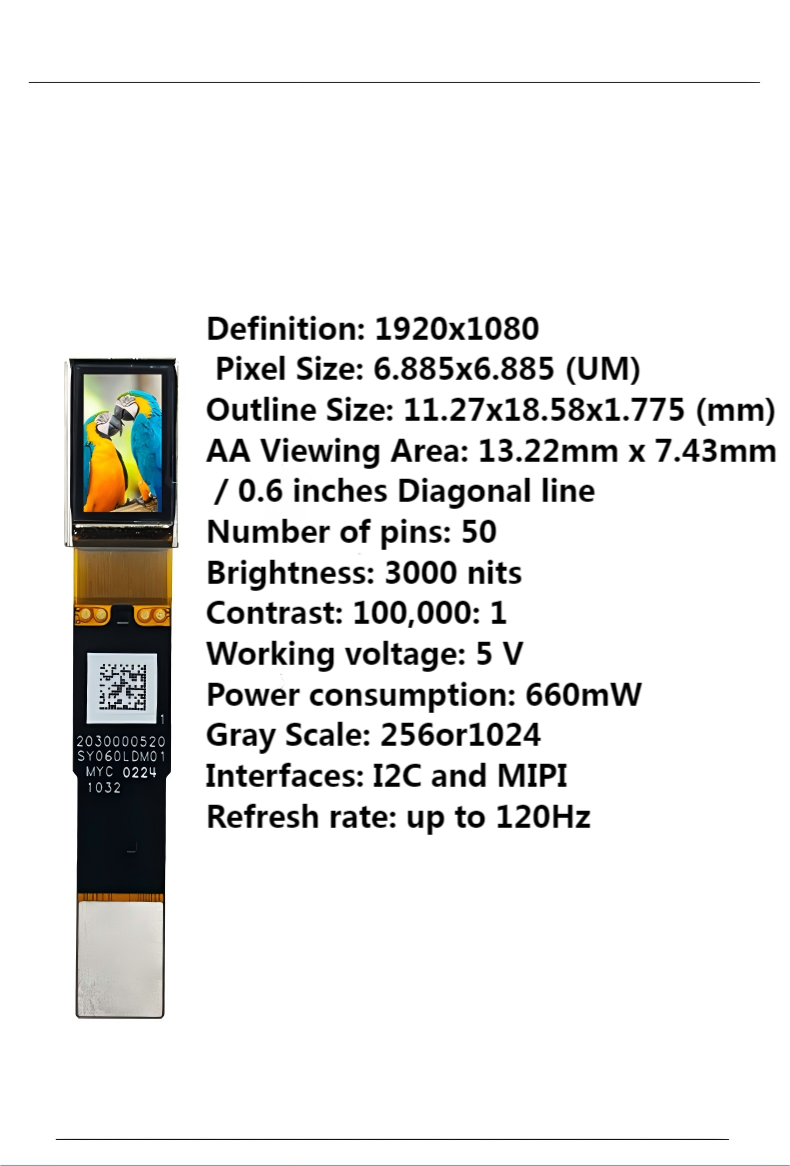
| Attribute | Value |
| Display Technology | AR display |
| Size | 0.6 inch |
| Resolution | 1920×1080 |
| Interface | 12C AND MIPI |
| Outline Size | 11.27x18.58x1.775 (mm) |
| AA Viewing Area | 13.22mm x 7.43mm |
| Testing Board | HDMI and Type C optional |
| Part No. | HXSY060WDG01 |
Product Images
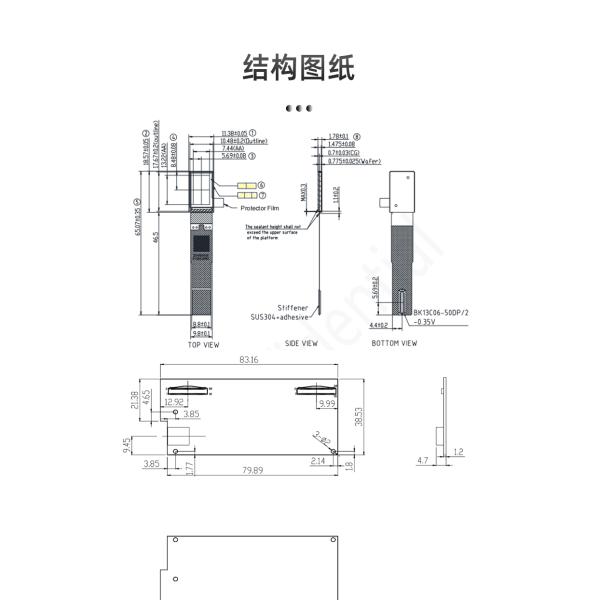
Drawing & Pin Definition
Micro OLED Technology
Key Advantages
- Ultra-High Pixel Density (PPI)
- Thin, Lightweight, and compact
- Superior Image Quality
- Lower power consumption
- Wide operating Temperature Range
- High brightness & Efficiency (with advanced designs)
- Manufacturing & Scalability benefits
Limitations
- High production costs & limited supply
- Limited brightness (compared to Micro LED)
- Limited view angles
- Shorter lifespan (compared to micro LED)
- Limited application scope (small display only)
- Motion Blur & Persistence issues (in VR)
- Competition from micro LED
Huaxin Technology Advantages
- Factory located in cost-effective inland city
- Most advanced equipment for stable quality
- Most processes use fully automatic equipment for efficiency and quality
- Professional engineers with 20+ years experience in LCD field
- Self-design capability for customized products
Certifications
- ISO14001
- ISO9001/IATF16949
- SGS of LCD module
Company Profile
Huaxin Technology (Enshi) Co., LTD
Hubei, Enshi
Founded: 2009
High technology enterprise specializing in R&D, production and sales of LCD, LCM, TFT, backlight, OLED
Product Portfolio
- LCD includes: VA, TN, HTN, STN, FSTN, CSTN and other series
- LCM includes: COB, TBA, COG, TP, OLED and other series
Company Statistics
- Registered capital: 20 million
- Current staff: 500+
- R&D accounts for 10%
- QC accounts for 15%
Production Capacity
| Annual Production Capacity | 2021 (Current) | 2022 (Goal) | 2023 (Challenge) | 2024 (Challenge) | 2025 (Challenge) | Unit |
| LCD Production | 4.5 | 9 | 9 | 9 | 9 | Thousands of logarithms/Day |
| LCM Production | 70 | 150 | 300 | 450 | 450 | Thousand pieces/Day |
| Backlight Production | 100 | 200 | 300 | 500 | 500 | Thousand pieces/Day |
| OLED Production | 10 | 20 | 30 | 40 | 50 | Thousand pieces/Day |
Product Applications
- VR/AR/MR headsets
- Military/aerospace
- Medical devices and microdisplays
- Camera & electronic viewfinders
- Automotive displays
- Wearable & smart glasses
Display Technology Comparison
| Feature | Micro OLED | Traditional OLED | MicroLED |
| Substrate | Silicon wafer | Glass/plastic | Sapphire/glass |
| PPI | 3,000-5,000+ | 400-800 | 1,000+ |
| Size | <1 inch common | Smartphone/TV sizes | Scalable |
| Power Use | Low | Medium | Very Low |
| Lifespan | Moderate (OLED aging) | Moderate | Very Long |
| Cost | High | Moderate | Very high |
Micro OLED Challenges
- Limited lifespan (blue OLEDs degrade faster)
- Higher manufacturing cost due to silicon wafer integration
- Currently small sizes (not suitable for TVs)
Future Outlook
Expected to dominate AR/VR and wearable displays due to unmatched pixel density. Companies like Sony, Samsung, BOE, and eMagin are investing heavily in this technology.