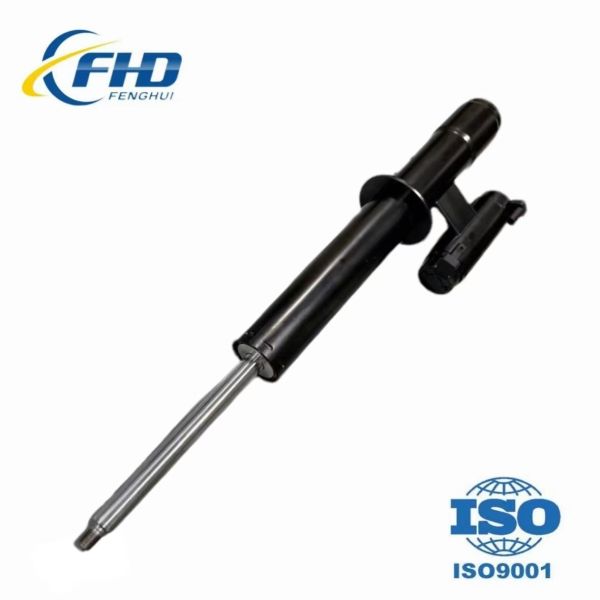
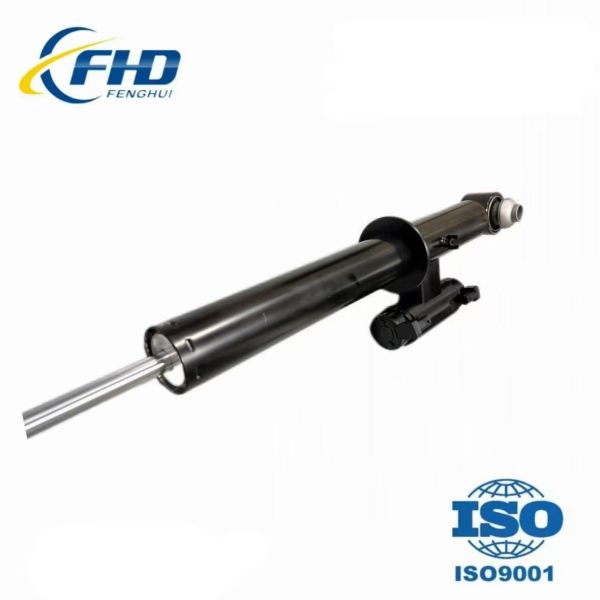
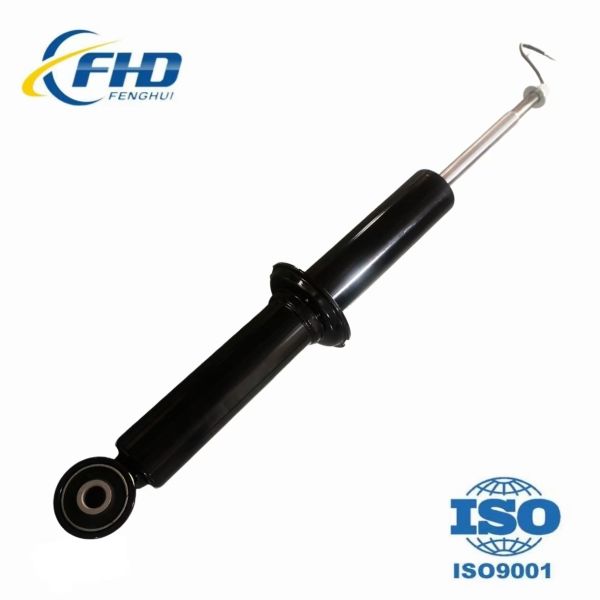
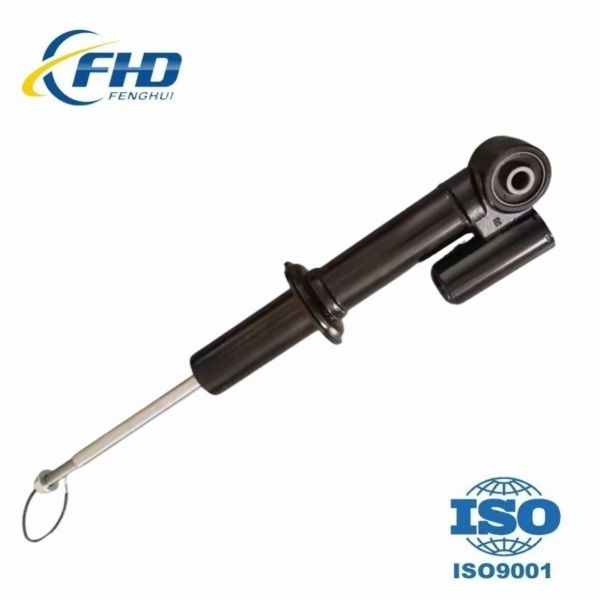
Structurally reinforced, OE-grade air shock absorber core (strut only) for BMW G12 xDrive 4WD front right position. This product includes the strut only, without air spring.
| Vehicle Application | BMW 7 Series (G11 / G12) xDrive 4WD Versions |
| Installation Position | Front Right (Vehicle Right Side, Passenger Side on LHD Vehicles) |
| Drive Type | 4WD (xDrive Full-Time All-Wheel Drive) |
| Component Type | Shock Absorber Core / Strut Only (Without Air Spring) |
This air shock absorber core (strut) is designed for the front air suspension system of the BMW G12 chassis, specifically for the xDrive 4WD front right (passenger side) position. This product is a strut-only component and does not include an air spring. It is suitable for repair scenarios where the original front air spring is still fully functional but the strut damping has degraded or failed.
Unlike the 2WD version, the xDrive 4WD front axle adds drive half-shafts, a front differential, and a transfer case drive shaft, making the front axle weight significantly higher than the 2WD version. Therefore, the 4WD front strut must withstand greater vertical loads and lateral forces, while also handling additional vibrations from power transmission.
Through an internal hydraulic valve system, it precisely regulates compression and rebound rates, providing stronger support while maintaining comfort. The strut works in coordination with the front air spring, lower control arm, steering knuckle and stabilizer bar to form the BMW adaptive front suspension system.
The BMW G12 xDrive features full-time all-wheel drive, with power distributed between the front and rear wheels based on road conditions. This product features damping reinforcement specifically matched to the increased weight and load characteristics of the 4WD front axle. It is manufactured to original equipment structural dimensions, with the lower fork mounting bracket, top fixing threads, and bump stop limit positions all consistent with original factory specifications, allowing direct replacement of the old strut without any modifications.
⚠️ This product is suitable for G11/G12 chassis 7 Series xDrive 4WD versions (e.g., 740Li xDrive, 750Li xDrive, etc.). For 2WD (rear-wheel drive) versions, the front axle is lighter and damping calibration differs. Please confirm your vehicle's drive type before purchasing. Vehicles with an "xDrive" badge on the rear are 4WD versions. Before purchasing, please verify the original OE part number or VIN code.
Keep dry, clean and handle with care.

Professional, environmentally friendly, and efficient packaging services ensure the safety of your goods during transit.

Common signs of damage include: a heavy "thumping" noise when the right front wheel goes over speed bumps, the front end noticeably dipping to the lower right side during braking, abnormal vibration from the right front wheel area during acceleration, and uneven saw-tooth wear on the right front tire.
A simple self-check method: after stopping the vehicle, press down firmly on the right front fender and release quickly. If the body bounces up and down more than twice before stopping, the damping on the right side has significantly degraded. Because the 4WD front axle is heavier, the rocking feel after damage will be more pronounced than on 2WD versions.
No, they are not interchangeable. The 4WD front axle has added drive half-shafts and a front differential, making it approximately 30-40 kg heavier than the 2WD version. Therefore, the 4WD strut has stiffer damping valve tuning and stronger support.
The consequences of forced interchangeability: installing a 2WD strut on a 4WD car → insufficient support, severe brake dive, excessive body roll during cornering; installing a 4WD strut on a 2WD car → overly stiff front axle, strong bump feel, reduced comfort. Before purchasing, confirm whether the vehicle has an "xDrive" badge on the rear.
Replacing in pairs is not mandatory; the right side can be replaced alone. However, because the 4WD front axle has a more complex structure and greater loads, the impact of left/right damping differences on handling is more noticeable than on 2WD versions.
If the front left strut has been in service for more than 60,000 km or 4+ years, it is recommended to replace both sides as a pair. Otherwise, you may experience front end instability during cornering or the need for frequent steering corrections when driving straight.
This situation is usually not a problem with the strut itself, but rather the air suspension system has not been reset after installation. After replacing front suspension components on a BMW G12 xDrive, a diagnostic tool (such as ISTA or a compatible device) is required to perform "height calibration" and "component matching" on the air suspension system.
The 4WD version has one additional front axle height sensor compared to the 2WD version, making the reset procedure more complex. It is recommended to connect a diagnostic tool after installation, clear the fault codes, and perform a complete front axle height initialization.
Yes, it is suitable. The front suspension structure of the G11 (standard wheelbase) and G12 (long wheelbase) xDrive versions is completely identical. The strut mounting dimensions, piston rod diameter, and damping characteristics are all the same, making them interchangeable.
When purchasing, you only need to confirm that the vehicle is the xDrive 4WD version and the front right position; there is no need to distinguish between short and long wheelbase.
It is recommended to replace the following accessories simultaneously: the front strut dust boot (the 4WD front axle has a more compact layout; if the dust boot is damaged, dirt enters more easily), the upper bump stop (may harden or crumble after long-term compression), and the top nut securing the piston rod (the original is a self-locking nut, which loses locking force after removal).
In addition, check the right front stabilizer bar link and the right front half-shaft outer CV joint boot for integrity. A damaged half-shaft on a 4WD vehicle can generate additional vibration that is easily misdiagnosed as a strut issue.
Yes, this is normal. Over long-term use, the damping oil inside the old strut gradually degrades and damping force decreases. After the new strut restores the original factory damping level, the road feel becomes more noticeable.
Because the 4WD front axle is heavier, the "stiffer" feel of the new strut will be more pronounced than on 2WD versions. Typically, after driving 400-600 km, the strut will gradually break in to a stable condition. If after 1,000 km the right front still feels noticeably bumpier than the left front, check whether the installation is correct or whether the correct model was matched.
This type of noise requires special attention on 4WD versions. Common causes include: 1) The top nut of the strut is not tightened to the specified torque (70-80 Nm for 4WD versions, slightly higher than 2WD); 2) The right front half-shaft inner CV joint is worn, and the changed installation angle after strut replacement exposes the noise; 3) The dust boot is not installed properly and is rubbing against the strut body; 4) The front differential bracket bushing is aged, creating resonance when working with the new strut.
It is recommended to first check the half-shaft condition, as half-shaft issues are more common on 4WD versions than on 2WD versions and are easily mistaken for strut failure.
Please verify the actual vehicle configuration. The Magic Body Control adaptive air suspension system (Executive Drive Pro) on the BMW G12 uses electronically controlled dampers with solenoid valves on the front axle, while this product is a standard damping type strut (without solenoid valve).
How to check: open the hood and observe whether there is a solenoid valve device with a wiring harness connector on top of the right front strut tower. If present, please choose the corresponding electronically controlled version; if not, this product is suitable. Note: The Magic Body Control system is more common on 4WD versions and rarely equipped on 2WD versions.
It is strongly recommended. The xDrive 4WD front axle structure is more complex than the 2WD version. Removing the strut involves more connecting components, and after installation, the caster, camber, and toe of the front wheels may all change.
Common consequences of skipping alignment: the steering wheel is off-center at high speeds, uneven tire wear (which occurs faster on 4WD versions than on 2WD), and pulling to one side when driving straight. It is recommended to drive 30-50 km after replacement to allow the suspension to settle naturally before performing a wheel alignment.
Absolutely not. The front and rear struts have fundamental differences in body length, piston rod diameter, mounting method, and damping valve tuning. The 4WD front strut must handle multiple loads from steering, braking, and power transmission, with design strength far higher than the rear strut.
Forcing interchangeability will result in chassis dynamic imbalance and seriously affect handling safety. Please be sure to purchase accurately according to front/rear and left/right positions.