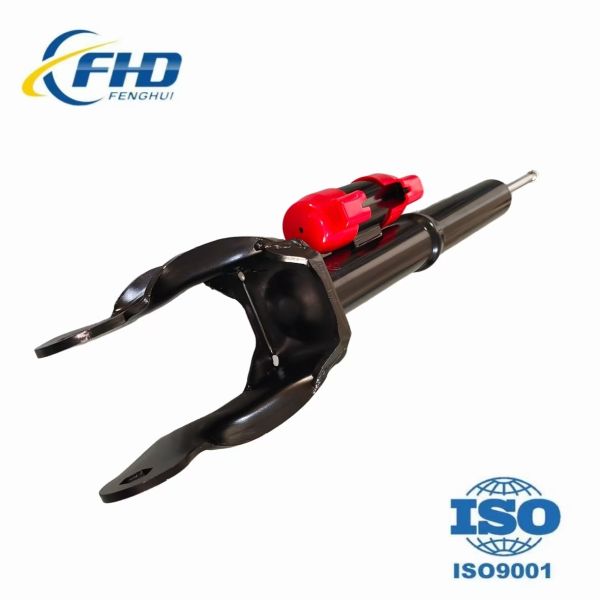
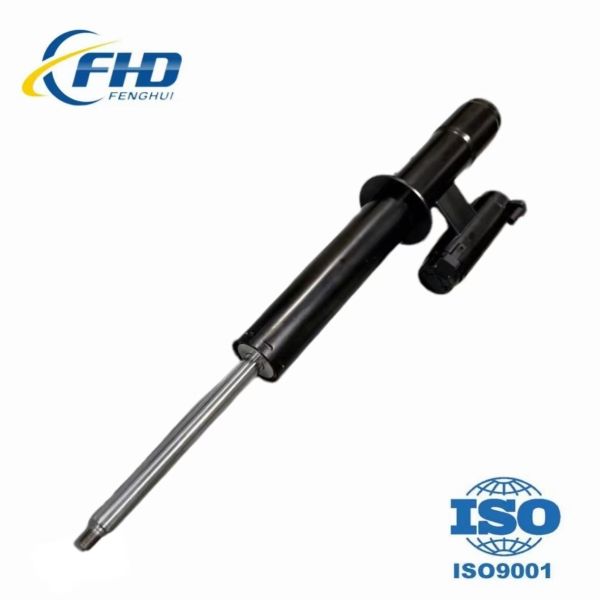
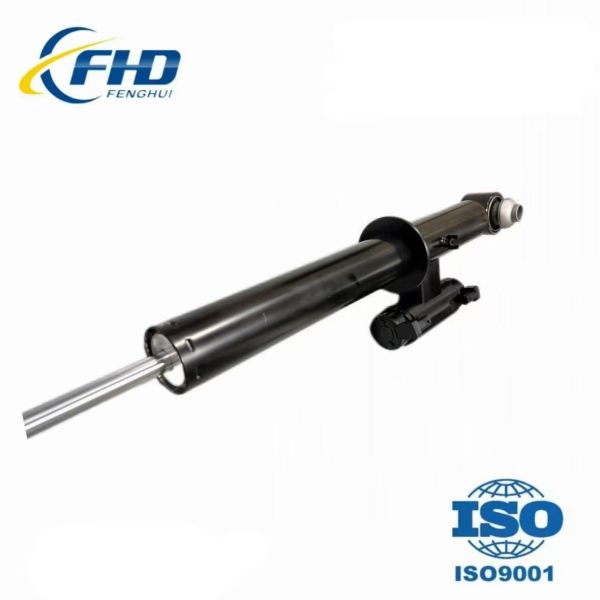
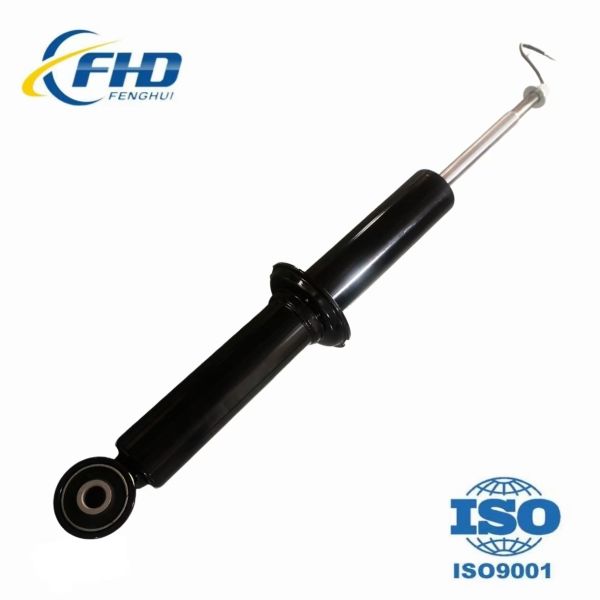
Sporty Load-Bearing, OE-Grade Air Shock Absorber Core (Strut Only) For Mercedes-Benz 292 Front Left Position (Strut Only, Without Air Spring)
Frequently Asked Questions
Q1: How can I tell whether the Mercedes-Benz 166 front left strut is already damaged?
Common signs of damage include: a dull "thumping" noise when the left front wheel goes over speed bumps, the front end noticeably dipping to the lower left side during braking, more severe body roll than usual when cornering right, and faster wear on the outside of the left front tire compared to the right. A simple self-check method: after stopping the vehicle, press down firmly on the left front fender and release quickly. If the body bounces up and down more than twice before stopping, the damping on the left side has significantly degraded.
Q2: Are the 166 front left and front right struts interchangeable?
No, they are not interchangeable. Although similar in appearance, the left and right front struts on the 166 differ in internal damping valve calibration to accommodate the left-right load difference caused by the driver's side long-term load and fuel tank location. Forcibly swapping them will result in asymmetric support on both sides of the front axle during cornering, affecting handling stability.
Q3: After replacing a single front strut, is it necessary to also replace the other side?
Replacing in pairs is not mandatory; the left side can be replaced alone. However, note that because the ML/GLE is a mid-to-large SUV with heavier body weight, the impact of left-right suspension damping differences on driving stability is more noticeable than in sedans. If the right side strut has been in service for a long time (over 60,000 km or 5+ years), its damping force will differ from the new strut, which may cause uneven body lean during cornering.
Q4: After replacing the strut, the instrument panel shows an "AIRMATIC Malfunction" warning, but the vehicle drives normally. What is the cause?
This situation is usually not a problem with the strut itself, but rather the air suspension system has not been reset after installation. After replacing front suspension components on a Mercedes-Benz 166, a diagnostic tool (such as XENTRY or a compatible device) is required to perform "level calibration" and "component learning" on the AIRMATIC system. It is recommended to connect a diagnostic tool after installation, clear the fault codes, and perform front axle height initialization.
Q5: Is the 166 front strut suitable for different engine versions of the ML and GLE?
Generally yes, but configuration differences need to be confirmed. The front axle suspension structure is the same for ML350, ML400, GLE320, GLE400, GLE450, and the strut mounting dimensions are identical. However, note that the 166 chassis front strut is available in two versions: with induction (compatible with ADS adaptive damping) and without induction. Before purchasing, observe whether the original strut tower has a solenoid valve wiring harness connector.
Q6: What accessories are recommended to replace at the same time as the front strut?
It is recommended to replace the following accessories simultaneously: the front strut dust boot, the upper bump stop, and the top nut securing the piston rod. In addition, check the left front stabilizer bar link ball joint for looseness and the left front lower control arm bushing for aging or cracking. Because the ML/GLE is a heavy vehicle, accessory wear occurs faster than in sedans, so a thorough inspection is recommended.
Q7: After replacing the strut, the left front suspension feels stiffer than before. Is this normal?
Yes, this is normal. Over long-term use, the damping oil inside the old strut gradually degrades and damping force decreases. The driver has become accustomed to the softer suspension feel. After the new strut restores the original factory damping level, the road feel becomes more noticeable. Typically, after driving 400-600 km, the strut will gradually break in to a stable condition.
Q8: There is a "creaking" or "squeaking" noise from the left front wheel area while driving after strut replacement. What is the cause?
This type of noise requires careful diagnosis. Common causes include: 1) The top nut of the strut is not tightened to the specified torque; 2) The dust boot is not installed properly and is rubbing against the strut body; 3) The left front stabilizer bar link ball joint is aged; 4) The left front lower control arm bushing is aged. It is recommended to first check the stabilizer link and control arm bushings.
Q9: Is a wheel alignment (chassis angle calibration) necessary after replacing the 166 front strut?
It is strongly recommended. The 166 chassis ML/GLE front suspension is a double-wishbone design. Removing the strut involves disconnecting the upper and lower control arms from the steering knuckle, which will affect front wheel alignment parameters. Common consequences of skipping wheel alignment include: unstable steering wheel at high speeds, uneven tire wear, and pulling to one side when driving straight.
Q10: Are the 166 front strut and rear strut interchangeable?
Absolutely not. The front and rear struts have fundamental differences in body length, piston rod diameter, mounting method, and damping valve tuning. The front strut must withstand multiple loads from steering, braking, and off-road wheel travel, with a completely different stroke design from the rear strut. Forcing interchangeability will result in chassis dynamic imbalance and seriously affect handling safety.
Q11: Is the 166 front strut suitable for the later generation GLE (V167)?
No, it is not suitable. The V167 is the next-generation GLE launched in 2019, with a completely different chassis structure, suspension geometry, and strut mounting dimensions. Parts are not interchangeable with the W166. Before purchasing, please confirm that your vehicle is the W166 chassis (2011-2019 model years).