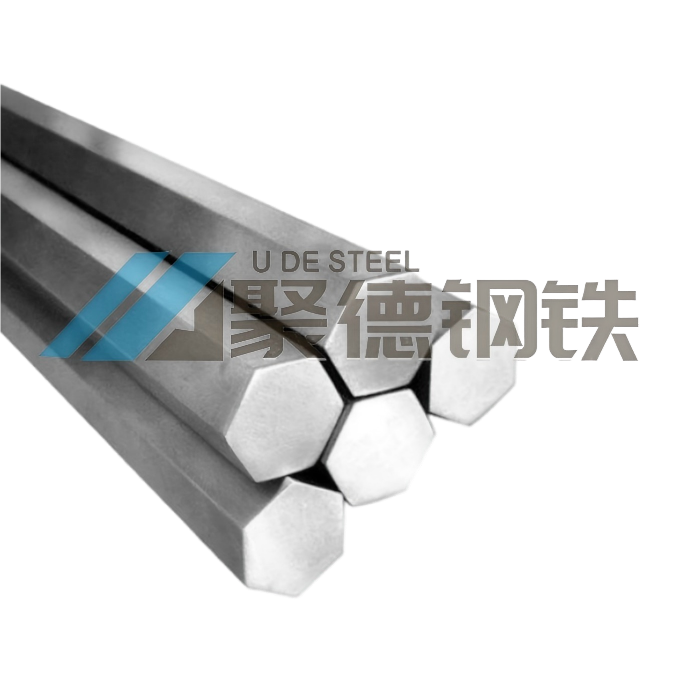
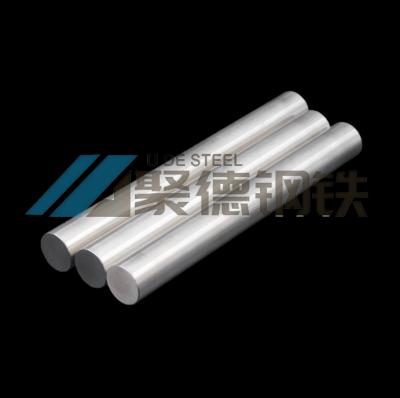
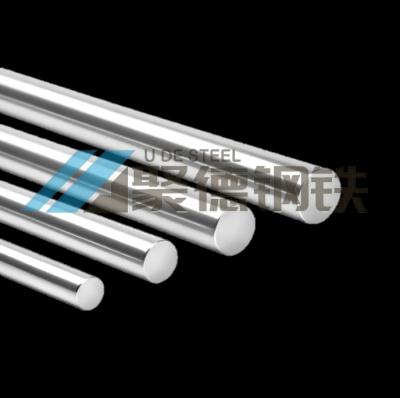
Our 316 Stainless Steel Hex Bar is manufactured from premium AISI 316 stainless steel using precision hot-rolled or cold-drawn production processes, offering outstanding corrosion resistance, excellent mechanical strength, and exceptional dimensional accuracy. Available in S3–S50 sizes with a bright surface finish, these solid hexagonal bars are specifically designed for demanding offshore and marine environments where resistance to chloride-induced corrosion is essential.
Containing 2–3% molybdenum (Mo), 316 stainless steel provides significantly better resistance to pitting and crevice corrosion than 304 stainless steel, making it an ideal material for offshore platforms, marine engineering, desalination equipment, chemical processing, and shipbuilding. The bright finish also enhances appearance while reducing surface contamination and simplifying maintenance.
| Item | Specification |
|---|---|
| Product Name | 316 Stainless Steel Hex Bar |
| Material Grade | AISI 316 / EN 1.4401 / UNS S31600 |
| Shape | Solid Hexagonal Bar |
| Size | S3–S50 (Across Flats) |
| Manufacturing Process | Cold Drawn / Hot Rolled |
| Surface Finish | Bright, Polished, Pickled |
| Length | 1000–6000 mm or Customized |
| Standard | ASTM A276, ASTM A479, EN 10088, JIS G4303 |
| Tolerance | h9, h11 or Customized |
| Certification | ISO 9001, EN10204 3.1 MTC |

| Element | Content (%) |
|---|---|
| Carbon (C) | ≤0.08 |
| Silicon (Si) | ≤1.00 |
| Manganese (Mn) | ≤2.00 |
| Phosphorus (P) | ≤0.045 |
| Sulfur (S) | ≤0.030 |
| Chromium (Cr) | 16.00–18.00 |
| Nickel (Ni) | 10.00–14.00 |
| Molybdenum (Mo) | 2.00–3.00 |
| Nitrogen (N) | ≤0.10 |
| Iron (Fe) | Balance |
| Property | Value |
|---|---|
| Density | 8.00 g/cm³ |
| Melting Point | 1375–1400°C |
| Thermal Conductivity | 16.3 W/m·K |
| Electrical Resistivity | 0.74 μΩ·m |
| Specific Heat | 500 J/kg·K |
| Elastic Modulus | 193 GPa |
| Property | Value |
|---|---|
| Tensile Strength | ≥515 MPa |
| Yield Strength (0.2%) | ≥205 MPa |
| Elongation | ≥40% |
| Hardness | ≤217 HB |
| Reduction of Area | ≥60% |
316 stainless steel is engineered for highly corrosive environments. The addition of molybdenum significantly improves resistance to chloride attack, making it suitable for long-term exposure to seawater splashes, marine atmospheres, and aggressive industrial chemicals.
Key corrosion resistance benefits include:
| Grade | Advantages | Limitations |
|---|---|---|
| 316 | Excellent seawater and chloride corrosion resistance, ideal for offshore applications | Higher cost than 304 |
| 304 | Cost-effective and versatile | Lower resistance to chloride corrosion |
| 316L | Lower carbon content, excellent weldability | Slightly lower strength than 316 |
| 201 | Economical | Poor corrosion resistance in marine environments |
| 303 | Excellent machinability | Reduced corrosion resistance due to sulfur addition |
316 stainless steel hex bars are widely used in: