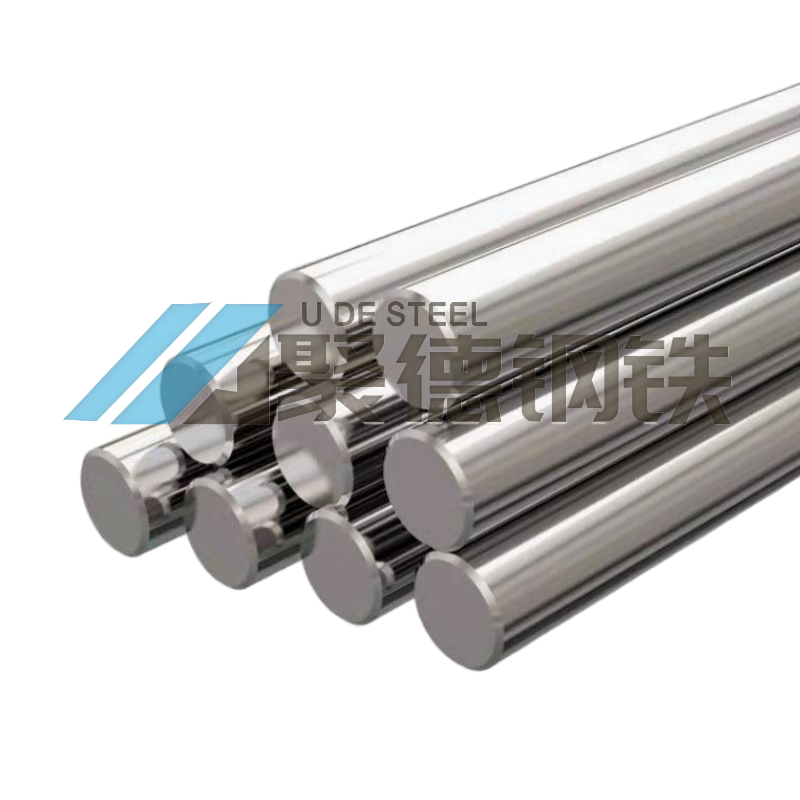
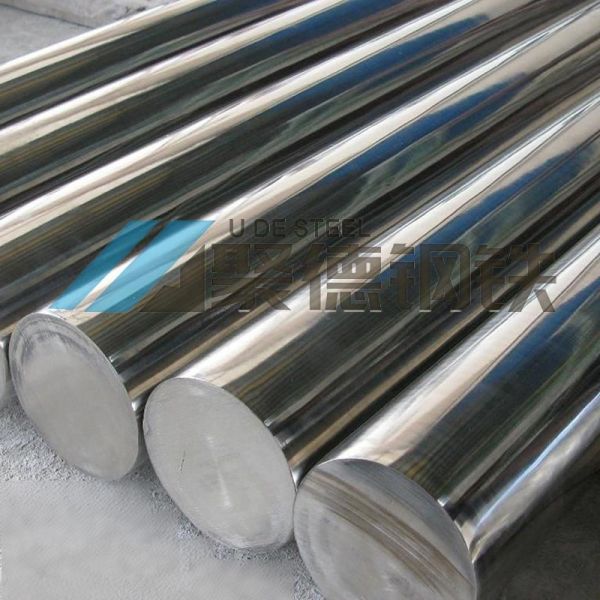
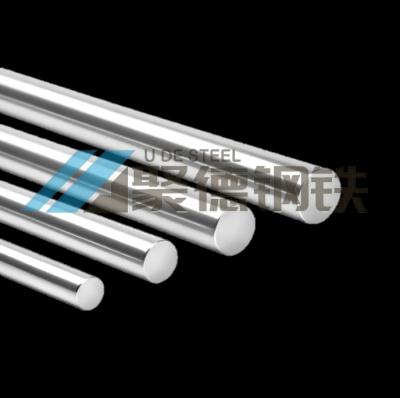
Our 316Ti Stainless Steel Round Bar is a premium titanium-stabilized austenitic stainless steel rod designed for demanding industrial environments. By adding titanium to the standard 316 stainless steel composition, 316Ti offers enhanced resistance to intergranular corrosion after welding and superior performance at elevated temperatures. It is widely used in petrochemical processing, chemical plants, offshore engineering, heat exchangers, pressure vessels, and power generation equipment.
Manufactured in accordance with ASTM A276, ASTM A479, EN 10088, and DIN EN 1.4571, our 316Ti stainless steel round bars provide excellent corrosion resistance, high strength, outstanding weldability, and long service life in harsh operating conditions.
| Item | Specification |
|---|---|
| Product Name | 316Ti Stainless Steel Round Bar |
| Material Grade | AISI 316Ti / UNS S31635 / EN 1.4571 |
| Diameter | 3mm–500mm |
| Length | 1000mm, 2000mm, 3000mm, 6000mm or Customized |
| Standard | ASTM A276, ASTM A479, EN 10088, DIN EN 10272 |
| Surface Finish | Bright, Polished, Peeled, Ground, Black |
| Manufacturing Process | Hot Rolled, Cold Drawn, Forged |
| Tolerance | h9, h11 or Customized |
| Certification | ISO 9001, EN10204 3.1 MTC |
| Element | Content (%) |
|---|---|
| Carbon (C) | ≤0.08 |
| Silicon (Si) | ≤1.00 |
| Manganese (Mn) | ≤2.00 |
| Phosphorus (P) | ≤0.045 |
| Sulfur (S) | ≤0.030 |
| Chromium (Cr) | 16.5–18.5 |
| Nickel (Ni) | 10.5–13.5 |
| Molybdenum (Mo) | 2.0–2.5 |
| Titanium (Ti) | ≥5 × (C+N), typically 0.40–0.70 |
| Property | Value |
|---|---|
| Tensile Strength | ≥515 MPa |
| Yield Strength | ≥205 MPa |
| Elongation | ≥40% |
| Hardness | ≤217 HB |
| Density | 7.99 g/cm³ |
| Elastic Modulus | 193 GPa |
| Property | Value |
|---|---|
| Density | 7.99 g/cm³ |
| Melting Point | 1375–1400°C |
| Thermal Conductivity | 16.3 W/m·K |
| Electrical Resistivity | 0.74 μΩ·m |
| Specific Heat | 500 J/kg·K |
316Ti stainless steel is engineered for aggressive corrosive environments where conventional stainless steels may fail.
The addition of 2–2.5% molybdenum significantly improves resistance to chloride-induced pitting and crevice corrosion, making it suitable for petrochemical plants, marine facilities, and coastal environments.
Titanium stabilizes the carbon, preventing chromium carbide precipitation during welding or prolonged exposure to temperatures between 450°C and 850°C, thereby maintaining corrosion resistance after fabrication.
316Ti performs reliably in continuous service up to approximately 600°C, making it ideal for heat exchangers, furnace components, and high-temperature piping systems.
It offers excellent resistance to:
| Grade | Advantages | Typical Application |
|---|---|---|
| 304 | Economical, good general corrosion resistance | Indoor equipment, construction |
| 316L | Excellent corrosion resistance, low carbon | Food, pharmaceutical, marine |
| 316Ti | Superior high-temperature and intergranular corrosion resistance | Petrochemical, heat exchangers, pressure vessels |
| 321 | High-temperature oxidation resistance | Exhaust systems, aerospace |
| Duplex 2205 | Higher strength and chloride resistance | Offshore and seawater applications |
316Ti Stainless Steel Round Bars are widely used in:
Standard export packaging includes:
316Ti is a titanium-stabilized version of 316 stainless steel. The titanium addition prevents sensitization during welding and improves high-temperature performance.
316L uses a low-carbon composition to reduce carbide precipitation, while 316Ti uses titanium stabilization, providing better long-term performance in high-temperature and welded applications.
Yes. Its excellent resistance to chlorides, acids, and high temperatures makes it one of the preferred materials for petrochemical processing equipment.
Yes. It has excellent weldability and generally does not require post-weld heat treatment to maintain corrosion resistance.
Yes. We provide customized diameters, lengths, surface finishes, machining services, and special tolerances according to customer drawings.
Yes. We supply EN10204 3.1 Material Test Certificates, PMI reports, and third-party inspection documents upon request.