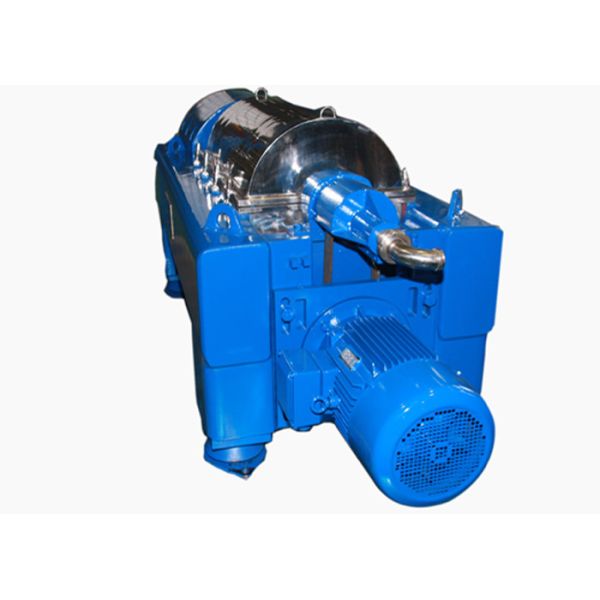
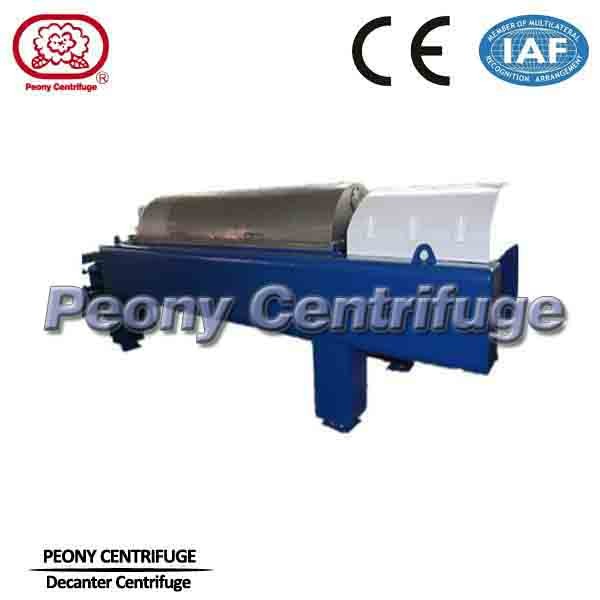
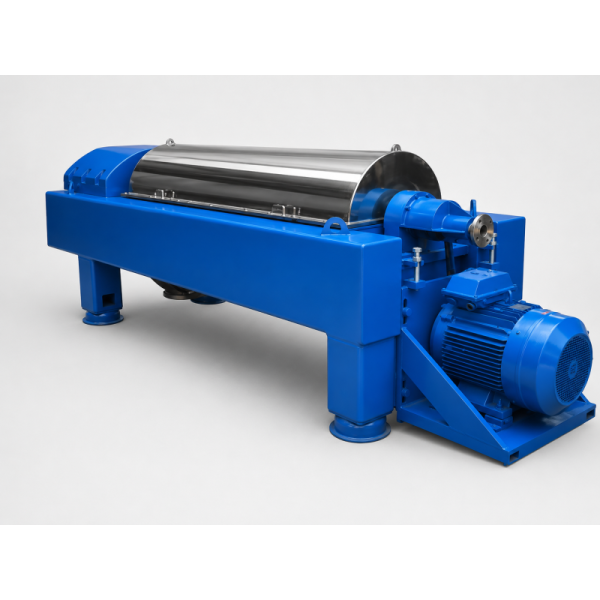
The Three Phase Decanter Centrifuge for Coconut Oil Extraction continuously separates coconut oil, aqueous liquid, and coconut solids from coconut milk or conditioned coconut slurry.
It is suitable for wet-process coconut oil production, virgin coconut oil processing, coconut cream separation, and coconut milk clarification. The system reduces manual settling time and prepares the recovered oil for polishing and final moisture removal.
Coconut milk contains natural proteins that stabilize the oil-water emulsion.
Heating, enzymatic treatment, fermentation, or controlled conditioning may be required before centrifugation.
Fiber, protein particles, and fine coconut meat may reduce oil purity and cause unstable discharge.
Screening and uniform feed preparation improve separation.
Temperature affects oil viscosity and emulsion stability.
A controlled feed temperature helps improve oil recovery without damaging product quality.
Incorrect phase-interface, bowl-speed, or feed-rate settings may increase oil loss.
Adjustable operating parameters help optimize recovery.
Product-contact surfaces, seals, cleaning systems, and operating procedures must meet food-processing requirements.
Peony provides three-phase separation solutions for oil recovery, water clarification, and sludge thickening.
Industrial Emulsion Wastewater
→ Screening
→ Equalization / Optional Emulsion Breaking
→ Three Phase Decanter Centrifuge
→ Oil + Water + Solids
Recovered Oil → Recycling / Disposal
Separated Water → Further Treatment
Concentrated Solids → Filter Press / Recovery / Disposal
Screened coconut milk or slurry enters the rotating bowl through a controlled feed pipe.
The feed tank maintains uniform concentration and temperature.
Centrifugal force moves coconut fiber, protein particles, and dense solids toward the bowl wall.
A concentrated solids layer forms.
The lighter coconut oil remains closer to the bowl center.
The heavier aqueous phase forms a separate outer liquid layer.
The screw conveyor transports settled coconut solids toward the conical discharge end.
The solids discharge continuously.
Coconut oil and aqueous liquid leave through separate outlets.
The solids discharge continuously for recovery or further treatment.

| Model | Diameter (mm) | Length (mm) | Length-to-diameter rate | G force | Max solid discharge (m³/h) | Weight (kg) | Dimension (L*W*H) (mm) |
|---|---|---|---|---|---|---|---|
| PDC-10 | 250 | 1000 | 4 | 4080 | 0.4 | 1000 | 2410*800*1080 |
| PDC-12 | 4200 | 1350 | 4 | 3500 | 0.6 | 1200 | 2610*800*1080 |
| PDC-12 | 4200 | 1350 | 4.5 | 3180 | 1.2 | 1800 | 3495*840*1180 |
| PDC-18 | 4000 | 1600 | 4.5 | 3180 | 1.2 | 3200 | 3497*1020*1385 |
| PDC-18 | 450 | 2150 | 4 | 2500 | 2 | 3800 | 4447*1080*1385 |
| PDC-20 | 400 | 2250 | 4.5 | 2500 | 3.5 | 4000 | 4580*1140*1470 |
| PDC-21 | 530 | 2280 | 4.3 | 2500 | 5 | 5000 | 4924*1170*1540 |
| PDC-26 | 655 | 2800 | 4.3 | 2270 | 8 | 7000 | 4300*1900*1350 |
Separates oil continuously and reduces long settling periods.
Adjustable phase-interface and operating speeds help reduce oil loss.
Removes coconut fiber, protein particles, and suspended impurities.
Food-grade wetted parts and CIP design support hygienic production.
Can connect with polishing, filtration, vacuum drying, and storage systems.
Please provide:
It provides primary oil recovery. Polishing filtration or centrifugation and vacuum drying may still be required.
Yes. The milk may first require screening and suitable emulsion conditioning.
Depending on the process, heating, enzymes, fermentation, or other controlled conditioning may be used.
Stable feeding, suitable temperature, correct phase-interface adjustment, and optimized bowl speed improve recovery.
Possibly. Their oil, moisture, protein, and hygiene conditions should be checked before use as feed material or another by-product.
Peony welcomes cooperation with coconut processors, virgin coconut oil producers, food-processing contractors, and edible-oil equipment distributors.
Send us your feed composition, temperature, capacity, oil-recovery target, and downstream process. Our engineering team will recommend a suitable three-phase decanter centrifuge solution.