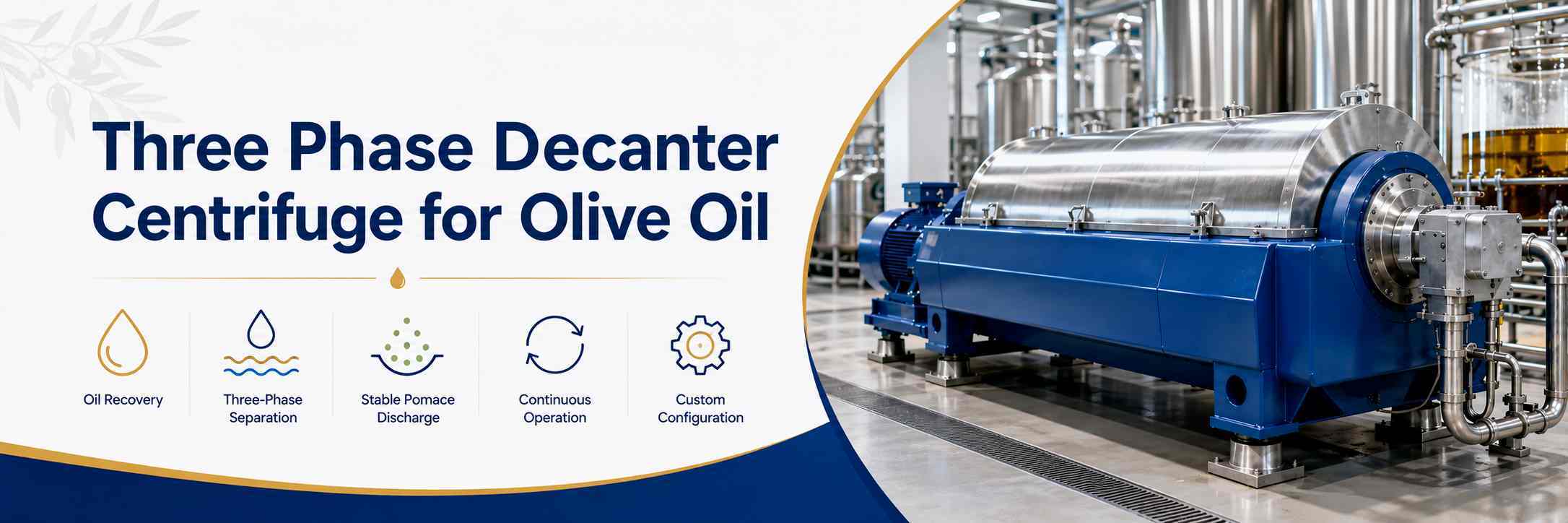
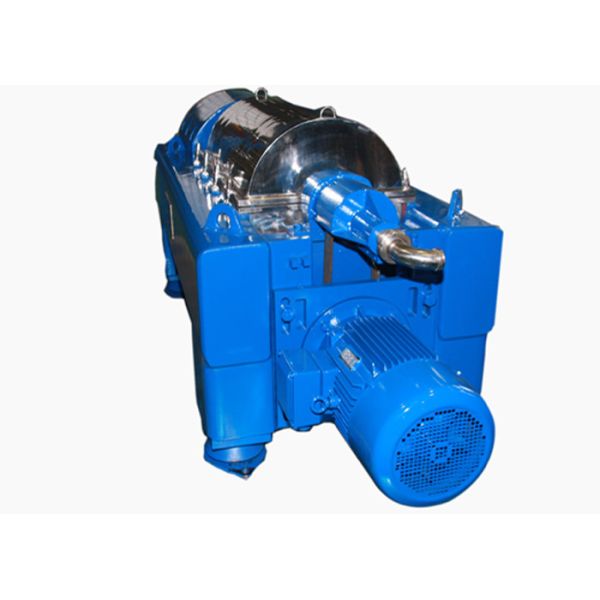
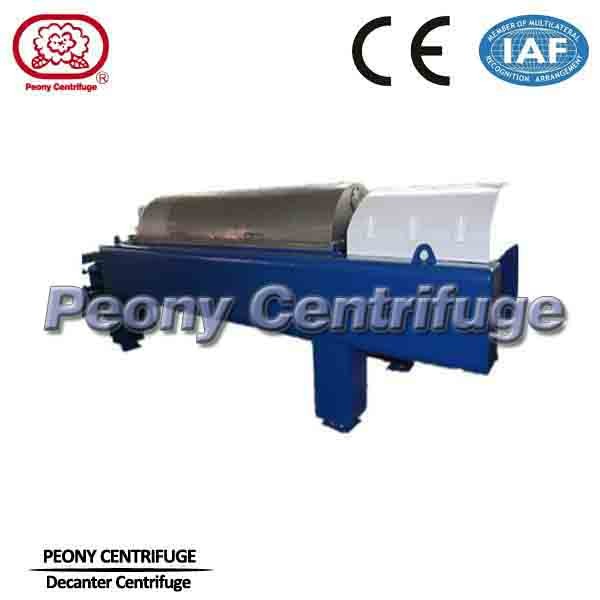
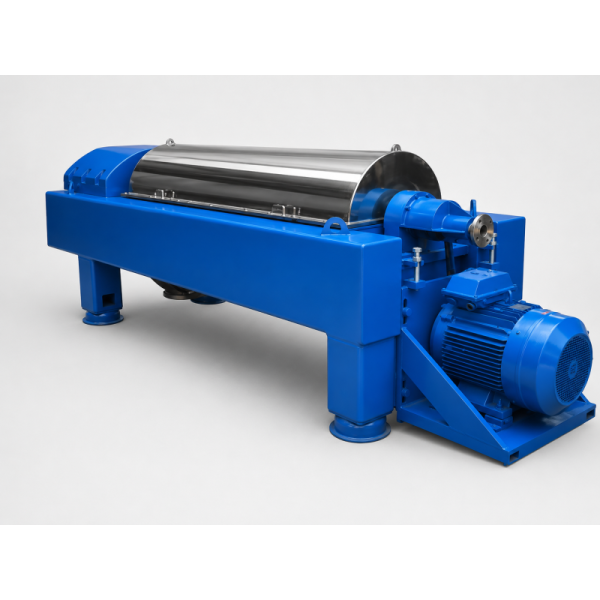
Three Phase Decanter Centrifuge for Olive Oil is designed for continuous separation of olive oil, vegetation water, and pomace in olive oil extraction lines.
After olive crushing and malaxing, the olive paste contains oil, water, pulp, skin, stone particles, and fine solids. A three-phase decanter centrifuge separates this paste into three output phases:
Unlike oily sludge treatment equipment, this centrifuge is used for vegetable oil production and olive oil extraction. The main purpose is to improve oil recovery, separate water and solids, reduce manual handling, and support continuous olive oil processing.
This centrifuge is suitable for olive oil processing lines where olive paste needs continuous oil-water-solid separation.
Typical applications include:
| Phase | Description | Purpose |
|---|---|---|
| Oil phase | Olive oil separated from olive paste | Collected for polishing, storage, or further clarification |
| Water phase | Vegetation water and added process water | Discharged or sent to further treatment |
| Solid phase | Pomace, pulp, skin, stone particles, and fine solids | Discharged continuously as olive pomace |
The actual separation effect depends on olive variety, paste condition, malaxing effect, water addition, temperature, oil content, solids content, and target oil quality.
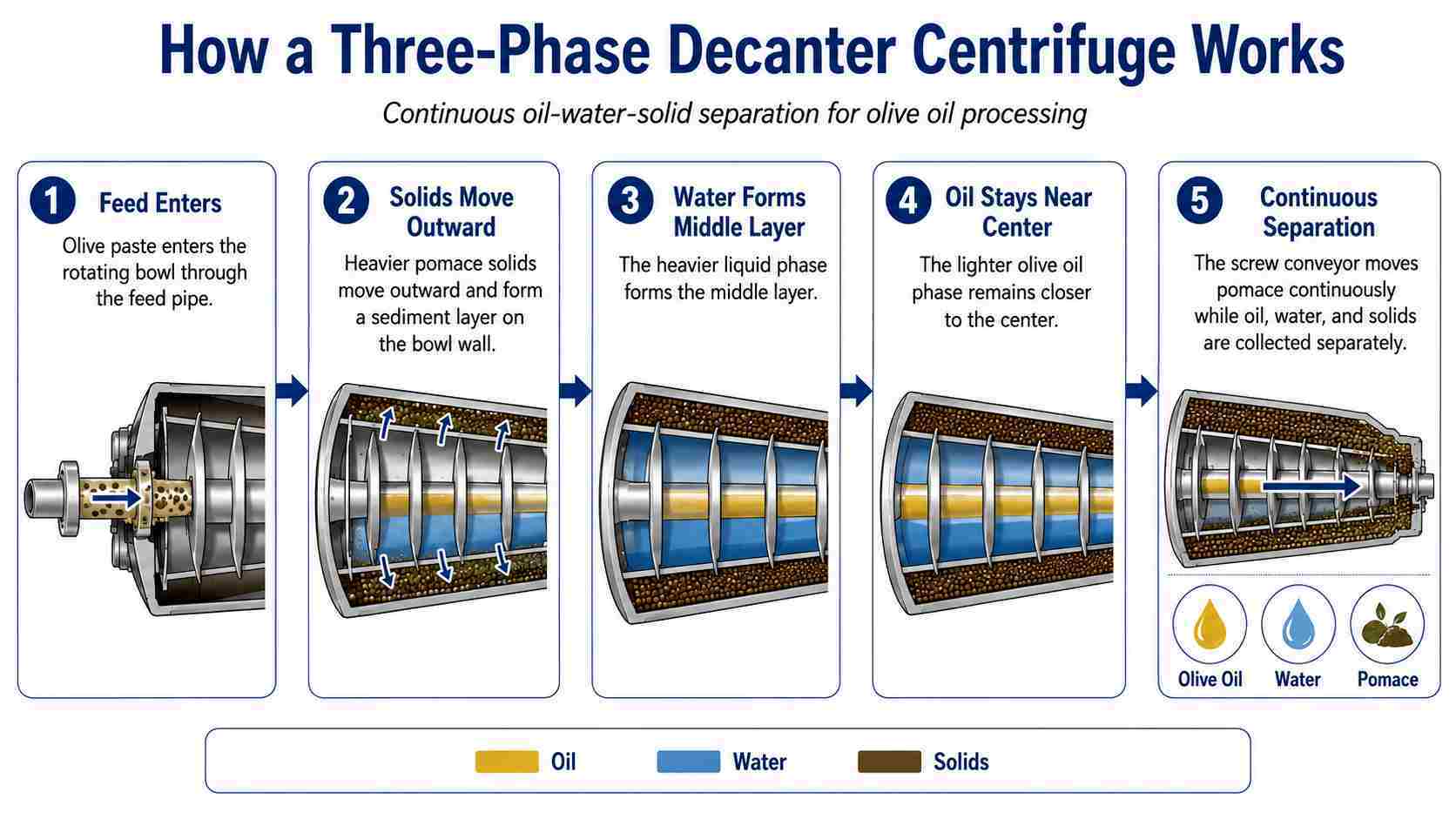
The malaxed olive paste enters the rotating bowl through the feed pipe.
Under centrifugal force, the phases separate according to density difference:
The screw conveyor rotates at a controlled differential speed and continuously pushes the separated pomace toward the discharge end.
At the same time, the oil phase and water phase are discharged separately through different liquid outlets.

| Model | Diameter (mm) | Length (mm) | Length-to-diameter rate | G force | Max solid discharge (m³/h) | Weight (kg) | Dimension (L*W*H) (mm) |
|---|---|---|---|---|---|---|---|
| PDC-10 | 250 | 1000 | 4 | 4080 | 0.4 | 1000 | 2410*800*1080 |
| PDC-12 | 4200 | 1350 | 4 | 3500 | 0.6 | 1200 | 2610*800*1080 |
| PDC-12 | 4200 | 1350 | 4.5 | 3180 | 1.2 | 1800 | 3495*840*1180 |
| PDC-18 | 4000 | 1600 | 4.5 | 3180 | 1.2 | 3200 | 3497*1020*1385 |
| PDC-18 | 450 | 2150 | 4 | 2500 | 2 | 3800 | 4447*1080*1385 |
| PDC-20 | 400 | 2250 | 4.5 | 2500 | 3.5 | 4000 | 4580*1140*1470 |
| PDC-21 | 530 | 2280 | 4.3 | 2500 | 5 | 5000 | 4924*1170*1540 |
| PDC-26 | 655 | 2800 | 4.3 | 2270 | 8 | 7000 | 4300*1900*1350 |
The centrifuge continuously separates olive paste into oil, water, and pomace, supporting stable olive oil production.
With suitable paste condition and operating parameters, the decanter helps recover more oil from the olive paste.
Three-phase separation allows olive oil, vegetation water, and pomace to be collected separately.
By removing most water and solids before final polishing, the decanter reduces the burden on downstream disc separation.
The screw conveyor continuously removes pomace, helping maintain steady operation and reducing manual handling.
The machine can be connected with crushers, malaxers, pumps, disc separators, storage tanks, and control systems.
Operating parameters can be adjusted according to paste consistency, water addition, oil content, and production capacity.
Under suitable feed and operating conditions, a three phase decanter centrifuge can typically help achieve:
Final performance depends on olive variety, paste condition, malaxing time, feed temperature, water addition, oil content, solids content, and operating parameters.
If the target oil quality is strict, a disc separator is usually recommended after the decanter for final polishing and residual water removal.
To recommend a suitable three phase decanter centrifuge for olive oil processing, please provide:
It is used to separate olive paste into olive oil, vegetation water, and pomace during continuous olive oil extraction.
No. The decanter is mainly used for primary separation of olive paste. For final oil polishing and residual water removal, a disc separator is usually used after the decanter.
Yes. With suitable paste condition, malaxing, and machine settings, the decanter can help reduce oil loss in pomace.
It depends on the process route, paste consistency, and separation target. Water addition may help separation in some three-phase systems, but it should be controlled to avoid unnecessary dilution.
Oil recovery depends on olive variety, paste condition, malaxing effect, temperature, water content, solids content, feed rate, and centrifuge settings.
If you have local customer channels or project resources involving olive oil mills, vegetable oil processing, olive paste separation, olive oil extraction, or three-phase separation projects, Peony welcomes cooperation.
Peony can support local agents, distributors, and project partners with technical model selection, olive oil process separation proposal, skid-mounted system integration, equipment manufacturing, installation guidance, commissioning support, spare parts, and after-sales service.
Please send us your target market, customer type, project background, and cooperation proposal. Our team will evaluate the opportunity and provide technical and commercial support for suitable olive oil separation projects.