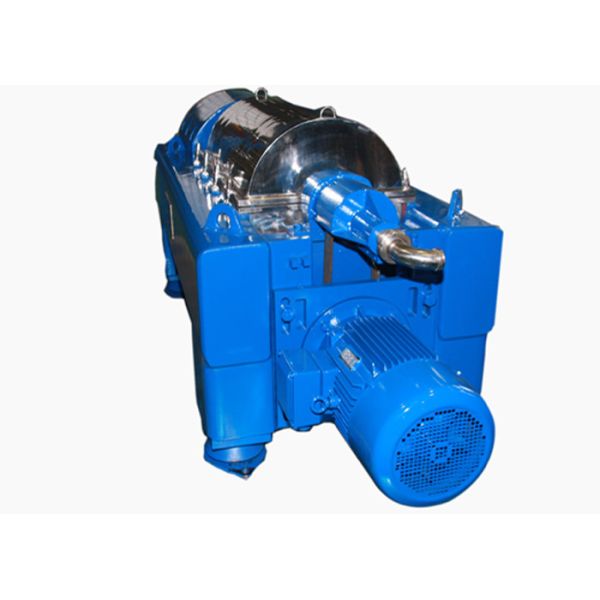
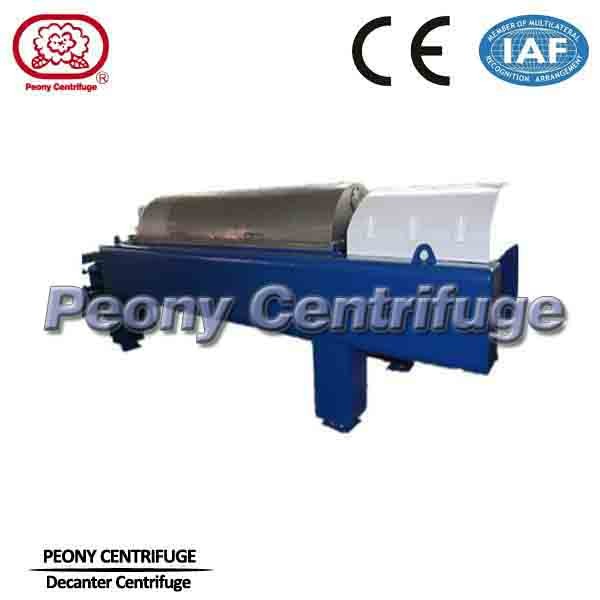
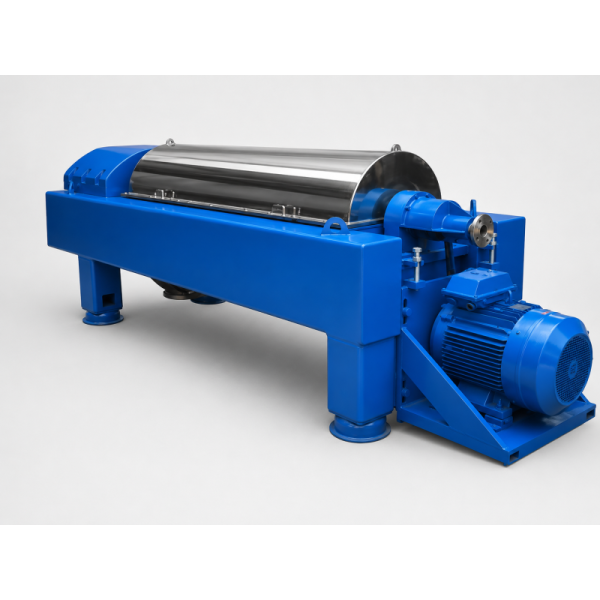
The Three Phase Decanter Centrifuge for Algae Oil Recovery continuously separates recovered algae oil, aqueous liquid, and concentrated biomass solids from conditioned algae slurry.
It is suitable for microalgae oil production, cell-disruption slurry treatment, fermentation residues, solvent-assisted extraction processes, and algae biomass dewatering before downstream purification.
Algae cells and cell fragments are small and slow-settling. High centrifugal force and stable feeding improve solids capture.
Proteins, lipids, and cell debris may stabilize emulsions. Heating, enzymes, pH adjustment, or demulsifier dosing may be required.
The centrifuge cannot release oil enclosed inside intact cells. Cell disruption or upstream extraction is required first.
Algae species, solids concentration, oil content, viscosity, and cultivation conditions can affect separation performance.
Solvent-containing feeds may require gas-tight, explosion-proof construction. Food or nutraceutical applications require sanitary materials and cleaning systems.
Conditioned Algae Slurry
→ Cell Disruption
→ Feed Tank
→ Three Phase Decanter
→ Oil + Water + Biomass
Recovered Oil → Purification
Water Phase → Reuse / Treatment
Biomass → Drying / Further Processing
Conditioned algae slurry enters the rotating bowl.
Agitation maintains stable solids and oil distribution.
Centrifugal force moves algae cells, cell debris, and dense particles toward the bowl wall.
A concentrated biomass layer forms.
The lighter algae oil remains closer to the bowl center.
The heavier aqueous phase forms a separate outer liquid layer.
The screw conveyor transports settled biomass solids toward the conical end.
The solids discharge continuously.
Recovered oil and aqueous liquid leave through separate outlets.
Biomass solids discharge continuously for further processing.

| Model | Diameter (mm) | Length (mm) | Length-to-diameter rate | G force | Max solid discharge (m³/h) | Weight (kg) | Dimension (L*W*H) (mm) |
|---|---|---|---|---|---|---|---|
| PDC-10 | 250 | 1000 | 4 | 4080 | 0.4 | 1000 | 2410*800*1080 |
| PDC-12 | 4200 | 1350 | 4 | 3500 | 0.6 | 1200 | 2610*800*1080 |
| PDC-12 | 4200 | 1350 | 4.5 | 3180 | 1.2 | 1800 | 3495*840*1180 |
| PDC-18 | 4000 | 1600 | 4.5 | 3180 | 1.2 | 3200 | 3497*1020*1385 |
| PDC-18 | 450 | 2150 | 4 | 2500 | 2 | 3800 | 4447*1080*1385 |
| PDC-20 | 400 | 2250 | 4.5 | 2500 | 3.5 | 4000 | 4580*1140*1470 |
| PDC-21 | 530 | 2280 | 4.3 | 2500 | 5 | 5000 | 4924*1170*1540 |
| PDC-26 | 655 | 2800 | 4.3 | 2270 | 8 | 7000 | 4300*1900*1350 |
Separates oil, water, and biomass in one continuous process.
Removes algae cells, disrupted cell material, and suspended solids.
Adjustable phase interface and operating speeds improve oil recovery.
Concentrated solids can be evaluated for protein, feed, fertilizer, or biofuel applications.
Suitable for connection with cell disruption, extraction, purification, and drying systems.
Please provide:
No. The cells normally require disruption, fermentation, enzymatic treatment, or solvent extraction before three-phase separation.
Possibly. Feed particle size, fiber content, oil concentration, and pretreatment method must be evaluated.
Stable emulsions may require heating, enzymes, pH adjustment, or another conditioning step before centrifugation.
Yes, with compatible seals, closed construction, solvent-resistant materials, and explosion-proof equipment when required.
Possibly. Protein content, solvent residue, moisture, contamination, and downstream product requirements should be checked.
Peony welcomes cooperation with algae processors, biofuel producers, fermentation companies, nutraceutical manufacturers, research institutes, and process-engineering partners.
Send us your algae type, feed composition, capacity, oil-recovery target, and downstream process. Our engineering team will recommend a suitable three-phase decanter centrifuge solution.