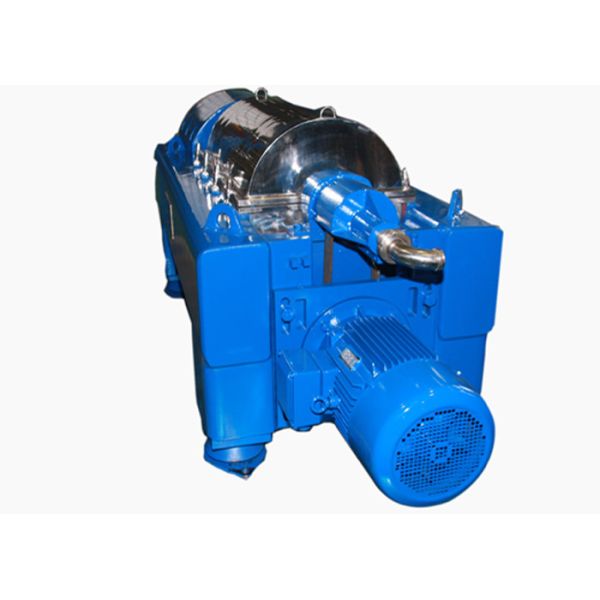
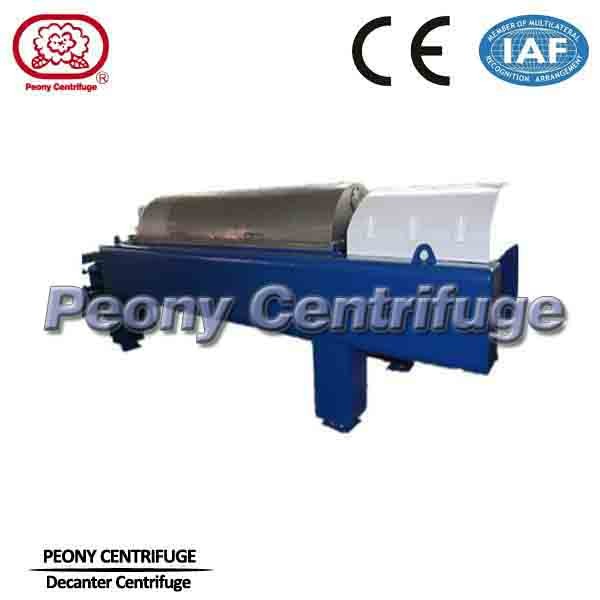
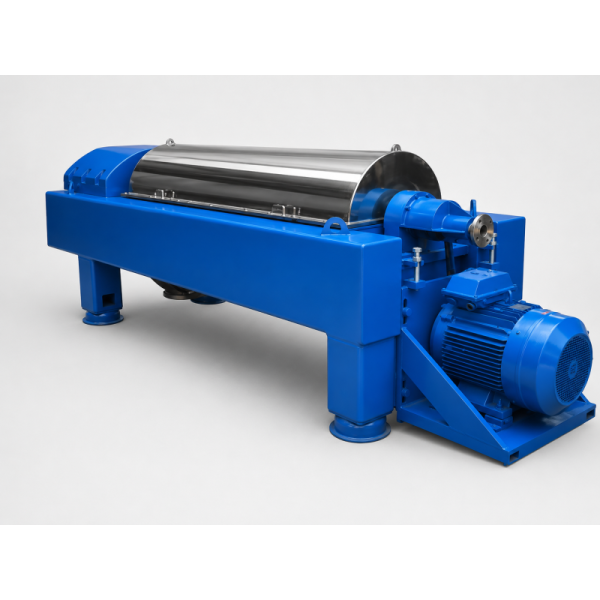
The Three Phase Decanter Centrifuge for Corn Germ Oil Recovery continuously separates recovered corn germ oil, aqueous liquid, and concentrated solids from conditioned process slurry or oil sludge.
It is suitable for corn wet-milling plants, germ-oil extraction facilities, crude corn oil clarification, degumming sludge treatment, and oil recovery from tank residues.
Germ particles, meal fines, fiber, and filter aid may remain suspended in the oil.
Screening and stable feeding help improve solids removal.
Phospholipids, proteins, and fine solids can stabilize the oil-water interface.
Heating or suitable conditioning may be required before separation.
Oil, water, and solids ratios may change between pressing, extraction, storage, and refining stages.
Adjustable speeds and phase-interface control help maintain stable operation.
Incorrect operating settings may increase residual oil in the discharged solids.
Feed rate, temperature, bowl speed, and differential speed should be optimized.
Wetted parts, seals, surface finish, and cleaning systems should meet edible-oil processing requirements.
Corn Germ Slurry / Oil Sludge
→ Screening
→ Heated Feed Tank
→ Three Phase Decanter
→ Oil + Water + Solids
Recovered Oil → Filtration / Refining
Water Phase → Further Treatment
Solids → Recovery / Disposal
Screened and conditioned corn germ slurry or oil sludge enters the rotating bowl.
Agitation maintains uniform temperature and solids concentration.
Centrifugal force moves germ fines, fiber, meal particles, and dense impurities toward the bowl wall.
A concentrated solids layer forms.
The lighter corn germ oil remains closer to the bowl center.
The heavier aqueous phase forms a separate outer liquid layer.
The screw conveyor transports settled solids toward the conical discharge end.
Concentrated solids discharge continuously.
Recovered oil and aqueous liquid leave through separate outlets.
The solids discharge continuously for recovery or further treatment.

| Model | Diameter (mm) | Length (mm) | Length-to-diameter rate | G force | Max solid discharge (m³/h) | Weight (kg) | Dimension (L*W*H) (mm) |
|---|---|---|---|---|---|---|---|
| PDC-10 | 250 | 1000 | 4 | 4080 | 0.4 | 1000 | 2410*800*1080 |
| PDC-12 | 4200 | 1350 | 4 | 3500 | 0.6 | 1200 | 2610*800*1080 |
| PDC-12 | 4200 | 1350 | 4.5 | 3180 | 1.2 | 1800 | 3495*840*1180 |
| PDC-18 | 4000 | 1600 | 4.5 | 3180 | 1.2 | 3200 | 3497*1020*1385 |
| PDC-18 | 450 | 2150 | 4 | 2500 | 2 | 3800 | 4447*1080*1385 |
| PDC-20 | 400 | 2250 | 4.5 | 2500 | 3.5 | 4000 | 4580*1140*1470 |
| PDC-21 | 530 | 2280 | 4.3 | 2500 | 5 | 5000 | 4924*1170*1540 |
| PDC-26 | 655 | 2800 | 4.3 | 2270 | 8 | 7000 | 4300*1900*1350 |
Recovers oil from process slurry, sludge, and tank residues.
Separates germ fines, meal particles, fiber, gums, and filter residues.
Produces separate oil, aqueous liquid, and concentrated solids streams.
Adjustable operating parameters help minimize oil remaining in water and solids.
Sanitary materials and CIP options support edible-oil production.
Please provide:
Yes. The feed should first be screened and conditioned to maintain stable flow and solids concentration.
Yes. It can recover oil while separating water, germ fines, gums, and sediment.
Stable feed temperature, suitable differential speed, correct phase interface, and controlled throughput help reduce oil loss.
Yes, but highly stable emulsions may require heating, pH adjustment, or other conditioning before centrifugation.
Possibly. Moisture, phosphorus, solids, free fatty acids, and color should be checked before further refining.
Peony welcomes cooperation with corn wet-milling plants, corn germ oil producers, edible-oil refineries, engineering contractors, and equipment distributors.
Send us your feed composition, temperature, capacity, recovery target, and downstream process. Our engineering team will recommend a suitable three-phase decanter centrifuge solution.