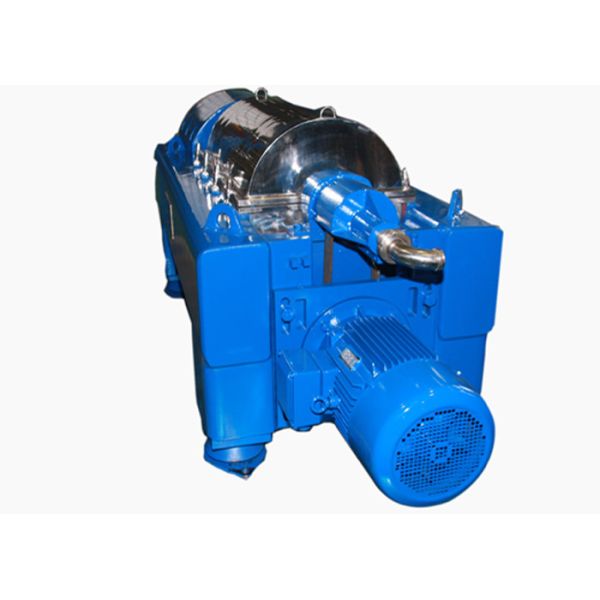
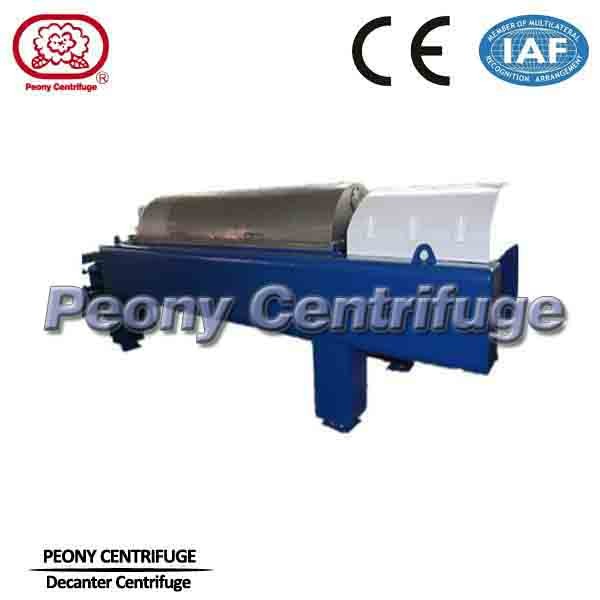
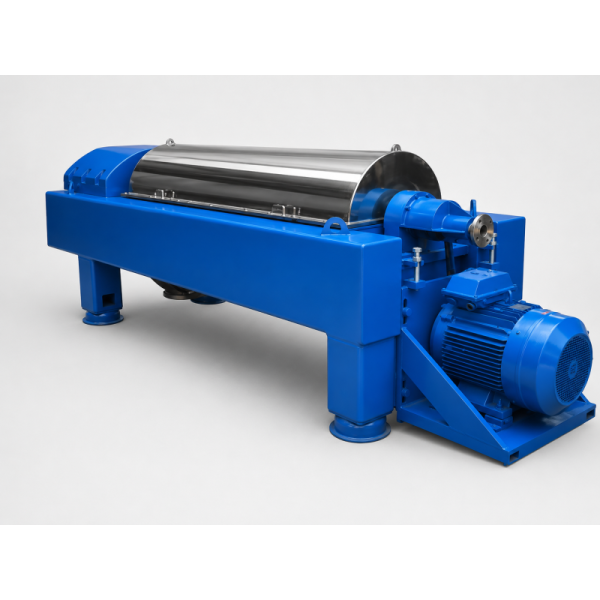
The Three Phase Decanter Centrifuge for Refinery Slop Oil Recovery is designed for continuous separation of recovered oil, water, and concentrated solids from refinery slop streams.
It is suitable for slop oil collected from tank drains, desalter operations, equipment cleaning, process upsets, oily wastewater systems, and off-spec hydrocarbon recovery.
Surfactants, fine solids, asphaltenes, and process chemicals may stabilize the emulsion.
Heating, demulsifier dosing, and controlled mixing can improve separation.
Oil, water, and solids content may change between batches or during one recovery operation.
Adjustable bowl speed, differential speed, feed rate, and phase interface help maintain stable performance.
Heavy hydrocarbons and wax can reduce fluidity.
Feed heating or controlled dilution may be required before centrifugation.
Rust, sand, coke, catalyst fines, and heavy sludge can cause wear or unstable solids discharge.
Wear-resistant scroll protection and high-torque conveying can be provided.
Slop oil may contain chlorides, treatment chemicals, acids, or alkaline residues.
Wetted materials and seals should be selected according to the actual liquid composition.
Peony provides continuous three-phase separation solutions for hydrocarbon recovery, water separation, sludge concentration, and downstream treatment preparation.
Refinery Slop Oil
→ Coarse Screening
→ Heated Agitated Tank
→ Optional Demulsifier Dosing
→ Three Phase Decanter Centrifuge
→ Recovered Oil + Separated Water + Concentrated Solids
Recovered Oil
→ Oil Tank
→ Reprocessing / Blending / Further Purification
Separated Water
→ API Separator / DAF / Biological Treatment
Concentrated Solids
→ Thermal Treatment / Further Dewatering / Controlled Disposal
Screened and heated slop oil enters the rotating bowl through a controlled feed pipe.
Agitation and optional demulsifier dosing maintain a uniform feed and improve phase separation.
High centrifugal force moves rust, sand, coke fines, and other dense solids toward the bowl wall.
The solids form a concentrated outer layer.
The lighter oil phase remains closer to the bowl center.
The heavier water phase forms a separate outer liquid layer.
The screw conveyor transports settled solids toward the conical end.
Concentrated solids discharge continuously through protected outlets.
Recovered oil and separated water leave through independent liquid outlets.
The oil is sent for reprocessing, while the water continues to refinery wastewater treatment.

| Model | Diameter (mm) | Length (mm) | Length-to-diameter rate | G force | Max solid discharge (m³/h) | Weight (kg) | Dimension (L*W*H) (mm) |
|---|---|---|---|---|---|---|---|
| PDC-10 | 250 | 1000 | 4 | 4080 | 0.4 | 1000 | 2410*800*1080 |
| PDC-12 | 4200 | 1350 | 4 | 3500 | 0.6 | 1200 | 2610*800*1080 |
| PDC-12 | 4200 | 1350 | 4.5 | 3180 | 1.2 | 1800 | 3495*840*1180 |
| PDC-18 | 4000 | 1600 | 4.5 | 3180 | 1.2 | 3200 | 3497*1020*1385 |
| PDC-18 | 450 | 2150 | 4 | 2500 | 2 | 3800 | 4447*1080*1385 |
| PDC-20 | 400 | 2250 | 4.5 | 2500 | 3.5 | 4000 | 4580*1140*1470 |
| PDC-21 | 530 | 2280 | 4.3 | 2500 | 5 | 5000 | 4924*1170*1540 |
| PDC-26 | 655 | 2800 | 4.3 | 2270 | 8 | 7000 | 4300*1900*1350 |
Recovered oil, separated water, and concentrated solids are produced continuously.
Conditioned separation reduces valuable oil loss in refinery sludge and wastewater.
Concentrated solids require less storage, transport, and final treatment.
Operating parameters can be adjusted for changing oil, water, and solids ratios.
Gas-tight, explosion-proof, and nitrogen-protected configurations are available.
Please provide:
Not always. Water, sediment, salt, sulfur, and contaminant levels should be tested before blending or reprocessing.
No. It depends on emulsion stability, solids content, temperature, and oil-water separation performance.
Yes. The feed should be evaluated for salts, solids, viscosity, corrosion risk, and emulsion stability.
Feed equalization, adjustable phase interface, bowl speed, and flow control help maintain stable separation.
Usually only after further oil and solids removal. API separation, DAF, or another pretreatment stage may be required.
Peony welcomes distributor and agent cooperation with refineries, oil terminals, slop oil processors, hazardous-waste companies, tank-cleaning contractors, and oily-wastewater treatment partners.
We support partners with slop oil testing, three-phase decanter selection, heating and demulsifier design, wear protection, gas-tight configuration, commissioning, spare parts, and after-sales service.
Send us your slop oil data, including oil-water-solids ratio, viscosity, temperature, required capacity, recovery target, and safety requirements. Our engineering team will recommend a suitable three-phase decanter centrifuge solution.