Specifications
Certification :
ASME,ISO 9001,CE, NSF/ANSI 61, WRAS, ISO 28765, LFGB, BSCI, ISO 45001
Price :
10000 USD
Material :
Stainless Steel, Carbon Steel
Supply Ability :
200 sets / days
Applications :
Chemical, Food Processing, Beverage Processing, Brewing, Metallurgy, Oil Refining, Pharmaceuticals
Payment Terms :
L/C,T/T
Delivery Time :
2 months
Design Pressure :
0.1-10 Mpa
Place of Origin :
China
MOQ :
1 Sets
Brand Name :
Center Enamel
Size :
Customized
Description
Brewery Pressure-Rated Vessels FAQ: Everything You Need to Know

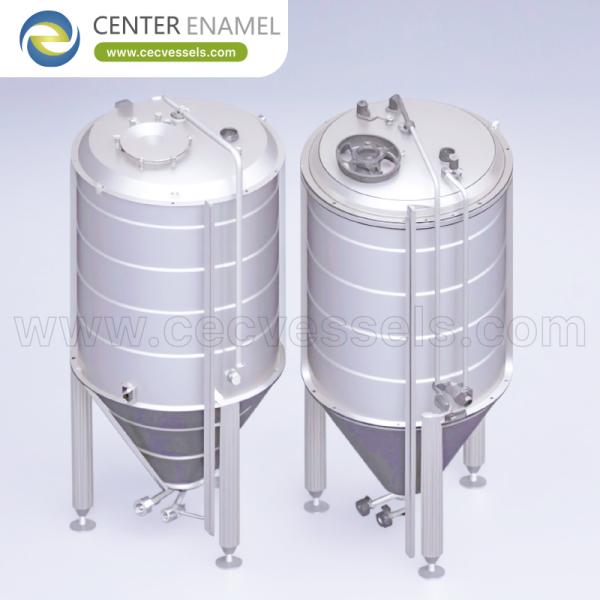
Answering the core question: What are brewery pressure-rated vessels and why are they essential? Brewery pressure-rated vessels are heavy-duty, certified containment units engineered to safely withstand positive internal pressures during active fermentation, natural carbonation conditioning, and closed-loop liquid transfers. Serving as the structural core of commercial brewhouses and cellars—including cylindroconical fermentation tanks (CCTs) and bright beer tanks (BBTs)—these precision stainless steel vessels maintain strict thermodynamic stability, gas containment, and absolute sanitary compliance to ensure brewing safety and product consistency.

1. Core Engineering and Operational Principles

Commercial brewing requires vessels capable of handling complex pneumatic and thermodynamic forces:

  • Natural Carbonation via Spunding: Pressure-rated fermenters allow brewers to utilize spunding valves to trap excess carbon dioxide (CO_2) produced during the final stages of fermentation, achieving natural carbonation without forced injection.
  • Closed-Loop Transfers: Operating under positive pressure enables brewers to move beer between vessels using inert gas (such as CO_2 or nitrogen), entirely eliminating oxygen pickup, oxidation, and microbial spoilage.
  • Cold Crashing Tolerance: High structural integrity allows rapid temperature drops (cold crashing) to precipitate yeast and chill haze without collapsing the vessel headspace.
2. Safety Compliance and International Certification

Because pressurized brewing equipment stores substantial mechanical energy, strict regulatory adherence is mandatory:

  • ASME and PED Certification: High-quality commercial pressure vessels are designed, tested, and certified to recognized international codes, such as the American Society of Mechanical Engineers (ASME) Boiler and Pressure Vessel Code or the European Pressure Equipment Directive (PED).
  • Over-Pressure Protection: Every vessel includes certified pressure-vacuum relief valves (PVRVs) and burst discs to protect the structural shell against over-pressurization or vacuum implosion during cleaning and cooling cycles.
Brewery Pressure-Rated Vessels Specifications Matrix
Vessel Category Typical Operating Pressure Range Primary Safety / Design Code Core Cellar Function
Cylindroconical Fermenter (CCT) 1.5 to 3.0 bar (22 to 43 psi) ASME Section VIII / PED Primary fermentation, maturation, and pressure spunding
Bright Beer Tank (BBT) 2.0 to 3.0 bar (29 to 43 psi) ASME Section VIII / PED Carbonation conditioning, lagering, and storage
Local Yeast Brink 1.0 to 2.0 bar (15 to 29 psi) ASME / Sanitary Code Temporary yeast storage and sterile pitching transfer
Frequently Asked Questions (FAQ)

Q: What is a brewery pressure-rated vessel?

A: A brewery pressure-rated vessel is a certified, sanitary stainless steel container engineered to safely contain positive internal pressures during beer fermentation, carbonation conditioning, and closed transfer operations.

Q: Why must commercial brewery tanks be pressure-rated?

A: They must be pressure-rated to safely manage natural carbonation via spunding valves, execute closed-loop transfers without oxygen exposure, and withstand structural stresses during cold crashing and cleaning cycles.

Q: What safety codes apply to industrial brewery pressure vessels?

A: Premium brewery vessels comply with international codes such as ASME (American Society of Mechanical Engineers) or PED (Pressure Equipment Directive), featuring certified pressure relief valves, vacuum breakers, and burst discs.

Q: What materials are used to construct brewery pressure vessels?

A: They are constructed from high-grade austenitic stainless steel (such as AISI 304 or 316L) with electropolished internal surfaces to guarantee corrosion resistance, structural strength, and absolute hygiene.

Q: How do pressure-rated fermenters handle temperature control?

A: They feature laser-welded dimple cooling jackets wrapped around the cylindrical shell and cone, circulating chilled glycol to absorb metabolic heat and manage thermal targets.

Send your message to this supplier
Send Now

Brewery Pressure-Rated Vessels FAQ: Everything You Need to Know

Ask Latest Price
Certification :
ASME,ISO 9001,CE, NSF/ANSI 61, WRAS, ISO 28765, LFGB, BSCI, ISO 45001
Price :
10000 USD
Material :
Stainless Steel, Carbon Steel
Supply Ability :
200 sets / days
Applications :
Chemical, Food Processing, Beverage Processing, Brewing, Metallurgy, Oil Refining, Pharmaceuticals
Payment Terms :
L/C,T/T
Contact Supplier
Brewery Pressure-Rated Vessels FAQ: Everything You Need to Know

Shijiazhuang Zhongzheng Technology Co., Ltd.

Verified Supplier
1 Years
hebei, shijiazhuang
Since 2008
Business Type :
Manufacturer
Total Annual :
100,000,000-200,000,000
Employee Number :
400~500
Certification Level :
Verified Supplier
Contact Supplier
Submit Requirement