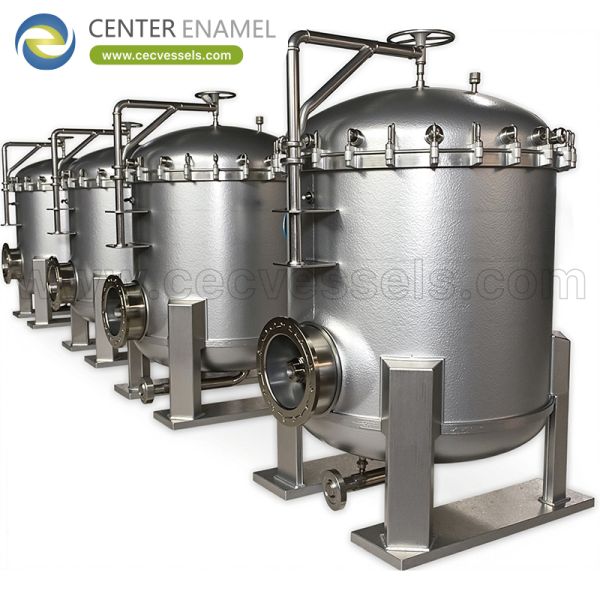
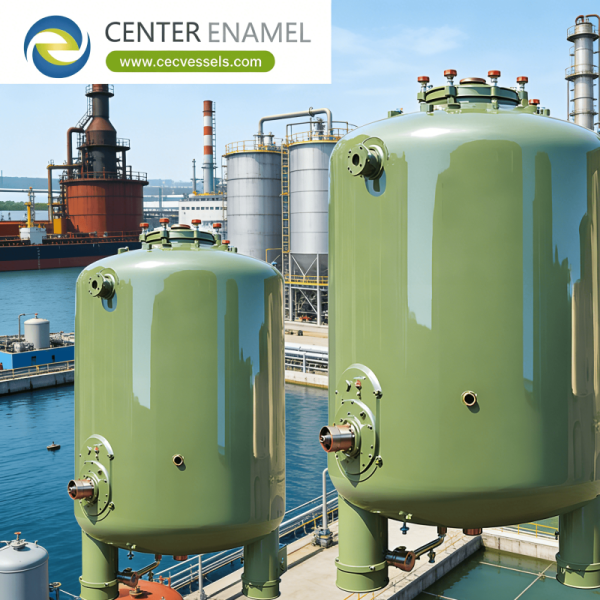
Specifications
Certification :
ASME,ISO 9001,CE, NSF/ANSI 61, WRAS, ISO 28765, LFGB, BSCI, ISO 45001
Price :
10000 USD
Material :
Stainless Steel, Carbon Steel
Supply Ability :
200 sets / days
Applications :
Chemical, Food Processing, Beverage Processing, Brewing, Metallurgy, Oil Refining, Pharmaceuticals
Payment Terms :
L/C,T/T
Delivery Time :
2 months
Design Pressure :
0.1-10 Mpa
Place of Origin :
China
MOQ :
1 Sets
Brand Name :
Center Enamel
Size :
Customized
Description
A Comprehensive Guide to Pressure Vessels: All You Need To Know

Pressure vessels are fundamental components across diverse industrial sectors, including oil and gas refining, chemical processing, power generation, and aerospace. Defined as closed containment containers designed to hold gases or liquids at pressures significantly different from ambient atmospheric pressure, these structures must maintain absolute integrity under intense mechanical and thermal loads. Due to the catastrophic risks associated with containment failure, pressure vessel engineering is governed by strict global design codes, rigorous material selection, and sophisticated inspection protocols.

1. Core Operating Principles and Mechanical Design

The structural integrity of a pressure vessel relies on balanced force distribution and precise geometrical configuration:

  • Shape Optimization: Most pressure vessels are built as cylindrical shells with hemispherical, elliptical, or dished heads because these shapes distribute internal stress evenly, minimizing localized stress concentrations.

  • Stress Management: Internal pressure generates two primary mechanical forces: hoop stress (circumferential stress acting to split the cylinder longitudinally) and longitudinal stress (axial stress acting to pull the vessel apart). Cylinder walls and thickness calculations are explicitly engineered to withstand these vector forces.

  • Maximum Allowable Operating Pressure (MAOP): This defines the upper pressure limit a vessel can safely handle at a specified operating temperature, factoring in corrosion allowances and safety margins.

2. Material Selection and Fabrication Requirements

Choosing the correct material is critical to preventing structural degradation, hydrogen embrittlement, or stress corrosion cracking:

  • Carbon Steels: Cost-effective and widely used for general industrial processing and standard pressure containment.

  • Stainless Steels & Nickel Alloys: Deployed in corrosive environments, high-temperature chemical reactions, and specialized petrochemical services.

  • Aluminum & Titanium: Selected for specialized applications requiring high strength-to-weight ratios or superior corrosion resistance.

  • Welding and Fabrication Quality: Because seams and joints represent potential weak points, all welding must comply with certified welding procedures (WPS) followed by comprehensive non-destructive examination (NDE) such as radiographic or ultrasonic testing.

3. Global Regulatory Standards and Compliance

Pressure vessel manufacturing and operation are strictly regulated by international codes to ensure public and workplace safety:

  • ASME Boiler and Pressure Vessel Code (BPVC): Developed by the American Society of Mechanical Engineers, Section VIII is the benchmark for industrial pressure vessels, divided into Division 1 (rules-based design), Division 2 (alternative rules with advanced analysis), and Division 3 (ultra-high pressure applications).

  • European Pressure Equipment Directive (PED 2014/68/EU): Mandates essential safety requirements for pressure equipment marketed within the European Economic Area, categorizing equipment based on fluid hazard group and volume.

Pressure Vessel Code Divisions and Standards Matrix
Parameter / Feature ASME BPVC Section VIII - Div. 1 ASME BPVC Section VIII - Div. 2 European PED (2014/68/EU)
Design Methodology Design-by-Rule (conservative safety factors) Design-by-Analysis (optimized wall thickness) Risk-based conformity assessment (Categories I–IV)
Pressure Application Standard industrial vessels (MAWP generally > 15 psi) Higher-pressure or optimized commercial systems Pressure equipment with max allowable pressure > 0.5 bar
Engineering Rigor Standardized calculation formulas and stress limits Comprehensive finite element analysis (FEA) and stress distribution Harmonized European standards with Notified Body oversight
Primary Focus Broad accessibility and proven safety margins Material efficiency, weight reduction, and high performance Cross-border regulatory compliance and hazard grouping
Frequently Asked Questions (FAQ)

Q: What is a pressure vessel?

A: A pressure vessel is a closed container designed to hold gases or liquids at pressures substantially higher or lower than ambient atmospheric pressure.

Q: What is the difference between a storage tank and a pressure vessel?

A: While standard storage tanks typically hold liquids at or near atmospheric pressure, pressure vessels are engineered to withstand high internal or external pressures significantly above 1 atmosphere (typically exceeding 15 psi under ASME codes).

Q: Why are ASME codes important for pressure vessels?

A: ASME codes provide standardized rules for the design, material selection, fabrication, inspection, and testing of pressure vessels, ensuring uniform safety and minimizing the risk of catastrophic failure.

Q: What inspection methods are used to verify pressure vessel safety?

A: Certified inspectors utilize non-destructive examination (NDE) methods—such as radiographic (X-ray) testing, ultrasonic testing, liquid penetrant testing, and hydrostatic pressure testing—to detect flaws and verify structural integrity.

Send your message to this supplier
Send Now

A Comprehensive Guide to Pressure Vessels: All You Need To Know

Ask Latest Price
Certification :
ASME,ISO 9001,CE, NSF/ANSI 61, WRAS, ISO 28765, LFGB, BSCI, ISO 45001
Price :
10000 USD
Material :
Stainless Steel, Carbon Steel
Supply Ability :
200 sets / days
Applications :
Chemical, Food Processing, Beverage Processing, Brewing, Metallurgy, Oil Refining, Pharmaceuticals
Payment Terms :
L/C,T/T
Contact Supplier
A Comprehensive Guide to Pressure Vessels: All You Need To Know

Shijiazhuang Zhongzheng Technology Co., Ltd.

Verified Supplier
1 Years
hebei, shijiazhuang
Since 2008
Business Type :
Manufacturer
Total Annual :
100,000,000-200,000,000
Employee Number :
400~500
Certification Level :
Verified Supplier
Contact Supplier
Submit Requirement