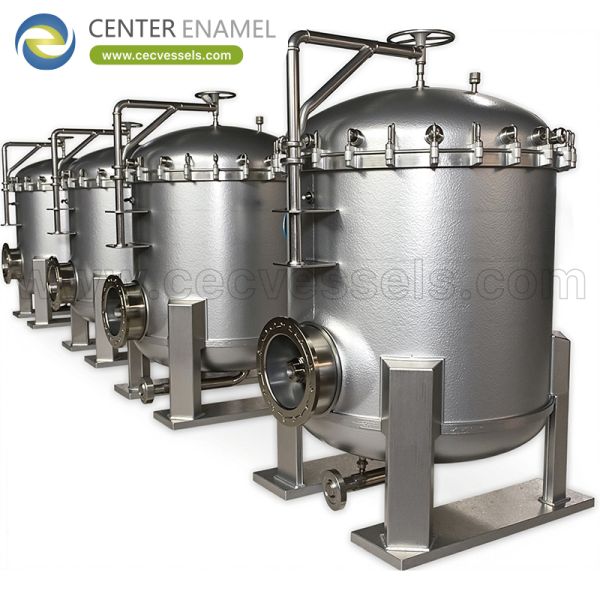
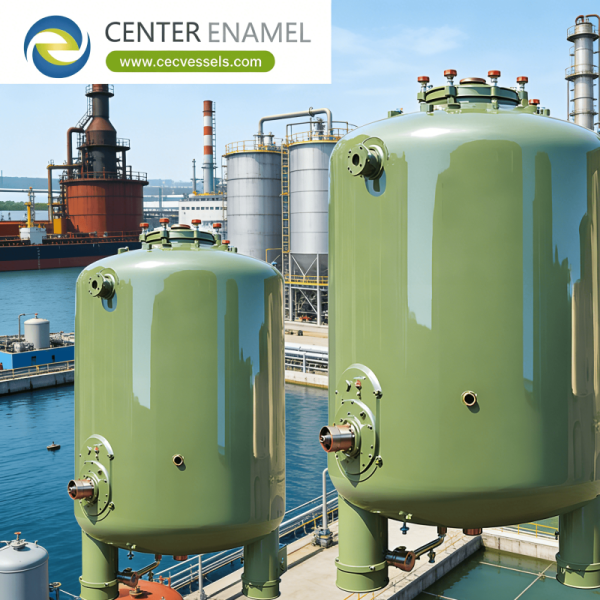
Specifications
Certification :
ASME,ISO 9001,CE, NSF/ANSI 61, WRAS, ISO 28765, LFGB, BSCI, ISO 45001
Price :
10000 USD
Material :
Stainless Steel, Carbon Steel
Supply Ability :
200 sets / days
Applications :
Chemical, Food Processing, Beverage Processing, Brewing, Metallurgy, Oil Refining, Pharmaceuticals
Payment Terms :
L/C,T/T
Delivery Time :
2 months
Design Pressure :
0.1-10 Mpa
Place of Origin :
China
MOQ :
1 Sets
Brand Name :
Center Enamel
Size :
Customized
Description
Pressurized vs. Atmospheric Storage Tanks: Understanding the Key Differences

Answering the core question: What is the difference between pressurized and atmospheric storage tanks? The primary distinction lies in their operating pressure thresholds and structural design requirements. Atmospheric storage tanks are engineered to hold bulk liquids at or near ambient atmospheric pressure, relying on venting systems and liquid hydrostatic head loads. In contrast, pressurized storage tanks are heavy-duty, closed-containment vessels designed to safely store liquefied gases, volatile chemicals, and high-pressure fluids at internal pressures significantly higher than the surrounding atmosphere. Selecting the correct containment system is critical for plant safety, environmental compliance, and process efficiency.

1. Core Operating Principles of Pressurized Storage Tanks

Pressurized storage tanks are engineered to prevent volatile contents from flashing into gas and to contain high-energy fluids safely:

  • Operating Pressure Thresholds: Designed to operate at internal pressures well above atmospheric levels—typically ranging from 15 psi to several thousand psi depending on the media.

  • Structural Geometry: Built primarily as heavy-walled horizontal cylinders (often called "bullets") or massive spherical vessels to distribute high hoop and longitudinal stresses evenly.

  • Governing Safety Codes: Strictly regulated by pressure vessel standards such as the ASME Boiler and Pressure Vessel Code (BPVC) Section VIII or international equivalents.

  • Primary Applications: Storing liquefied petroleum gas (LPG), liquid natural gas (LNG), compressed anhydrous ammonia, volatile petrochemical intermediates, and high-pressure reaction gases.

2. Core Operating Principles of Atmospheric Storage Tanks

Atmospheric storage tanks are optimized for the bulk containment of non-volatile or stable liquids where internal pressurization is unnecessary:

  • Operating Pressure Thresholds: Designed to operate at ambient atmospheric pressure, though certain low-pressure designs (per API 650 Annex F) can accommodate mild internal pressures up to 2.5 psi.

  • Venting Mechanisms: Equipped with open vents, gooseneck breathers, or Pressure-Vacuum Relief Valves (PVRVs) to allow air and vapor to flow freely as liquid levels fluctuate during filling and emptying cycles.

  • Structural Geometry: Typically vertical cylindrical flat-bottom structures with fixed or floating roofs, where wall thickness is calculated based on liquid hydrostatic head pressure rather than internal gas pressure.

  • Governing Safety Codes: Fabricated in accordance with standards such as API 650 (welded steel tanks for oil storage), API 620, or AWWA D100.

  • Primary Applications: Bulk storage of municipal water, wastewater treatment fluids, industrial process water, diesel, fuel oil, and heavy chemical feedstocks.

Pressurized vs. Atmospheric Storage Tanks Comparison Matrix

Parameter / Feature Pressurized Storage Tank Atmospheric Storage Tank
Operating Pressure High internal pressure (typically > 15 psi / 100 kPa) Ambient atmospheric pressure ($\le$ 2.5 psi max)
Primary Structural Load Intense internal hoop and longitudinal gas stresses Liquid hydrostatic head weight (downward and outward)
Vessel Geometry Spherical, horizontal cylindrical bullets, or thick-walled drums Vertical cylindrical shells with flat bottoms and domed/conical roofs
Venting & Relief System Sealed system with high-capacity spring-loaded safety relief valves Open vents, breather hatches, or PVRV assemblies
Wall Construction Thick, heavy-gauge metallic or composite shells Thinner-grade steel plates engineered for volume capacity
Governing Standards ASME BPVC Section VIII, EN 13445 API 650, API 620, UL 142, AWWA D100
Best Suited Application LPG, LNG, volatile chemical gases, and pressurized reactants Bulk water, wastewater, diesel fuel, and non-volatile liquid storage

Frequently Asked Questions (FAQ)

Q: What is the main difference between a pressurized and an atmospheric storage tank?

A: Pressurized tanks are heavy-duty, sealed vessels engineered to contain gases or volatile liquids under high internal pressure. Atmospheric tanks operate at or near ambient pressure and are designed to store bulk liquids based on hydrostatic head loads.

Q: Why do pressurized tanks require specialized geometries like spheres or bullets?

A: Spheres and horizontal cylindrical bullets distribute internal mechanical stress evenly across the vessel walls. This geometry allows the tank to withstand high internal pressures safely without localized stress concentration points.

Q: Can an atmospheric storage tank handle pressurized gases?

A: No. Standard atmospheric tanks cannot withstand internal gas pressurization. Introducing high pressure into an atmospheric tank will cause structural failure, roof-to-shell joint separation, or catastrophic rupture.

Q: What safety devices protect pressurized tanks from overpressure?

A: Pressurized tanks are equipped with spring-loaded pressure relief valves (PRVs), rupture disks, and emergency flare systems designed to discharge excess gas safely if internal pressure exceeds safe operating limits.

Send your message to this supplier
Send Now

Pressurized vs. Atmospheric Storage Tanks: Understanding the Key Differences

Ask Latest Price
Certification :
ASME,ISO 9001,CE, NSF/ANSI 61, WRAS, ISO 28765, LFGB, BSCI, ISO 45001
Price :
10000 USD
Material :
Stainless Steel, Carbon Steel
Supply Ability :
200 sets / days
Applications :
Chemical, Food Processing, Beverage Processing, Brewing, Metallurgy, Oil Refining, Pharmaceuticals
Payment Terms :
L/C,T/T
Contact Supplier
Pressurized vs. Atmospheric Storage Tanks: Understanding the Key Differences

Shijiazhuang Zhongzheng Technology Co., Ltd.

Verified Supplier
1 Years
hebei, shijiazhuang
Since 2008
Business Type :
Manufacturer
Total Annual :
100,000,000-200,000,000
Employee Number :
400~500
Certification Level :
Verified Supplier
Contact Supplier
Submit Requirement