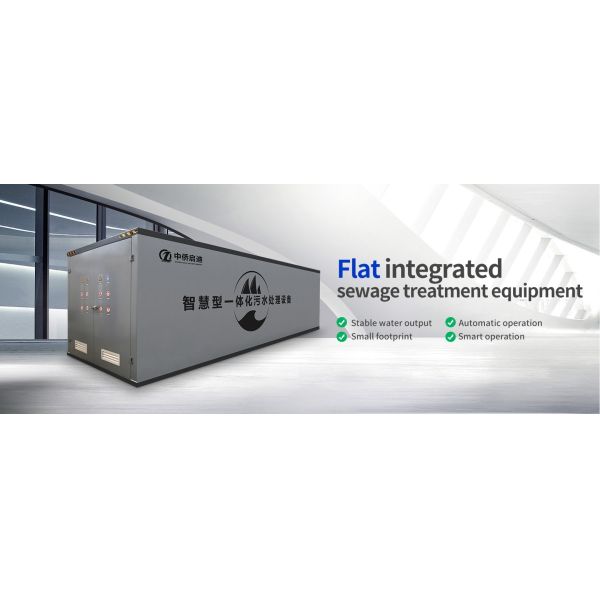
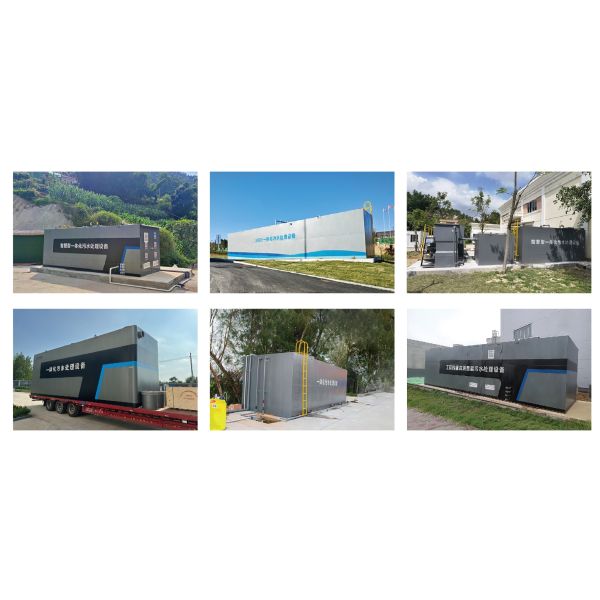
Integrated Sewage Treatment Equipment: Processes and Treatment Flow Introduction
Integrated sewage treatment equipment is a highly efficient device that integrates multiple units such as pretreatment, biochemical treatment, sedimentation, and disinfection. Its core lies in purifying sewage to meet discharge or reuse standards through microbial degradation and physical separation. Mainstream processes include A/O, A²/O, MBR, MBBR, etc. The standard flow is: Pretreatment → Biochemical Treatment → Solid-Liquid Separation → Advanced Treatment → Disinfection & Discharge.

1. Core Treatment Process (Five Standard Purification Steps)
1.1 Pretreatment Stage (Physical Interception)
- Grid: Removes large impurities such as branches, plastic bags, and sand to prevent pipe and equipment clogging.
- Equalization Tank: Balances fluctuations in water quality and quantity (residence time: 4–8 hours), with pre-aeration to control odors and create stable conditions for the biochemical stage.
1.2 Biochemical Treatment Stage (Core Degradation)
Sewage enters anoxic/anaerobic and aerobic tanks, where microorganisms decompose pollutants:
- Anaerobic/Anoxic Tank: Denitrifying bacteria convert nitrate nitrogen to nitrogen gas (denitrification), and phosphorus-accumulating organisms release phosphorus.
- Aerobic Tank: Aerobic bacteria decompose organic matter (reducing COD/BOD), and nitrifying bacteria convert ammonia nitrogen to nitrate nitrogen.
1.3 Solid-Liquid Separation Stage
- Traditional Processes (A/O, A²/O): Gravity sedimentation in a secondary sedimentation tank; part of the sludge is recycled, and excess sludge is discharged regularly.
- MBR Process: High-efficiency filtration using an MBR membrane tank (0.1–0.4μm micropores) instead of a sedimentation tank, producing clearer effluent.
1.4 Advanced Treatment (Optional)
For high effluent requirements, add quartz sand/activated carbon filtration, advanced oxidation (ozone), etc., to further reduce turbidity and remove trace pollutants.
1.5 Disinfection and Discharge
Disinfect using ultraviolet (UV) (no secondary pollution) or sodium hypochlorite to kill bacteria and viruses before qualified discharge or reuse.


2. Detailed Introduction to Mainstream Processes
2.1 A/O Process (Anoxic-Oxic)
- Principle: Sewage flows through the anoxic tank (A) for denitrification and the aerobic tank (O) for organic matter degradation and nitrification.
- Features: Simple flow, low cost, excellent denitrification effect, strong shock load resistance.
- Application: Rural areas, residential quarters, scenic spots; effluent meets Class 1 B Standard.
2.2 A²/O Process (Anaerobic-Anoxic-Oxic)
- Principle: Adds an anaerobic tank based on A/O to achieve denitrification, dephosphorization, and organic matter removal.
- Features: Excellent nitrogen and phosphorus removal performance, comprehensive treatment effect.
- Application: Municipal sewage, large residential communities; effluent meets Class 1 A Standard.
2.3 MBR Membrane Bioreactor (A/O + MBR)
- Principle: Combines biochemical treatment with micro/ultrafiltration membrane separation to effectively retain microorganisms and suspended solids.
- Features: Minimal footprint, nearly zero SS in effluent, direct reuse possible, high automation.
- Application: Hospitals, high-end residential areas, reclaimed water projects; effluent meets Class 1 A / Reuse Standard.
2.4 MBBR Moving Bed Biofilm Reactor
- Principle: Suspended carriers are added to the tank, where microorganisms attach and grow to form biofilms.
- Features: High volume load, strong shock resistance, low sludge production, no sludge recirculation required.
- Application: Industrial wastewater, renovation projects, high-load scenarios; effluent meets Class 1 A Standard.
3. Process Comparison and Selection
| Process |
Core Advantages |
Effluent Standard |
Application Scenarios |
| A/O |
Economical, stable, easy maintenance |
Class 1 B |
Rural areas, ordinary residential quarters |
| A²/O |
Excellent nitrogen and phosphorus removal |
Class 1 A |
Municipal sewage, large residential areas |
| MBR |
Optimal water quality, small footprint, reusable |
Class 1 A / Reuse |
Hospitals, scenic spots, water-scarce regions |
| MBBR |
Strong shock resistance, high load, low sludge yield |
Class 1 A |
Industrial wastewater, renovation projects |
4. Typical Complete Process (Taking MBR as an Example)
Sewage → Grid → Equalization Tank → Anaerobic Tank → Aerobic Tank → MBR Membrane Tank → Disinfection Tank → Clean Water Tank → Qualified Discharge / Reuse