CUSTOM LiFePO4 BATTERIES | EQUIPMENT INTEGRATION
Compact LiFePO4 packs for compatible industrial robots: 24 V 40 Ah and 48 V 50 Ah options, multi-level BMS, RS485/CAN communication and project-specific parallel integration support.
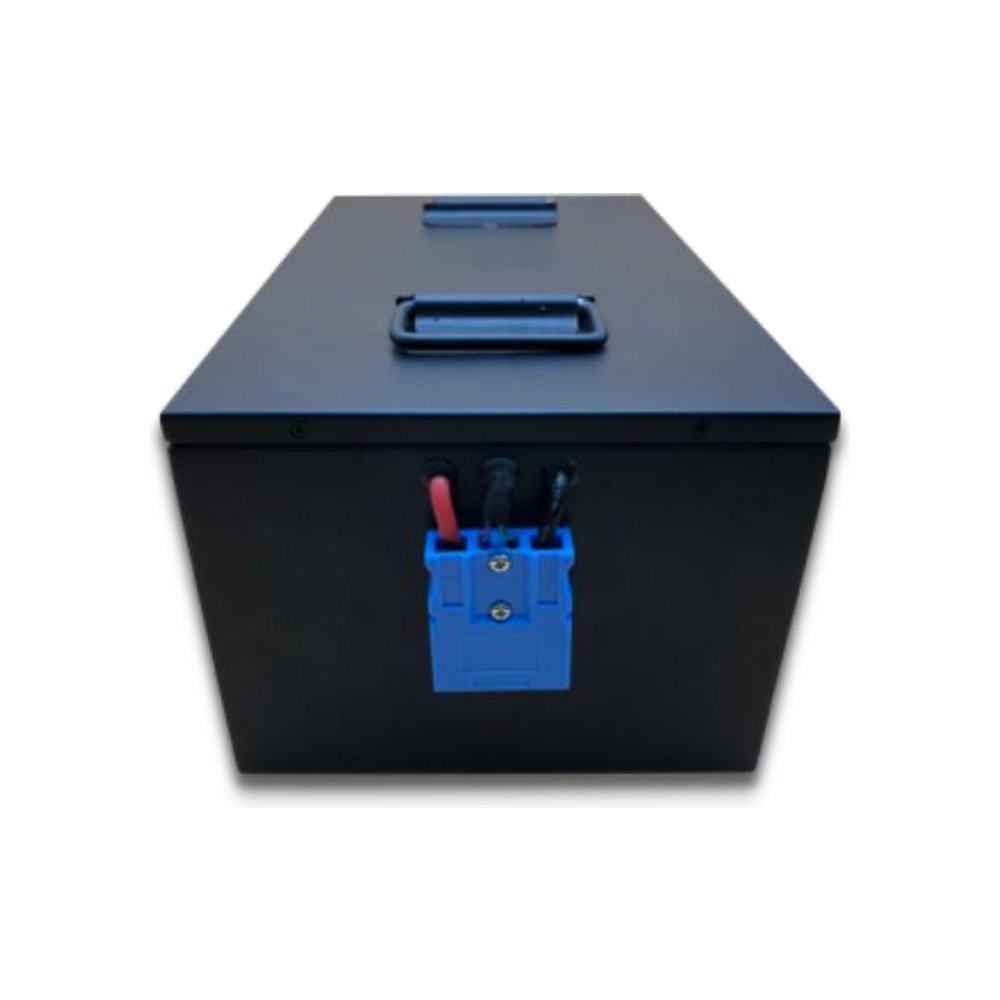
Fit battery power into the available robot space and duty cycle. The robot battery series offers 24 V 40 Ah and 48 V 50 Ah options in compact enclosures, with approximate weights of 11 kg and 23 kg. Multi-level BMS management, communication and parallel-system support provide a basis for integration into compatible production and material-transfer equipment.
YINTU is an energy storage and battery solution provider. We work with capable manufacturing partners to coordinate product selection, technical clarification and the agreed supply scope for customer equipment projects.
The two enclosures measure 280 x 180 x 150 mm and 330 x 240 x 160 mm in source order. Evaluate mounting, connector clearance and service access alongside the available robot battery-bay space.
The series includes multi-level battery management for coordinated monitoring and protection. The equipment integration team confirms operating limits and the control response expected from the robot system.
RS485/CAN interfaces support communication with compatible controllers. Electrical interface names do not guarantee message compatibility; the agreed protocol and required battery data are checked during integration.
Multi-battery parallel technology is supported for project-specific system integration. The permitted pack quantity, matching rules, charging strategy and control logic are confirmed before defining a combined battery system.
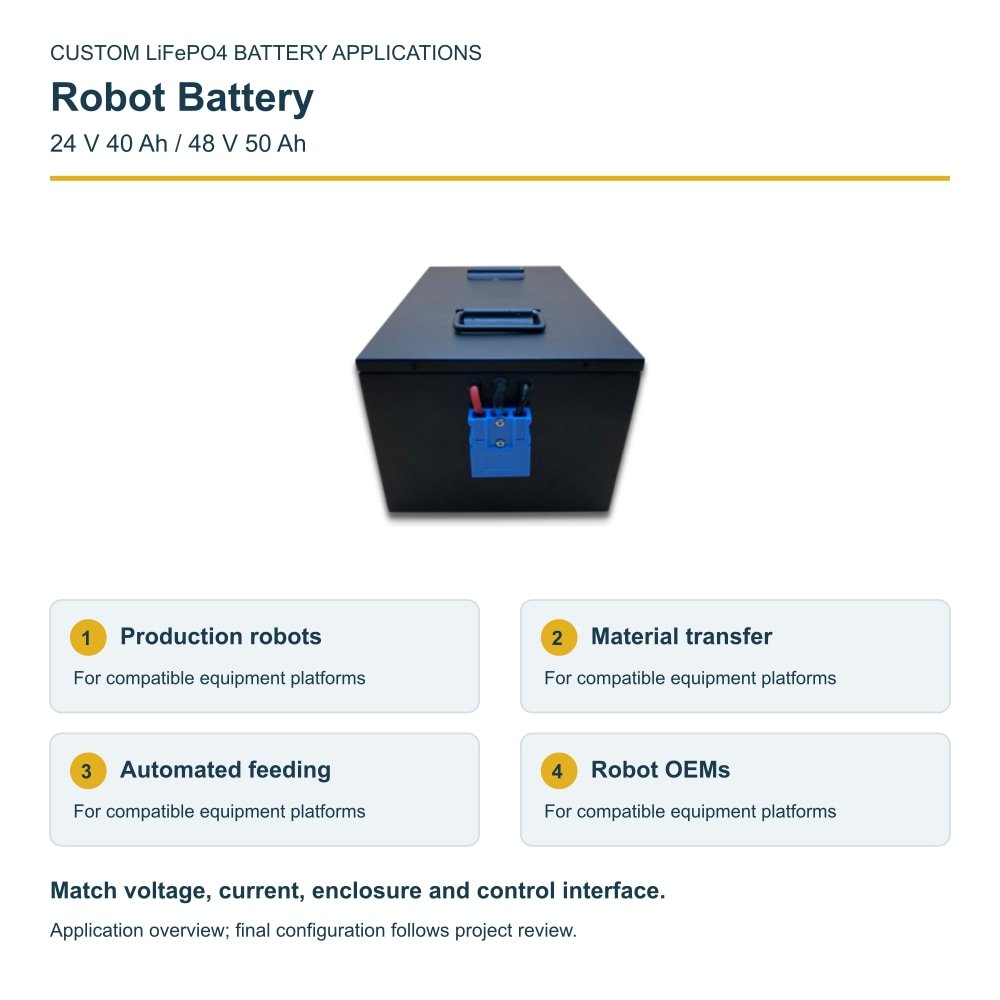
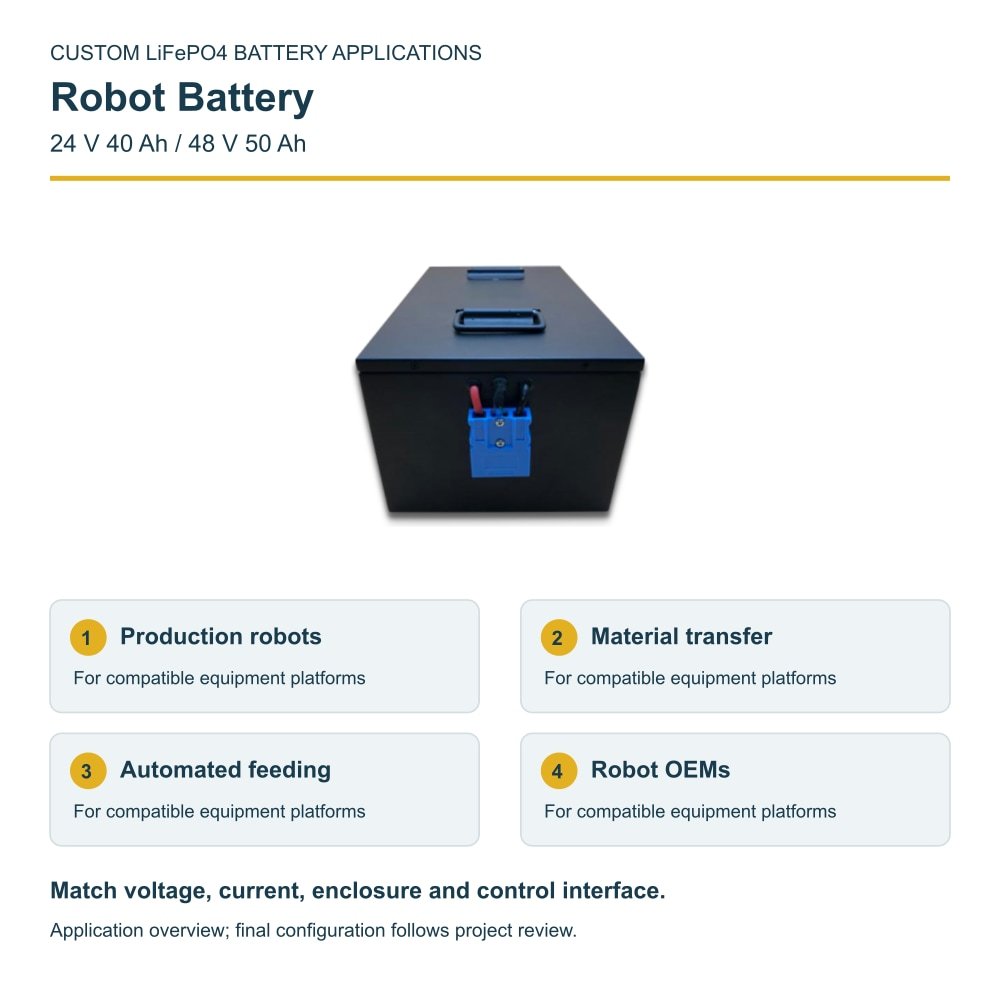
Provide battery power for suitable robotic modules used in manufacturing workflows. The voltage, motor peaks and operating cycle determine whether the compact pack is appropriate for the intended module.
Integrate batteries into compatible platforms moving parts between work areas. Capacity selection follows movement duty and charging opportunities, while pack weight and mounting position are evaluated against the robot design.
Support suitable battery-operated parts delivery and feeding equipment. A defined charger profile and communication interface help the integrator coordinate battery use with the equipment operating sequence.
Use the two listed configurations as starting points for an OEM battery requirement. YINTU coordinates enclosure, connectors, communication and parallel-system clarification with manufacturing partners for the selected robot platform.
| Parameter | 24V40Ah | 48V50Ah |
|---|---|---|
| Battery chemistry | LiFePO4 | LiFePO4 |
| Nominal voltage | 24 V | 48 V |
| Rated capacity | 40 Ah | 50 Ah |
| End-of-charge voltage | 29.2 V | 54.75 V |
| End-of-discharge voltage | 20.0 V | 40.5 V |
| Maximum charge current | 20 A | 25 A |
| Maximum discharge current | 40 A | 50 A |
| Communication | RS485 / CAN | RS485 / CAN |
| Dimensions (mm; source order) | 280 x 180 x 150 | 330 x 240 x 160 |
| Approximate weight | 11 kg | 23 kg |
Dimensions retain the source order. Parallel quantity, charger profile and control logic are project-specific. The source product illustration has limited resolution; the original product appearance is retained.
The battery is selected as part of an equipment power system. A matched charging source supplies the pack, and the approved equipment interface connects it to the intended load. Communication and monitoring functions follow the selected configuration. Protection, cable sizing, switching and installation details belong to the final equipment design.
Start with the equipment requirements: robot bus voltage, motor peak current and duration, duty cycle, battery bay, connector, charger or docking interface, RS485/CAN protocol and any parallel-system requirement. We use this information to compare the listed configurations and identify the technical points that need alignment with the manufacturing partner.
Charger, display, wiring, connectors, monitoring services and installation support are included only where specified in the quotation. Certification requirements, warranty and performance commitments are confirmed for the selected configuration; the series listing does not establish a blanket approval for every application.
The datasheet states parallel-system support but does not specify a maximum quantity. YINTU coordinates the permitted quantity, pack matching, charging and control requirements for the proposed system.
Share the equipment model or design, voltage and current requirements, duty cycle, available installation space, charger information and the required control interface. Include any destination-specific testing or approval requirements.
The source images illustrate the product series. Enclosure, terminals, cables and accessories follow the selected configuration and approved drawing. Dimensions in the table retain the source order unless otherwise confirmed.
Send YINTU your equipment requirements and quantity plan. We will coordinate a suitable battery configuration and a clear technical and supply proposal with our manufacturing partners.
Reference: YT-Robot Battery Series datasheet, V1.0, October 2026. The original PDF is attached. Where a value is marked with an asterisk, the engineering recommendation in this page requires manufacturer confirmation before order and does not amend the original source document.