CUSTOM LiFePO4 BATTERIES | EQUIPMENT INTEGRATION
Custom LiFePO4 batteries for compatible construction vehicles: 51.2 V, 80 V and 96 V options, 100 A maximum charging, 200 A maximum discharge, RS485/CAN communication and touch-screen display support.
Match battery power to the machine and its working cycle. This series offers three electrical configurations for compatible construction transport, material-moving and special-purpose vehicles. A 200 A maximum discharge rating across the range supports selection around the equipment controller and load profile, while the enclosure options help the integration team plan battery-bay packaging.
YINTU is an energy storage and battery solution provider. We work with capable manufacturing partners to coordinate product selection, technical clarification and the agreed supply scope for customer equipment projects.
Choose 51.2 V, 80 V or 96 V to suit the approved controller and motor system. Voltage selection comes before capacity sizing; the pack must operate across the full voltage window expected by the machine.
All three configurations list a 200 A discharge limit. Review acceleration, lifting or auxiliary load peaks and their duration against the complete system design rather than treating the maximum current as a universal continuous duty rating.
The third listed enclosure dimension is 225 mm for each version. The different footprints allow packaging review around a defined battery bay, cable access and mounting arrangement; the source does not identify dimension orientation.
The series supports 100 A maximum charging, RS485/CAN communication and touch-screen display integration. The charger, display supply and communication messages are selected for the equipment project.
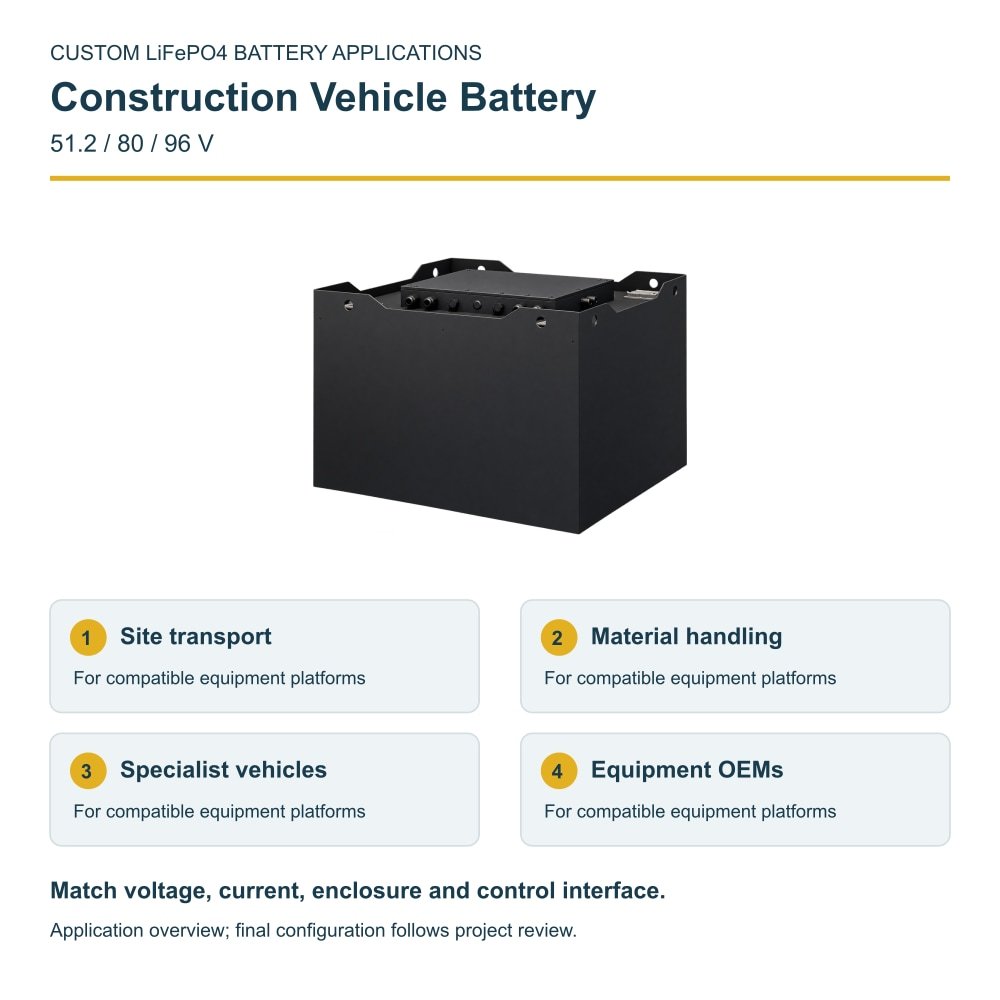
Supply compatible site transport vehicles that move people, tools or materials between work areas. Battery selection follows payload, gradient, travel schedule and recharge opportunities so the capacity supports the intended working cycle.
Integrate battery power into suitable electrically driven handling equipment around the site. Evaluate traction and auxiliary loads together, including simultaneous operation, to determine the necessary current margin and battery reserve.
Consider the series for approved traction or auxiliary duties on specialist platforms. Mounting, vibration, cable routing and enclosure protection are reviewed against the operating environment and the vehicle manufacturer requirements.
Use the configuration table as a starting point for a new vehicle or equipment platform. YINTU coordinates voltage, current, enclosure and interface clarification with manufacturing partners before the supply configuration is finalized.
| Parameter | 51.2V200Ah | 80V100Ah | 96V100Ah |
|---|---|---|---|
| Battery chemistry | LiFePO4 | LiFePO4 | LiFePO4 |
| Nominal voltage | 51.2 V | 80 V | 96 V |
| Rated capacity | 200 Ah | 100 Ah | 100 Ah |
| End-of-charge voltage | 58.4 V | 91.2 V | 109.5 V |
| End-of-discharge voltage | 42.0 V | 62.5 V | 78.0 V |
| Maximum charge current | 100 A | 100 A | 100 A |
| Maximum discharge current | 200 A | 200 A | 200 A |
| Communication | RS485 / CAN | RS485 / CAN | RS485 / CAN |
| Dimensions (mm; source order) | 400 x 600 x 225 | 400 x 620 x 225 | 400 x 700 x 225 |
| Approximate weight | 48 kg | 70 kg | 85 kg |
Dimensions retain the original order; width, depth and height orientation is not specified. Display and charger supply are confirmed for the selected project.
The battery is selected as part of an equipment power system. A matched charging source supplies the pack, and the approved equipment interface connects it to the intended load. Communication and monitoring functions follow the selected configuration. Protection, cable sizing, switching and installation details belong to the final equipment design.
Start with the equipment requirements: controller voltage window, traction or auxiliary duty, peak current and duration, duty cycle, bay dimensions, mounting and vibration requirements, charger and communication protocol. We use this information to compare the listed configurations and identify the technical points that need alignment with the manufacturing partner.
Charger, display, wiring, connectors, monitoring services and installation support are included only where specified in the quotation. Certification requirements, warranty and performance commitments are confirmed for the selected configuration; the series listing does not establish a blanket approval for every application.
They are candidates for compatible electrical platforms, not a universal replacement. The controller voltage, motor load, current profile and mechanical installation must match the selected configuration.
Share the equipment model or design, voltage and current requirements, duty cycle, available installation space, charger information and the required control interface. Include any destination-specific testing or approval requirements.
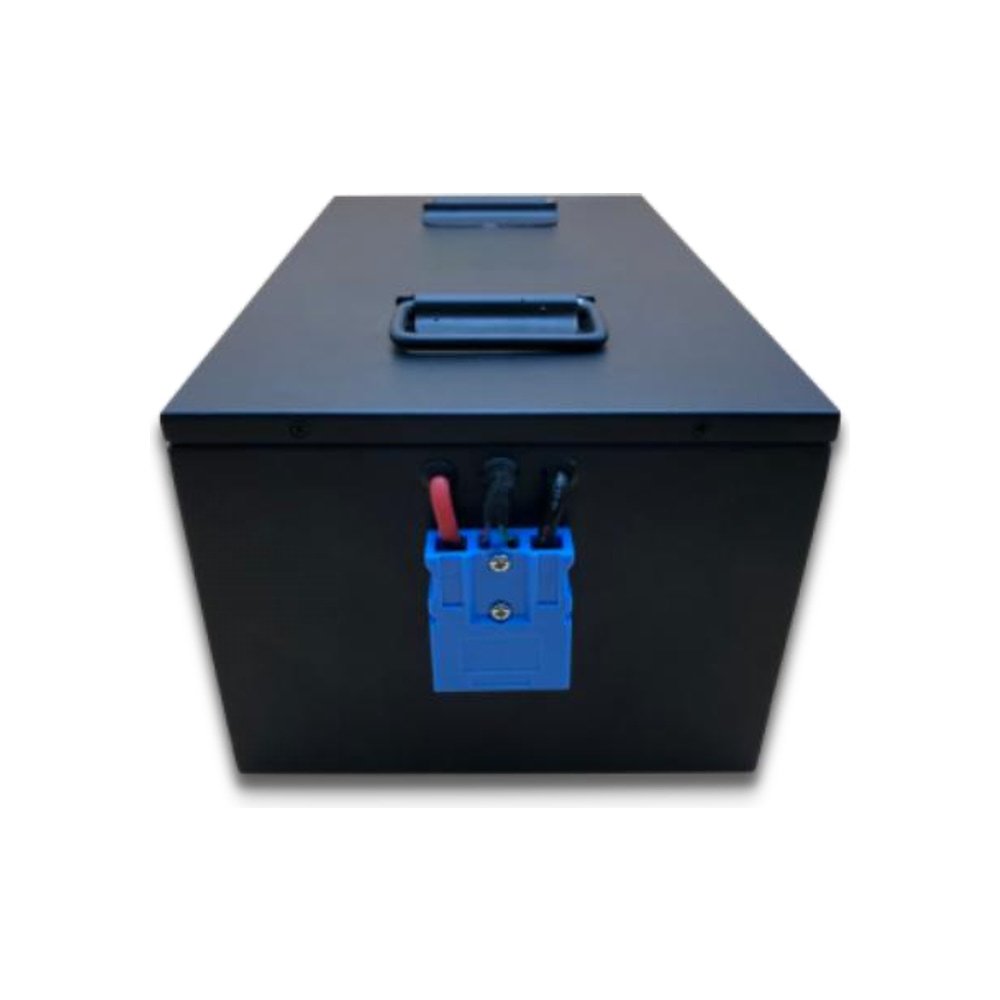
The source images illustrate the product series. Enclosure, terminals, cables and accessories follow the selected configuration and approved drawing. Dimensions in the table retain the source order unless otherwise confirmed.
Send YINTU your equipment requirements and quantity plan. We will coordinate a suitable battery configuration and a clear technical and supply proposal with our manufacturing partners.
Reference: YT-Construction Vehicle Battery Series datasheet, V1.0, October 2026. The original PDF is attached. Where a value is marked with an asterisk, the engineering recommendation in this page requires manufacturer confirmation before order and does not amend the original source document.