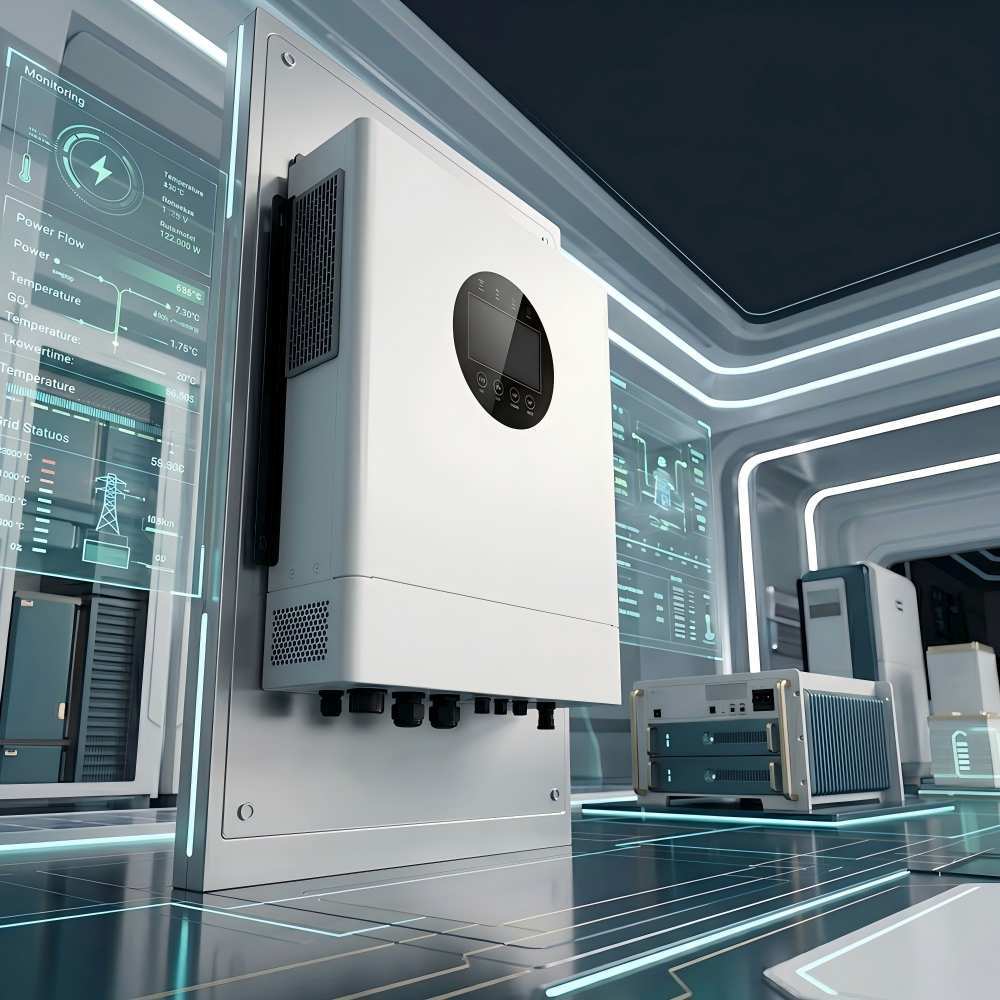
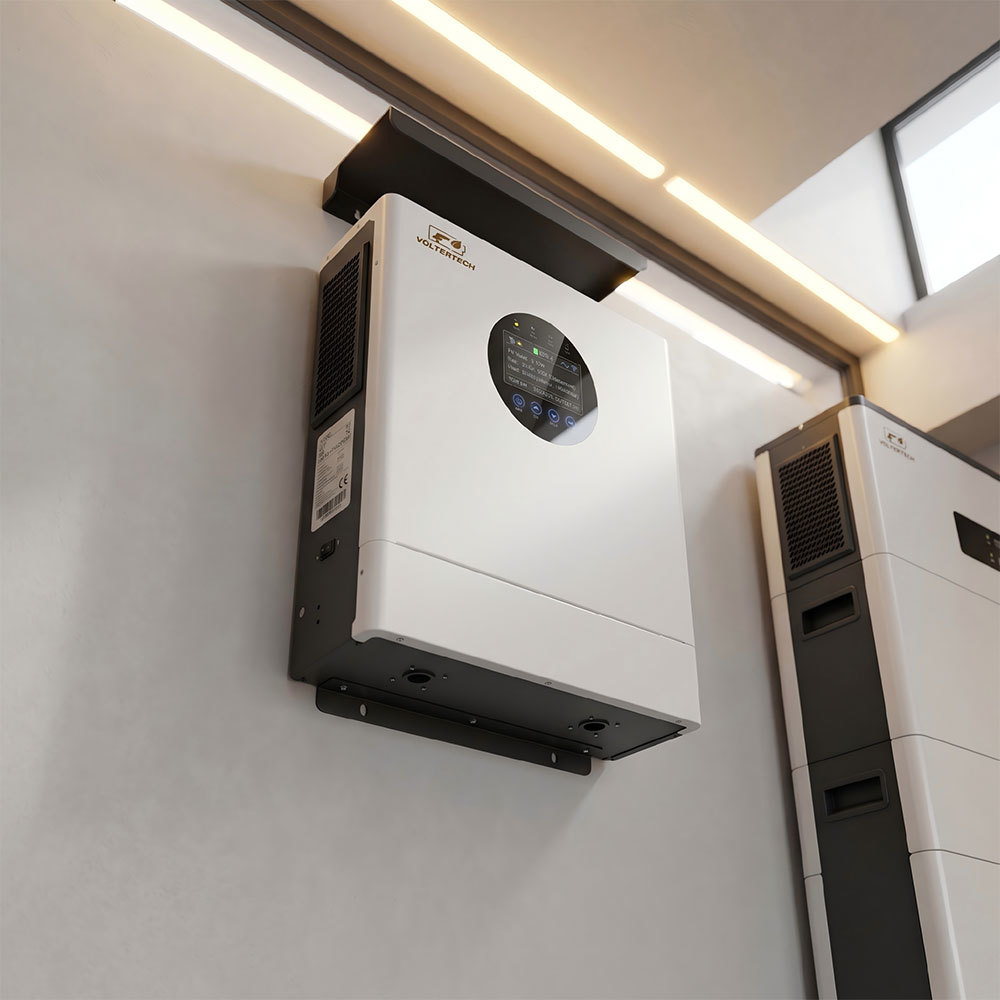
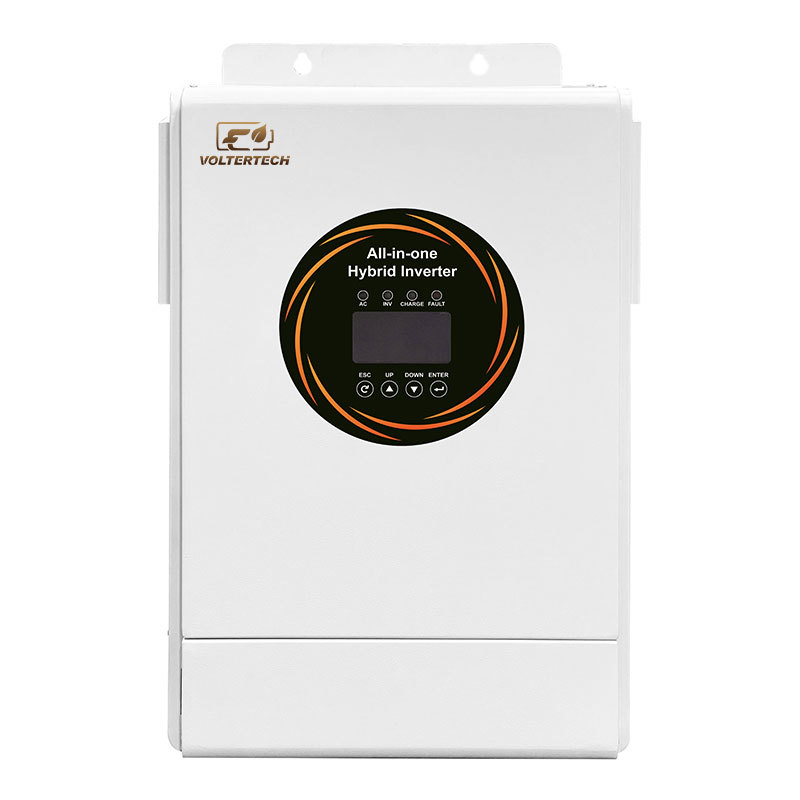
The 10kW 48V Single Phase Hybrid Solar Inverter with Dual MPPT IP65 is designed for higher-power residential solar systems where PV generation, battery storage and AC supply need to be managed within one inverter platform.
With 10000W rated output, up to 16200W of PV input and 220A maximum charging current, this model is suited to solar systems with larger simultaneous household loads and higher battery charging requirements.
For residential system sizing, inverter power should be selected according to the electrical loads that may operate at the same time rather than total daily energy consumption alone.
A 10kW rated output provides more capacity for homes using several higher-power appliances simultaneously. Air conditioners, water pumps, electric cooking equipment and other large loads should still be considered individually when calculating peak demand.
The PV input section supports up to 16200W, giving installers additional flexibility when pairing a larger solar array with a 10kW AC inverter.
Maximum DC voltage is 520Vdc and the MPPT operating voltage range is 50–450Vdc. Solar array design therefore needs to consider both total panel wattage and the electrical characteristics of each PV string.
The selected solar module Voc, Vmp and current should be checked before determining the final number of panels per string.
The 10kW model provides two MPPT trackers. The technical specification lists maximum PV input current as 18A + 36A across the MPPT inputs.
This provides flexibility when the solar array needs to be divided into separate input groups, such as installations with different roof orientations or different PV string arrangements.
The inverter includes grid-tied, off-grid and hybrid operating specifications, allowing one system to coordinate PV generation, battery storage and AC power according to the installation requirements.
The battery side is based on a nominal 48Vdc architecture and supports up to 220A maximum charging current. CAN and RS485 interfaces are provided for communication with compatible battery systems.
51.2V LiFePO4 batteries are commonly used within 48V-class energy storage systems, but the exact battery operating voltage, charging limits and BMS communication protocol should be checked before confirming compatibility.
Swipe left or right to view the complete specification table.
| Parameter | Specification |
|---|---|
| Rated Output Power | 10000W |
| Maximum PV Input Power | 16200W |
| Maximum DC Voltage | 520Vdc |
| MPPT Voltage Range | 50–450Vdc |
| MPPT Trackers / Input Current | 2 / 18A + 36A |
| Nominal AC Output Voltage | 220 / 230 / 240VAC |
| Nominal Output Current | 43.5A |
| Nominal Battery Voltage | 48Vdc |
| Maximum Charging Current | 220A |
| Maximum Conversion Efficiency | 97% |
| Communication | RS485 / CAN / Wi-Fi / Dry Contact |
| Parallel Operation | Up to 6 Units for Single-Phase Supply |
| Protection Rating | IP65 |
| Operating Temperature | -10°C to +50°C |
| Net Weight | 42kg |
The better choice depends primarily on simultaneous load demand, solar array size and battery charging requirements.
8kW model: 8000W rated output, up to 13.5kW PV input and 190A maximum charging current.
10kW model: 10000W rated output, up to 16.2kW PV input and 220A maximum charging current.
A 10kW inverter may be more suitable when the home has higher peak loads, a larger planned PV array or a battery system that can make use of the higher charging capability. Selecting a larger inverter without considering the actual load and battery system is not necessary.
The inverter series supports up to six units in parallel for single-phase supply, providing an expansion path when one 10kW inverter is not sufficient for the required system output.
The specification also lists a three-unit configuration for three-phase supply. Parallel and phase configuration should be confirmed according to the project electrical design before installation.
A 10kW inverter provides 10000W rated output, but whether it is sufficient depends on the electrical loads operating at the same time. Air conditioners, pumps, electric cooking appliances and other high-power equipment should be included when calculating peak demand.
The inverter supports up to 16.2kW of PV input. The exact number of panels depends on panel wattage, Voc, Vmp and current because the PV strings must also remain within the 520V maximum DC voltage and 50–450V MPPT operating range.
A 15kW PV array is below the specified 16.2kW maximum PV input power. However, the final string configuration must also comply with the inverter's PV voltage and current limits.
The inverter uses a nominal 48Vdc battery platform. Battery energy capacity should be selected according to the loads that need backup and the required backup duration. Battery charging capability and BMS communication should also be considered.
51.2V LiFePO4 batteries are commonly used in 48V-class storage systems. Compatibility should still be confirmed using the exact battery operating voltage range, charging parameters and CAN or RS485 communication protocol.
Choose according to peak household load, planned PV capacity and battery configuration. The 10kW model provides higher AC output, greater maximum PV input and higher charging current, while an 8kW inverter may already be sufficient for a lower-load system.
Yes. The technical specification includes off-grid operation and pure sine wave battery-mode output. Actual off-grid performance depends on available PV generation, battery capacity and connected loads.
Yes. The inverter series supports up to six units for single-phase parallel operation. The final configuration should be designed according to the required output power and electrical system.
The specification lists a three-unit configuration for three-phase supply. The complete three-phase system arrangement should be confirmed before ordering and installation.
Provide the solar panel model and quantity, battery brand and model, maximum simultaneous load, grid voltage, required backup duration and whether grid-tied or off-grid operation is needed. These details help check inverter sizing, PV string design and battery compatibility.
Send us your maximum load, solar panel specifications, battery model and required backup time. We can help check whether the 10kW inverter, PV array and battery configuration match your project.
Check Your 10kW Solar System