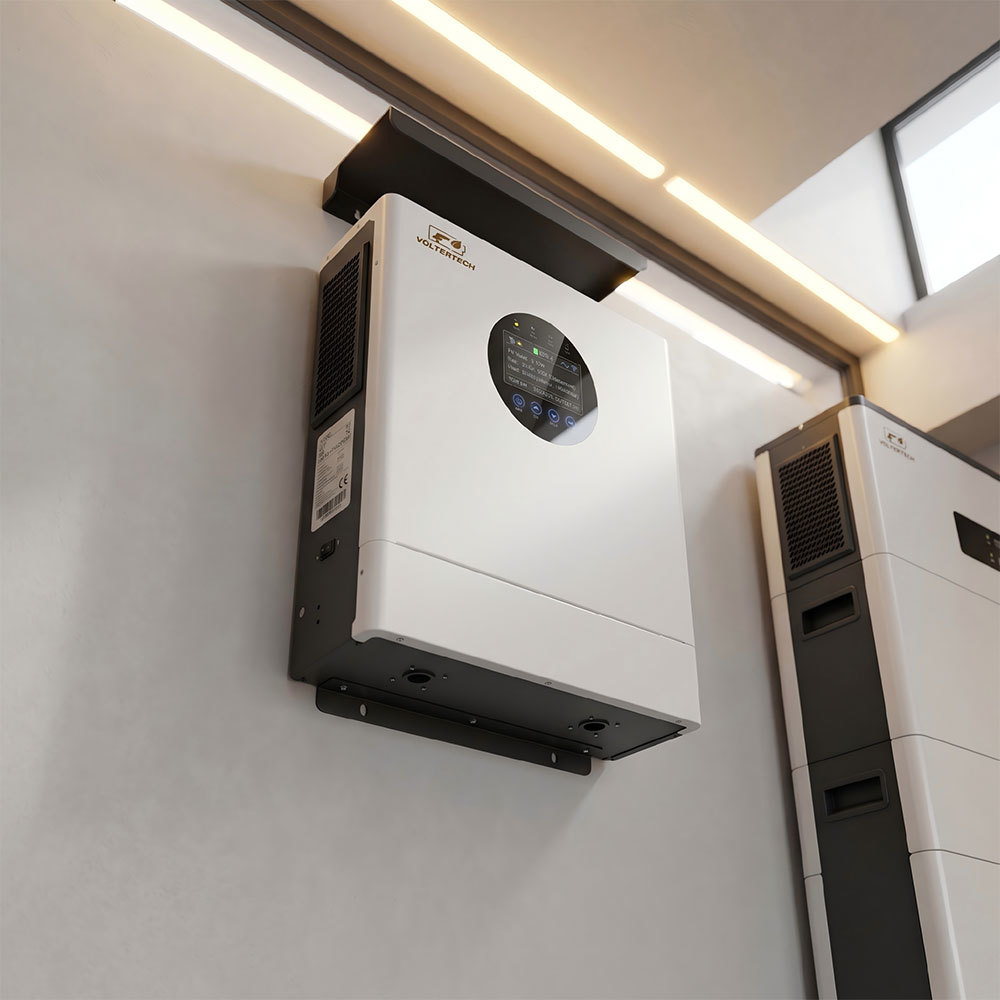
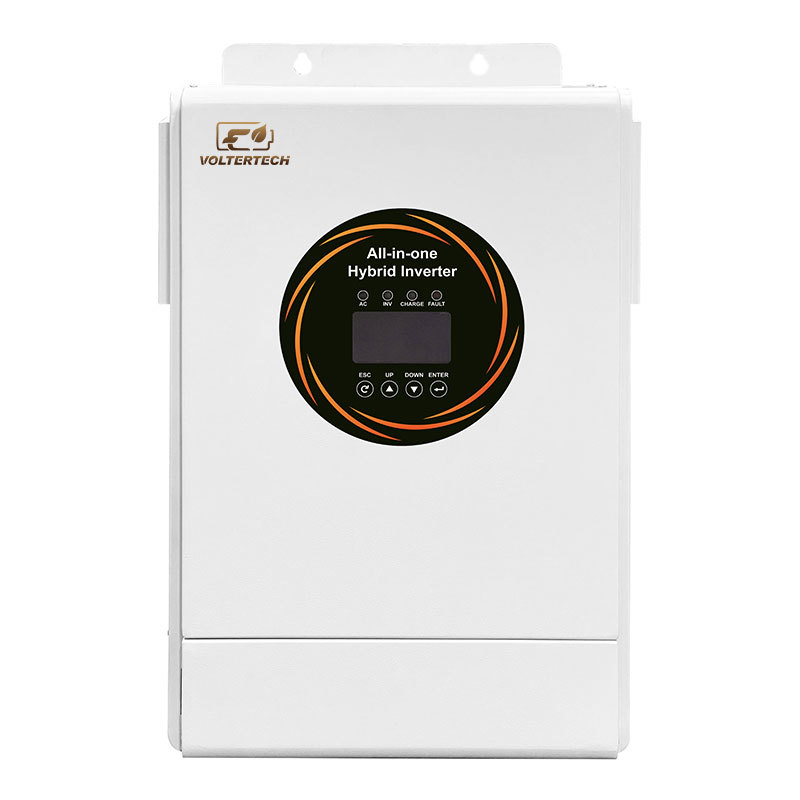
6kW Solar Inverter for 48V Battery Systems with 120A PV and AC Charging
This 6kW solar inverter is designed around a 48V battery platform and supports compatible lithium and lead-acid battery systems. It integrates photovoltaic charging, AC charging, pure sine wave output and energy-management interfaces in one unit.
The formal specification lists a maximum photovoltaic charge current of 120A and a maximum AC charge current of 120A. When photovoltaic and AC charging are used together, the listed combined maximum remains 120A rather than increasing to 240A.
This version is positioned for battery distributors, solar installers and system integrators requiring a higher-output inverter for 48V battery banks, with CT/Meter access, dry-contact control and optional WiFi monitoring.
48V Battery Platform
The inverter operates with a nominal 48Vdc battery bank and requires correctly configured DC cabling and protection equipment.
Lithium and Lead-Acid Support
Compatible lithium or lead-acid batteries can be selected according to the project’s required capacity, chemistry and charging settings.
120A Photovoltaic Charging
The MPPT charger can provide up to the listed 120A limit when sufficient solar power is available and the battery accepts the configured current.
120A AC Charging
Compatible AC input can supplement photovoltaic charging when solar production is insufficient or faster battery recovery is required.
The maximum inverter charging current should not automatically be applied to every battery. The selected value must remain within the battery manufacturer’s permitted charge rate, BMS or protection limit, cable capacity and DC protection rating.
The formal parameter table lists a floating-charge voltage of 56V and an overcharge-protection voltage of 60V. Final settings must match the selected battery chemistry and supplier instructions.
Battery capacity determines expected operating duration, while the inverter rating determines the maximum continuous load. A larger battery reserve can extend backup time but does not increase the 6kW continuous output.
The maximum combined photovoltaic and AC charging current is listed as 120A. Charging priorities must be coordinated so that the total configured current does not exceed this value.
| Battery Voltage Platform | 48Vdc |
| Battery Compatibility | Lithium and Lead - Acid Batteries |
| Battery Charging Voltages | 56V Floating Charge / 60V Overcharge Protection |
| Maximum PV Charge Current | 120A |
| Maximum AC Charge Current | 120A |
| Maximum Combined Charge Current | 120A PV + AC Combined |
| Battery-Mode Performance | 6kW Continuous / 12kVA Surge / Up to 93% Efficiency at 48Vdc |
| Monitoring and Control | LCD / RS485 / USB / Dry Contact / CT/Meter / Optional WiFi |
| Environmental and Physical Data | IP21 / -10°C to 50°C / 392.5 × 325 × 130mm / 8.5kg |
Battery type, capacity, charging voltage, current limit, DC cabling and protection devices must be confirmed before commissioning. This page does not replace the battery manufacturer’s technical instructions.
Yes. Both battery types are listed, but the charging voltages and current settings must match the selected battery system.
No. The formal table lists a maximum combined photovoltaic and AC charging current of 120A.
No. The permitted current depends on battery capacity, chemistry, BMS or protection rating, cable size and DC protection equipment.
The specification lists 56V for floating charge and 60V for overcharge protection. Final settings must follow the battery supplier’s instructions.
The interface can support compatible energy measurement and system-control functions when the required external devices and settings are used.
This solar inverter is suitable for battery distributors, solar installers and system integrators requiring a 48V platform with high-current photovoltaic and AC charging.
Selecting a compatible 48V battery bank and charging-current configuration?