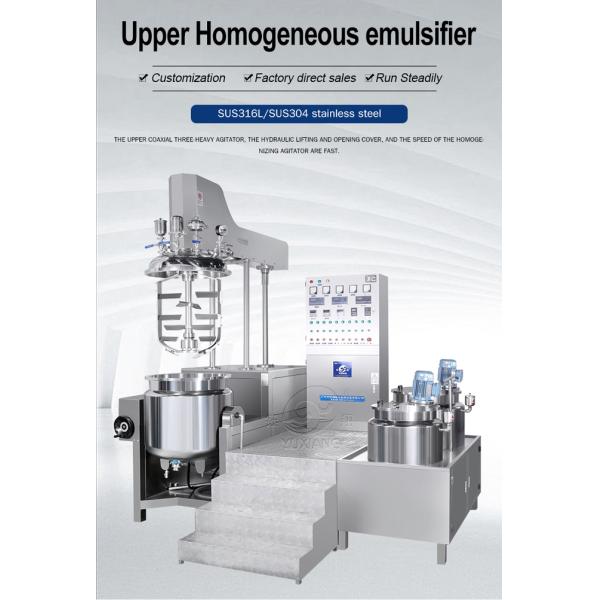
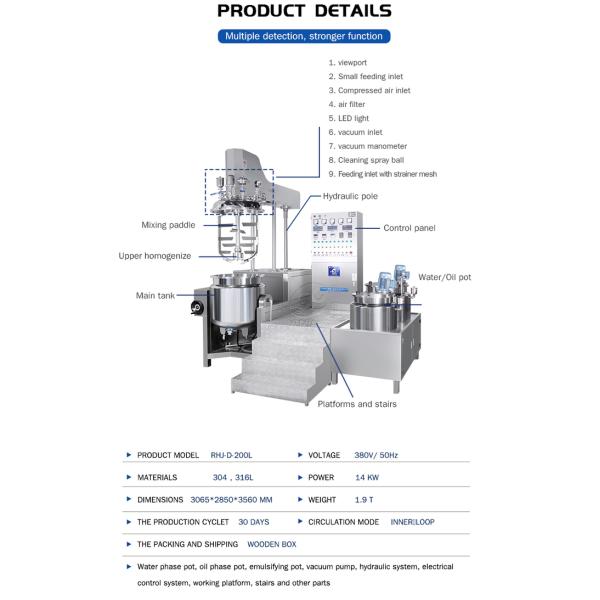
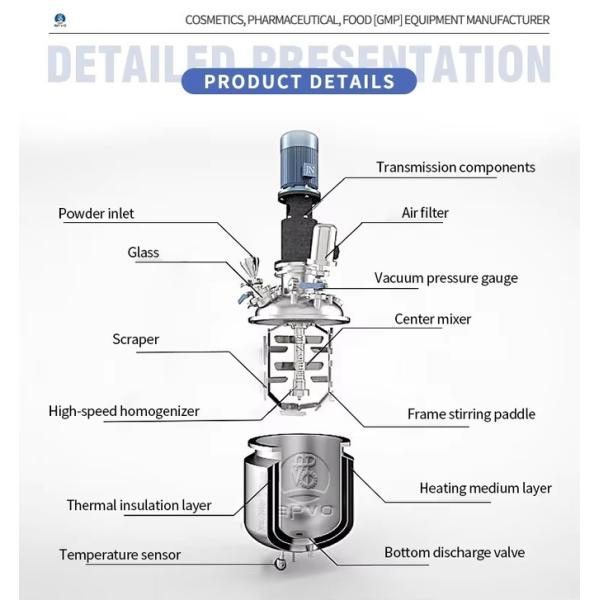
Core Functions & Technical Features
1. Food-Grade Material & Hygiene Design
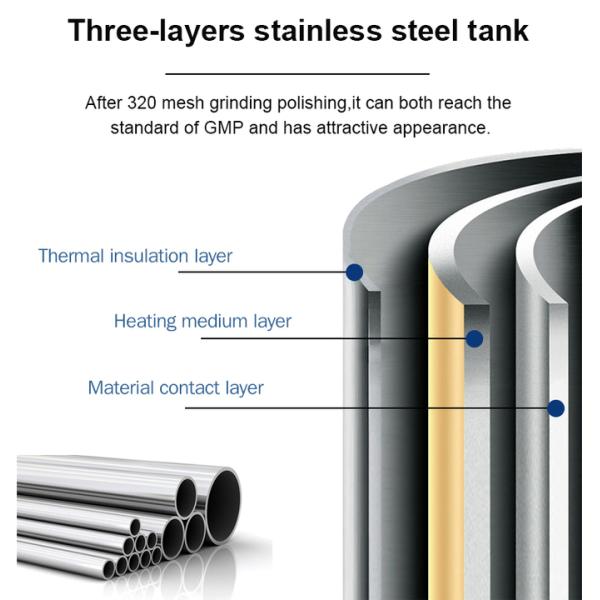
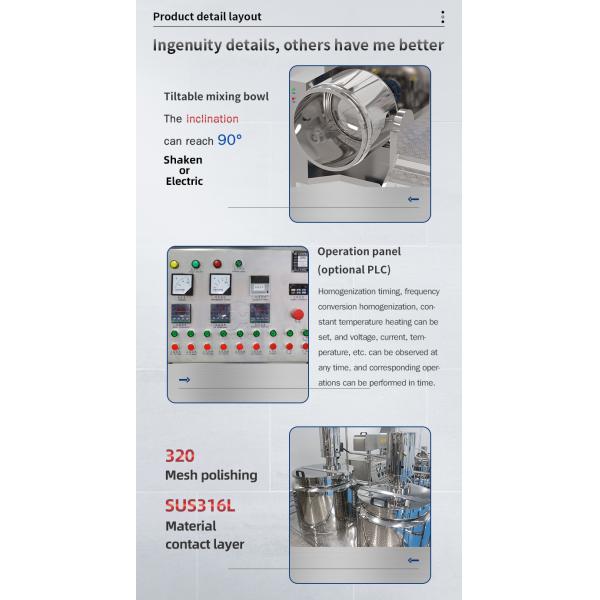
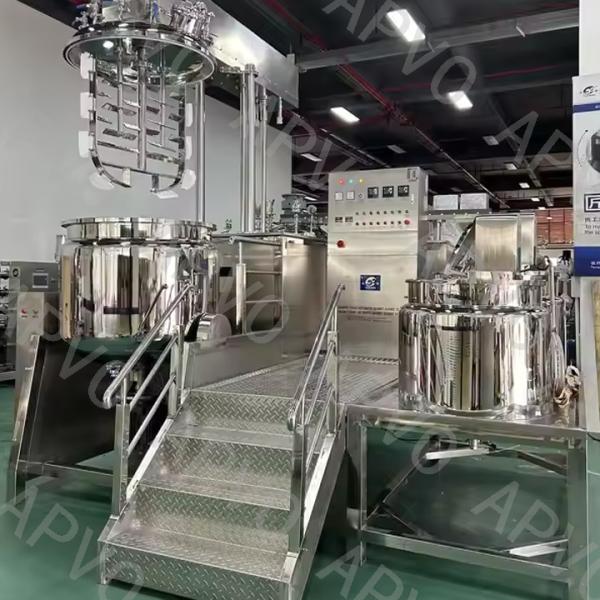
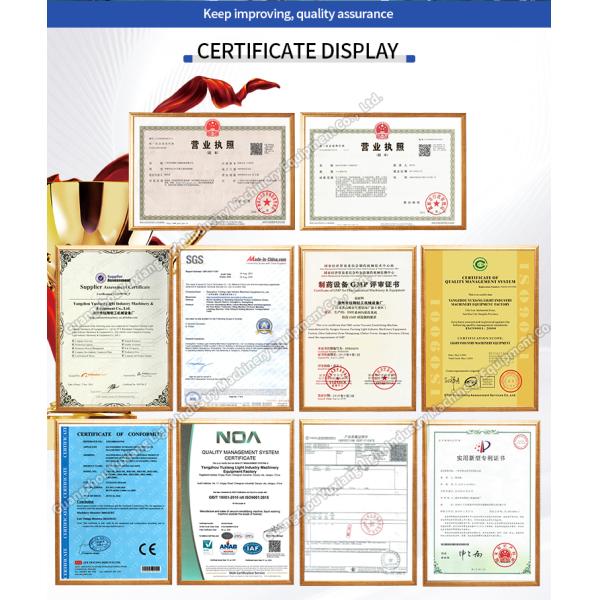
All product-contacting components are fabricated from 316L food-grade stainless steel, with non-contact parts made of 304 stainless steel. The surfaces undergo electrolytic polishing treatment to achieve a surface roughness Ra ≤ 0.4 μm, preventing material adhesion, biofilm formation, and residual buildup—critical for food safety. The seamless chamber design, rounded corners, and detachable homogenizing head eliminate cleaning dead corners, supporting CIP (Clean-in-Place) and SIP (Sterilize-in-Place) operations. It fully complies with FDA, EU 10/2011, and GMP food production standards, ensuring no contamination to food materials.
2. Vacuum Homogenization & Emulsification System
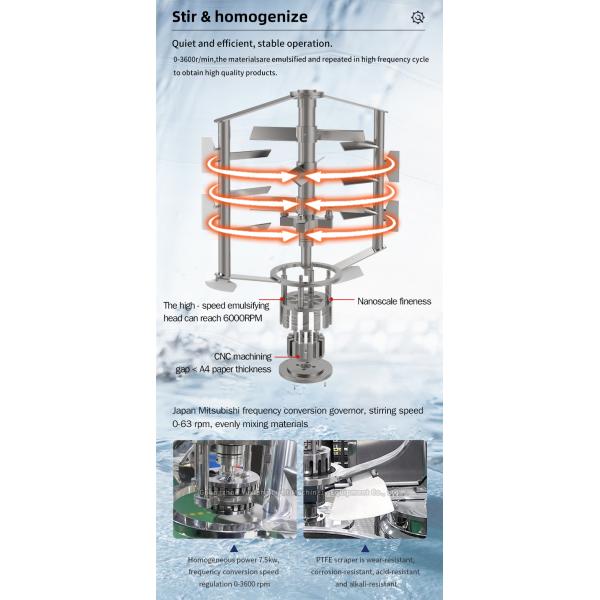
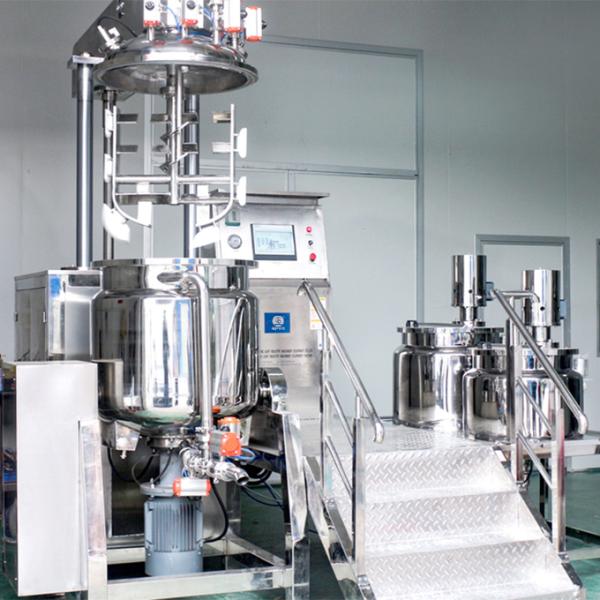
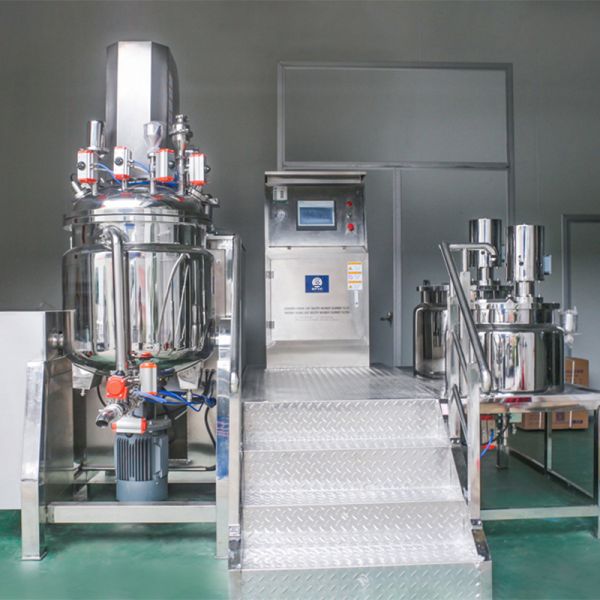
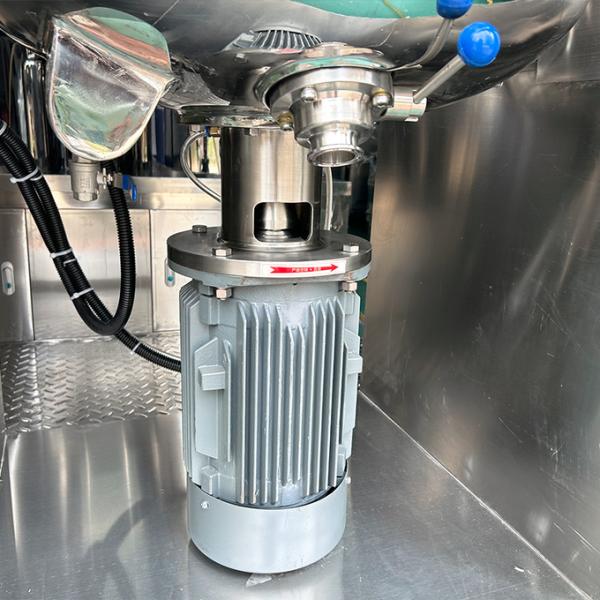
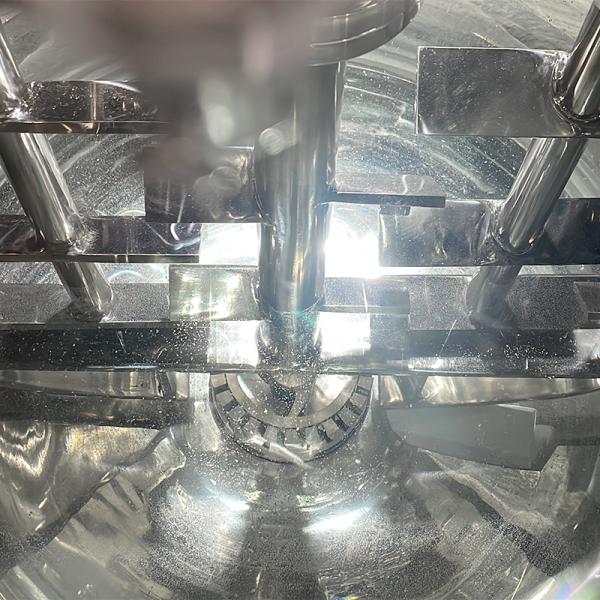
The core homogenizing unit adopts a dual-stage rotor-stator structure, with a maximum rotational speed of 12,000 rpm and linear speed of 45 m/s. The adjustable rotor-stator gap (0.1-0.3 mm) generates intense shearing, cavitation, and turbulent forces, effectively breaking down solid particles and oil droplets into micro-dispersions (1-3 μm). This realizes complete fusion of immiscible phases (oil-water, solid-liquid) for pastes, eliminating graininess and ensuring a smooth, dense texture. The integrated high-efficiency vacuum system maintains a stable vacuum degree of -0.095 to -0.098 MPa, removing air bubbles during mixing to prevent oxidative degradation of food materials and avoid surface porosity in finished pastes.
3. Automated Control System
Equipped with a PLC touchscreen control system, the equipment enables full-process automation. Operators can set and adjust key parameters (homogenization speed/time, vacuum degree, mixing speed, temperature) via the touchscreen, with real-time data monitoring and digital display. The system stores up to 100 formulation parameter profiles, supporting one-click switching between different paste products. Batch data (processing time, temperature, vacuum level, speed) is automatically recorded and stored for at least 2 years, facilitating production traceability and regulatory audit compliance. The automated workflow reduces manual intervention, minimizing human error and ensuring consistent batch quality.
4. Multi-Mode Mixing System for High-Viscosity Pastes
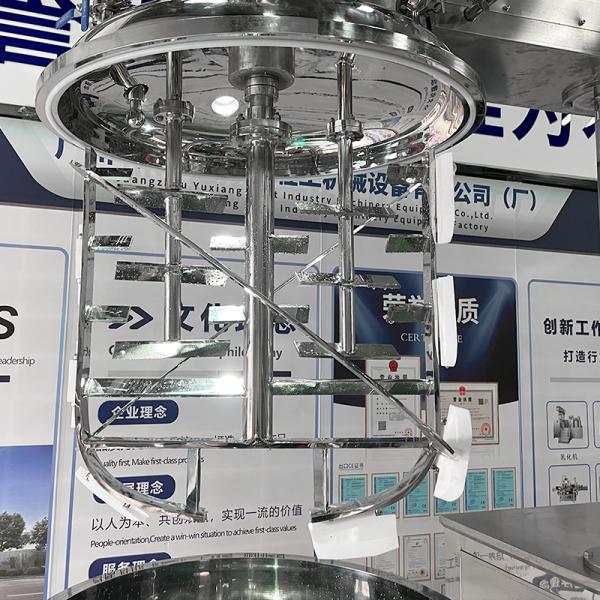
Targeting high-viscosity food pastes (50,000-200,000 mPas), the equipment is equipped with a dual-agitation structure (anchor-type + paddle-type) driven by a variable-frequency motor. The anchor-type stirrer adheres closely to the chamber wall, scraping residual materials and enhancing heat transfer efficiency, suitable for mixing thick pastes. The paddle-type stirrer promotes vertical material flow, ensuring all materials pass through the homogenization zone repeatedly. Stirring speed is steplessly adjustable (50-500 rpm), synchronized with the homogenization process to adapt to viscosity changes during paste formation.
5. Precision Temperature Control System
The chamber features a jacketed design, supporting both circulating water cooling and electric heating. The temperature control range is 20-90℃ with a precision of ±1℃, regulated by a PID (Proportional-Integral-Derivative) control system. This prevents thermal denaturation of heat-sensitive food ingredients (e.g., proteins, natural extracts) and ensures stable paste matrix formation, maintaining the flavor, nutrition, and texture of food products.
6. Safety & Reliability Configuration
The equipment is equipped with multiple safety protection functions: motor overload protection, vacuum abnormal alarm, temperature deviation warning, pressure relief valve, and emergency stop button. The sealed chamber design prevents material splashing and operator exposure to high-temperature or high-viscosity materials. Food-grade silicone gaskets and double mechanical seals ensure airtightness, preventing material leakage and cross-contamination.