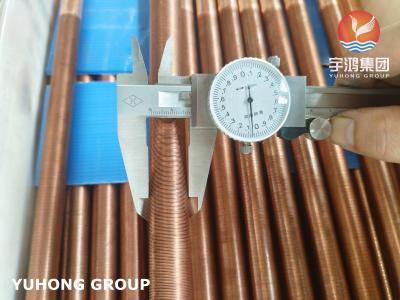
H Type And Double H Type Finned Tubes For Heat Exchangers High Rigidity
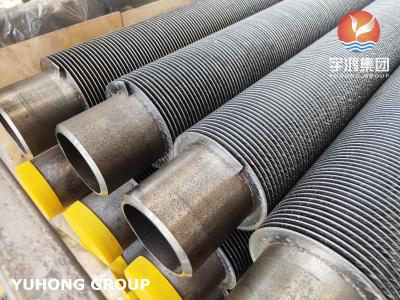
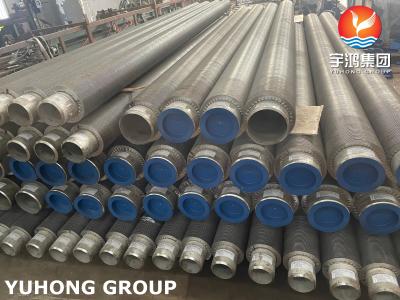
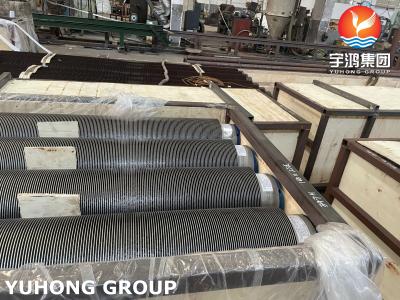
H-Finned Tube
Structural features:
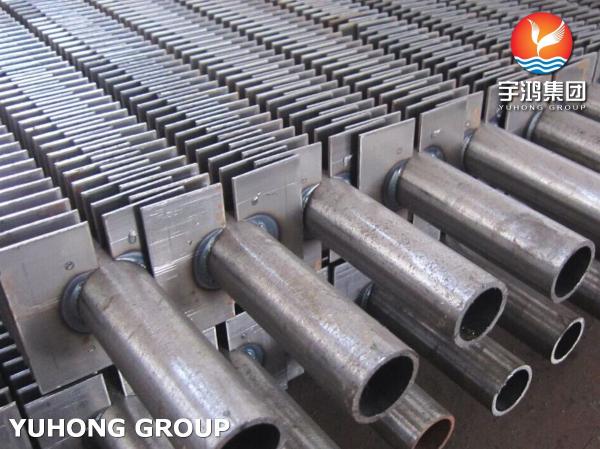
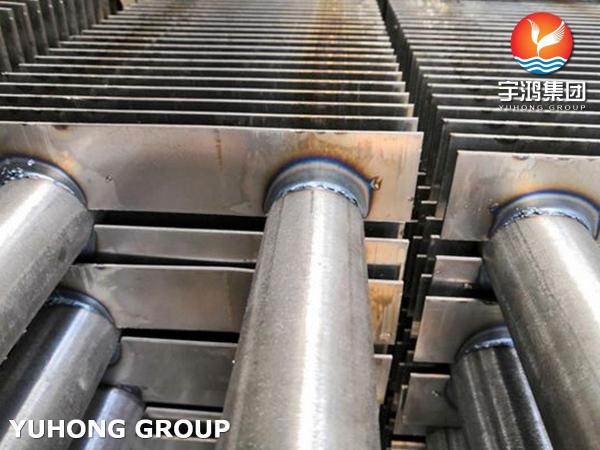
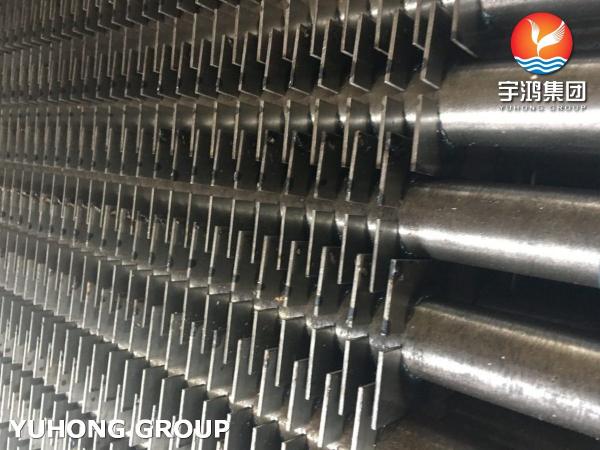
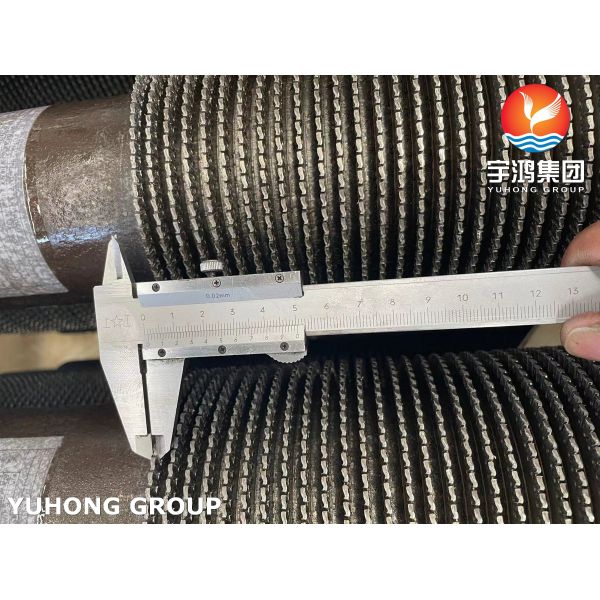
The fins are arranged in parallel and symmetrical, and the cross-section is shaped like the letter "H". Usually, two longitudinal fins are fixed on both sides of the base tube by high-frequency welding or mechanical pressing.
Typical parameters:
fin height 15-30 mm, thickness 1.5-3 mm, spacing 20-50 mm.
Core advantages:
- High rigidity: The H-shaped structure enhances anti-deformation ability and is suitable for high flow rate (>30 m/s) or particle-containing media.
- Easy to clean: The straight channel reduces ash accumulation and is suitable for flue gas waste heat recovery systems (such as coal-fired boilers).
Double H-Finned Tube
Structural features:
Two sets of H-shaped fins are integrated on a single base tube to form a "double H" cross-section, or the heat transfer area is increased through a cross-fin design.
Typical parameters:
fin height 10–25 mm, thickness 1.0–2.5 mm, spacing 15–40 mm (staggered arrangement).
Core advantages:
- Heat transfer doubled: The double-fin structure increases the heat transfer area by 40–60% compared to the single H-type.
- Turbulence optimization: Cross-fins disturb the fluid and increase the Nusselt number (Nu) by 10–15%.
- ✦H-type fin tube: with anti-scouring and low maintenance as the core, it is suitable for high dust and high flow rate industrial scenes.
- ✦Double H-type finned tube: With the advantages of efficient heat transfer and compact design, it is suitable for chemical and energy systems with high heat load and limited space.
- When selecting, it is necessary to comprehensively evaluate the medium characteristics (corrosiveness, dust content), thermal parameters (temperature, pressure, flow rate) and life cycle cost. If necessary, composite fins (such as H-type + spiral fins) can be customized to balance performance and economic benefits.
Application
Power industry:
- Coal-fired boiler air preheater (APH), resistant to fly ash erosion.
- Gas turbine waste heat boiler (HRSG) medium pressure evaporation section.
Metallurgical industry:
- Blast furnace gas waste heat recovery, medium dust content >50 g/Nm³.
- Double H-type fin tube
Petrochemical unit:
- Flue gas turbine (Flue Gas Expander) inlet heat exchanger of catalytic cracking unit (FCCU).
- Ethylene cracking furnace convection section, improve cracking gas preheating efficiency.
New energy systems:
- High temperature heat exchange tubes (400–550°C) for molten salt energy storage systems (TES).