Specifications
Certification :
ASME, ABS, DNV-GL , BV, LR , KR, CCS, PED, TUV, ISO9001, AD2000
Material :
Carbon steel (ASME SA516 Gr.70)
Price :
NEGOCIATED
Packaging Details :
IRON FRAME+PLYWOODEN CASE OR WOVEN BAG
Pressure containment :
Dished heads
Supply Ability :
500 TONS
Payment Terms :
T/T,L/C
Optional components :
Heat exchanger tube bundle, finned tube bundle, U-tube bundle
Place of Origin :
CHINA
Construction standard :
ASME Section VIII, Division 1
Delivery Time :
20-80 DAYS
Brand Name :
YUHONG
Configuration :
Horizontal vessel
MOQ :
1 PCS
Internal components :
Inlet diverter, baffles, demister, weir, level control nozzles
Description
ASME Horizontal Three-Phase Separator | Oil/Gas/Water Separation Vessel with Demister, Baffles & Weir – For Oil & Gas, Chemical & Refining Applications
Need a custom quote for Separator? Contact our engineering team directly: jimmy@steelseamlesspipe.com
Product Description

Yuhong Group: Complete Pressure Vessel Solutions – From Separators to Heat Exchangers

Yuhong Group Co., Ltd. designs and manufactures a comprehensive range of thermal and pressure equipment for global industries. Our core offerings include shell and tube heat exchangers, pressure vessels, air coolers, and process separators – including two-phase and three-phase separators for oil, gas, and water separation. We also supply critical components: finned tube bundles, U-tube bundles, heat exchanger tubesheets, and all related parts – ensuring full support for new projects and maintenance.

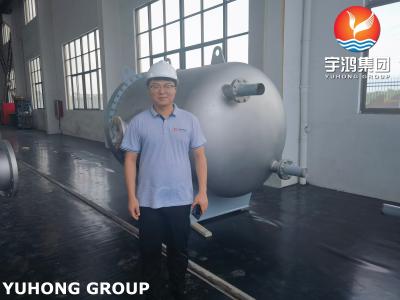
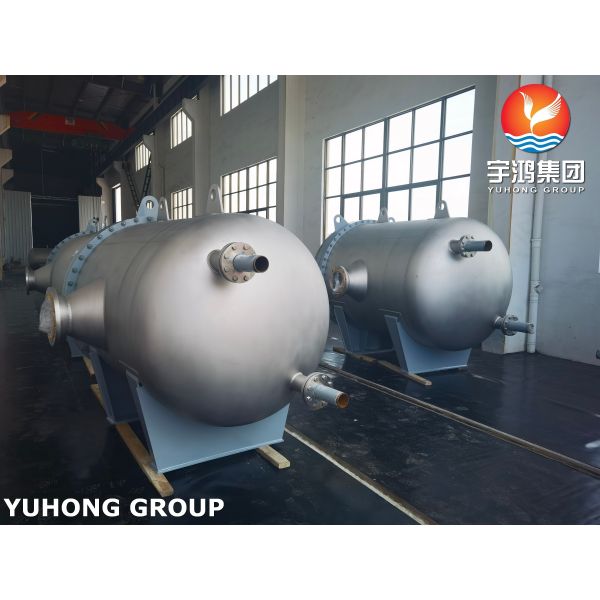
Shown in the attached photographs and schematic is a horizontal three-phase separator – a pressure vessel designed to separate incoming well streams into gas, oil, and water phases. The schematic illustrates the internal components including the inlet diverter, baffles, demister, weir, and level control nozzles that enable efficient phase separation.

Product Focus: Three-Phase Separator – Engineered for Efficient Phase Separation

A three-phase separator is a pressure vessel that separates a mixed inlet stream into three distinct phases: gas, oil (liquid hydrocarbon), and water (produced water). The separation is achieved through a combination of gravity settling, impingement, and coalescing, with internal components designed to maximize separation efficiency.

Based on the images and schematic, this separator exhibits:

  • Configuration: Horizontal vessel – providing maximum liquid surface area for gravity separation

  • Material: Carbon steel (ASME SA516 Gr.70) – with optional corrosion-resistant lining or clad plate

  • Construction: ASME Section VIII, Division 1 compliant with U-Stamp certification

  • Internal components: Inlet diverter, baffles, demister, weir, and level control nozzles

  • Application: Oil/gas/water separation in upstream and midstream processing

Key Components & Their Functions in a Three-Phase Separator

Component Function Role in Equipment Performance
Inlet Diverter / Impingement Plate Redirects incoming flow; reduces velocity Prevents liquid carryover; protects downstream internals from erosion
Baffle Plates Direct flow; promote gravity settling Enhance liquid/liquid separation; prevent short-circuiting
Demister / Mist Eliminator Removes entrained liquid droplets from gas Ensures clean gas outlet; prevents liquid carryover
Weir Plate Controls liquid level; maintains oil/water interface Enables oil/water separation by gravity; maintains stable interface
Level Control Nozzles Provide connections for level instruments Enable level control and interface control
Pressure Control Valve Maintains vessel pressure Ensures stable operation; prevents overpressure
Shell Pressure-containing boundary Contains process fluids; designed for pressure/temperature
Dished Heads End closures Provide pressure containment; designed per ASME
Nozzles (Gas Out, Oil Out, Water Out) Process fluid outlets Enable phase-specific discharge
Manway Access for inspection and cleaning Enables internal maintenance and inspection
Heat Exchanger Tube Bundle (optional) Heating/cooling within the vessel Can be installed for temperature control
Finned Tube Bundle (external) External heating/cooling Can be added for temperature control of outlet streams
U-Tube Bundle (internal) Internal heat exchange For temperature control within the vessel

Technical Highlights of Our Three-Phase Separator

  • ASME U-Stamp certified: Full compliance with ASME Section VIII, Division 1 – ensuring global acceptance for safety and regulatory requirements.

  • Optimized internal design: Inlet diverter, baffles, demister, and weir are designed using computational fluid dynamics (CFD) or empirical correlations to maximize separation efficiency and minimize liquid carryover.

  • Custom engineering: Designed to your specific flow rates, fluid properties, pressure, and temperature conditions.

  • Material flexibility: Carbon steel (SA516 Gr.70), stainless steel (304/316L), clad plate, or nickel alloys – selected based on service fluid corrosivity.

  • NDE & PWHT: Full NDE (RT, UT, MT, PT) and PWHT as required by ASME code – ensuring weld integrity.

  • Hydrostatic testing: Every separator is pressure-tested before shipment – documented with test reports.

Knowledge Module: Separator Types – Two-Phase vs. Three-Phase

Type Phases Separated Key Features Typical Application
Two-Phase Separator Gas + Liquid Simple design; demister for gas Gas processing; compressor suction scrubbers
Three-Phase Separator Gas + Oil + Water Inlet diverter, baffles, demister, weir Oil & gas production; refinery feed preparation
Horizontal Separator Gas + Liquid(s) Larger surface area; better gravity settling High liquid flow; three-phase separation
Vertical Separator Gas + Liquid(s) Smaller footprint; better solids handling Slurry service; limited floor space
Test Separator Gas + Liquid(s) Portable; compact design Well testing; temporary installations

Knowledge Module: Three-Phase Separation – How It Works

Based on the schematic provided, the separation process follows these steps:

  1. Inlet Flow: The incoming mixed stream (gas, oil, water) enters through the inlet nozzle.

  2. Inlet Diverter: The flow is redirected by the inlet diverter/impingement plate, causing a sudden velocity drop. This initiates the separation of gas from liquids.

  3. Gravity Separation: The liquids fall into the liquid section of the vessel. Oil (lighter) rises to the top, water (heavier) settles to the bottom.

  4. Baffles: Baffle plates promote liquid/liquid separation by reducing turbulence and preventing short-circuiting.

  5. Weir Plate: The weir maintains the oil/water interface level. Oil flows over the weir, while water remains on the inlet side.

  6. Demister: Gas passes through the demister (mist eliminator) where any remaining liquid droplets are captured and returned to the liquid section.

  7. Outlet Streams: Gas exits through the top nozzle, oil exits through the oil outlet, and water exits through the water outlet – each with level control valves to maintain proper levels.

Knowledge Module: Internal Components & Their Importance

Component Why It Matters Common Issues
Inlet Diverter Prevents erosion; reduces turbulence If damaged, liquid carryover increases
Demister (Mist Eliminator) Ensures gas quality Fouling reduces efficiency; requires periodic cleaning
Weir Plate Controls oil/water interface Improper level leads to oil in water or water in oil
Baffles Improves separation efficiency Corrosion or damage reduces effectiveness
Level Control Nozzles Enables level control Clogged nozzles cause poor level control

Advantages of Ordering Separators from Yuhong Group

  • ASME U-Stamp certification: Full code compliance – accepted worldwide for regulatory and insurance purposes.

  • Complete design & fabrication: From process design to final delivery – all in-house, including internal components.

  • Material verification: PMI (Positive Material Identification) on all pressure-retaining components.

  • NDE & documentation: Complete NDE reports, hydrostatic test reports, and ASME data reports included.

  • Component integration: Vessels supplied with all internals – inlet diverter, baffles, demister, weir – and external accessories.

Component-Only Supply – We Also Provide for Maintenance & Spares

If your existing separator needs replacement parts, we supply individual components without ordering a complete new vessel:

  • Inlet diverters / impingement plates – to your dimensions

  • Baffle plates – carbon steel or stainless steel

  • Demister / mist eliminator pads – stainless steel or alloy

  • Weir plates – carbon steel or stainless steel

  • Nozzles and flanges – SA105, SA182 – any facing type

  • Manway covers and gaskets – complete access closure assemblies

  • Dished heads – formed to your dimensions and thickness

  • Heat exchanger tubes – for internal coils or external heat exchange

  • Finned tube bundles – for external heating/cooling applications

Typical Applications for Three-Phase Separators

Industry Application Why Horizontal Separator
Oil & gas production Wellhead separation, test separation Handles high liquid volumes; good gravity settling
Refining Feed preparation, emulsion breaking Separates oil/water before refining
Chemical processing Liquid/liquid separation Separates immiscible liquids
Power generation Knock-out drums, steam separators Removes moisture from steam or gas
Cryogenic / LNG Phase separation in liquefaction Separates gas/liquid at low temperatures

Knowledge Module: Separator Sizing & Design Considerations

Parameter Consideration Impact on Design
Gas flow rate Must be below critical velocity for liquid carryover Determines vessel diameter and demister sizing
Liquid flow rate Must allow adequate residence time for gravity separation Determines vessel length and liquid capacity
Oil/water density difference Larger difference = easier separation Affects weir height and interface control
Emulsion tendency Difficult to separate; may require heat or chemicals May require internal coils or chemical injection
Pressure and temperature Affects gas density and liquid properties Determines wall thickness and material selection
Slug flow Inlet flow surges May require larger vessel or slug catcher upstream

Quality Assurance & Documentation

Every three-phase separator we fabricate includes:

  • ASME U-Stamp certification – with Manufacturer’s Data Report

  • Material Test Certificates (MTC) per EN 10204 3.1

  • NDE reports – RT, UT, MT, PT as required

  • PWHT records – time-temperature charts

  • Hydrostatic test report – documented and witnessed

  • Internal component inspection report

  • PMI (Positive Material Identification) – 100% verification

  • Third-party inspection (SGS, BV, TÜV) – at buyer's request

Get a Quotation for Your Three-Phase Separator

To quote a three-phase separator like the one in your photographs, send the following to jimmy@steelseamlesspipe.com:

  • Flow rates (gas, oil, water)

  • Fluid properties (density, viscosity, corrosivity)

  • Inlet conditions (pressure, temperature)

  • Required separation efficiency (liquid carryover, oil in water)

  • Required material (carbon steel, stainless steel, clad)

  • Any drawing or sketch available

We will respond with a technical proposal, general arrangement drawing, and competitive price – typically within 72 hours.

ASME Horizontal Three-Phase Oil Gas Water Separator
Send your message to this supplier
Send Now

ASME Horizontal Three-Phase Oil Gas Water Separator

Ask Latest Price
Watch Video
Certification :
ASME, ABS, DNV-GL , BV, LR , KR, CCS, PED, TUV, ISO9001, AD2000
Material :
Carbon steel (ASME SA516 Gr.70)
Price :
NEGOCIATED
Packaging Details :
IRON FRAME+PLYWOODEN CASE OR WOVEN BAG
Pressure containment :
Dished heads
Supply Ability :
500 TONS
Contact Supplier
video
ASME Horizontal Three-Phase Oil Gas Water Separator

YUHONG HOLDING GROUP CO., LTD

Verified Supplier
2 Years
ningbo
Since 1990
Business Type :
Manufacturer, Exporter, Trading Company, Seller
Total Annual :
50M-75M
Employee Number :
50~850
Certification Level :
Verified Supplier
Contact Supplier
Submit Requirement