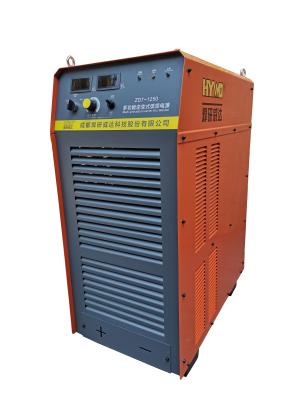
HYJ-40 H-Beam Flange Straightening Machine for Steel Structure Fabrication
Product Overview
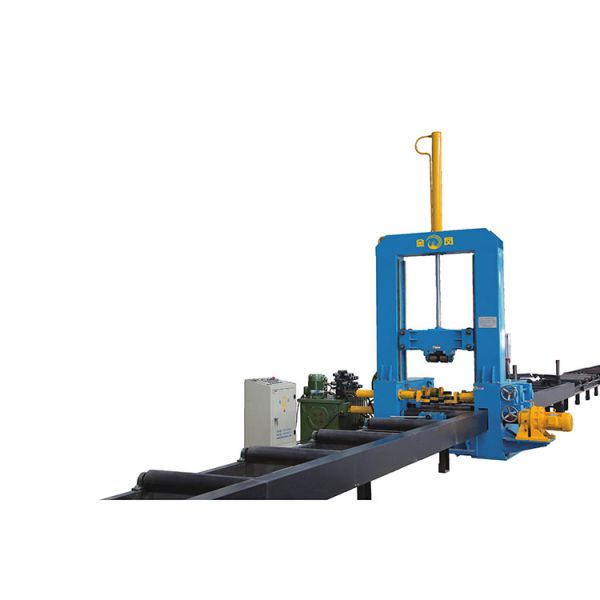
The HYJ-40 H-Beam Flange Straightening Machine is an essential piece of equipment for any heavy-duty structural steel fabrication plant. After the submerged arc welding (SAW) process, the flanges of H-beams and T-beams often suffer from thermal distortion and bending.
Designed for high-efficiency continuous operation, the HYJ-40 applies powerful mechanical force to precisely correct this deformation. It ensures that your finished steel members meet strict international building codes, making it perfect for Pre-Engineered Building (PEB) factories, bridge construction, and agricultural infrastructure projects worldwide.
Key Features & Engineering Advantages
- High-Efficiency Main Drive: Powered by a robust 11 KW motor and an advanced cycloidal pinwheel reducer. This combination ensures high transmission efficiency and allows for an impressive straightening speed of approximately 6300 mm/min.
- Heavy-Duty Screw-Down Mechanism: The pressing device is driven by a 1.5 KW motor paired with a bipolar speed reducer. It delivers massive output torque and incredibly smooth, stable operation during the heavy pressing process.
- Crack-Resistant Alloy Rollers: All straightening rollers are manufactured from premium-grade alloy steel and undergo advanced heat treatment. This critical manufacturing step prevents surface cracking and extends the lifespan of the rollers under extreme industrial pressure.
- Rigid Machine Structure: The main body consists of upper and lower sections securely fastened with heavy-duty T-bolts. The feeding conveyor frames are welded from structural profiles, and the conveyor rollers are crafted from durable seamless steel pipes.
Technical Specifications
| Technical Parameters |
Specifications & Capabilities |
| Model Number |
HYJ-40 |
| Applicable Flange Width |
150 - 600 mm |
| Applicable Flange Thickness |
6 - 40 mm |
| Minimum Web Height |
180 mm (Auxiliary roller required for specific sizes*) |
| Straightening Speed |
≈ 6300 mm/min |
| Main Drive Motor Power |
11 KW (Cycloidal pinwheel reducer) |
| Screw-Down Motor Power |
1.5 KW (Bipolar speed reducer) |
| Total Machine Power |
14 KW |
*Auxiliary guide roller required for web heights between 180-350 mm with flange thickness under 16 mm
System Composition & Scope of Supply
The HYJ-40 package is delivered as a complete, ready-to-use system:
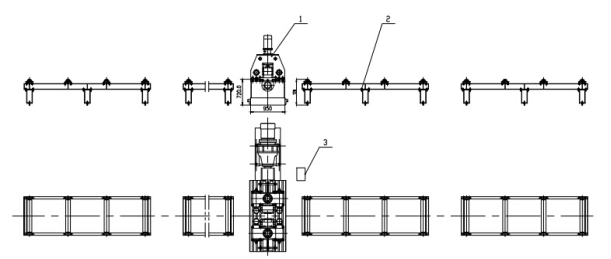
- Main Straightening Machine: Includes the heavy-duty body, left/right machine frames, motors, reducers, active driving rollers, pressing rollers, and auxiliary guide wheels.
- Feeding Conveyor System: Includes support bases and robust roller tracks for smooth material handling.
- Electrical Control System: Industrial control cabinet ensuring safe and synchronized operation.
- Spare Parts Kit: Includes a special maintenance wrench (1 pc) and push-button switches (2 pcs).
Site Installation & Operating Conditions
Sichuan Shunyao designs equipment to operate reliably in diverse global climates, from tropical to cold regions:
- Power Supply: 220V/380VAC +/- 5%, 50-60Hz
- Lubrication: Standard industrial lubricating oil and grease (prepared by the user)
- Environmental Temperature: -10°C to +40°C (Max daily temperature variance <= +/- 10°C)
- Relative Humidity: <= 95% RH (Non-condensing)
- Foundation Requirements: Maximum altitude 1000m. Civil foundation engineering is required. The standard foundation blueprint will be provided upon contract validation
Frequently Asked Questions
Q1: Why is a flange straightening machine necessary for PEB manufacturing?
A1: During the submerged arc welding of H-beams, the intense heat causes the steel flanges to warp or bend inward (mushrooming effect). The HYJ-40 uses mechanical pressure to roll the flanges back perfectly flat, ensuring the steel beams can be safely assembled on the construction site.
Q2: What is the maximum flange thickness the HYJ-40 can correct?
A2: This heavy-duty model can effortlessly straighten steel plate flanges up to 40 mm in thickness and 600 mm in width.
Q3: When do I need to use the auxiliary roller?
A3: If you are processing smaller H-beams where the web height is between 180 mm and 350 mm, AND the flange thickness is under 16 mm, the provided auxiliary guide roller must be engaged to prevent the web from buckling under pressure.