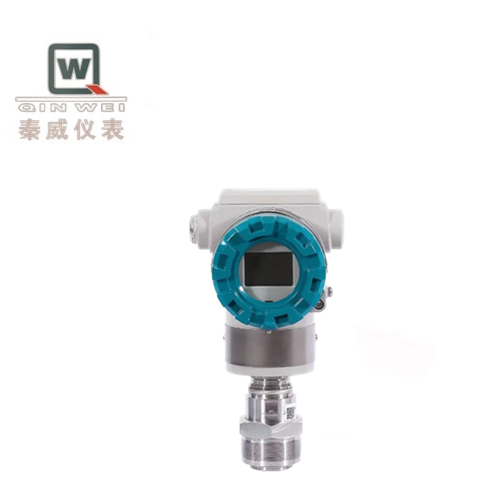
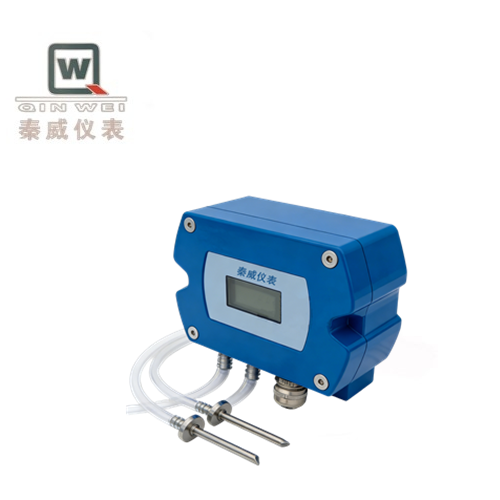
Intelligent Pressure Transmitter Supporting HART Protocol For Bidirectional Communication
An intelligent pressure transmitter refers to a transmitter that, on the basis of a traditional transmitter (which converts physical pressure signals into standard electrical signals), is equipped with a microprocessor and digital communication capabilities.
Core advantages
-
Digital communication protocols (the cornerstone of intelligence)
- HART protocol: The most mainstream, superimposing digital signals on 4-20mA analog signals, compatible with traditional systems, and enabling bidirectional communication. It is a typical representative of "hybrid intelligence".
- Fieldbus protocols: Such as Profibus-PA, Foundation Fieldbus (FF). Fully digital, a single bus can connect multiple devices, saving wiring and providing a large amount of information.
- Wireless protocols: Such as WirelessHART, ISA100.11a. Completely free from cable constraints, suitable for remote, rotating equipment or areas where retrofitting is difficult.
-
Advanced diagnostic functions
- Device diagnosis: Inspect the integrity of electronic components, sensors, memory status, etc.
- Process diagnosis: Monitor process anomalies such as pressure tap blockage, process temperature out of limit, pressure spikes, and empty pipe detection (for level measurement).
- Verification prompts: Remind users when the instrument has exceeded the calibration period.
-
Powerful data processing capabilities
- Multi-variable output: A single transmitter can simultaneously provide multiple measurement values such as differential pressure, static pressure, and process temperature.
- Built-in calculation: For example, directly calculate the cumulative flow value based on differential pressure and medium parameters.
- Data logging: Can store historical events, alarms, and diagnostic information for post-event analysis.
-
Flexibility in configuration and operation
- Wide range ratio: Up to 100:1 or even higher. Users can significantly adjust the range according to process changes without replacing the instrument.
- Adjustable damping: Set signal damping through software to filter process noise.
- Output characteristic linearization: Customize output functions such as square root and small signal cut-off.
Typical application scenarios
- Critical control loops: such as pressure control of reaction vessels and differential pressure control of distillation columns. Their high precision and high reliability ensure process stability and safety.
- Safety interlock systems: Their self-diagnostic function effectively prevents "false actions" or "no actions", improving the SIL level.
- Equipment health management (PHM): Monitoring the performance degradation trend of equipment such as compressors, pumps, and large filters.
- Remote and unmanned sites: such as oil and gas wellheads and urban heating network nodes. Data collection and remote management are achieved through wireless intelligent transmitters.
- Energy management and metering: High-precision measurement of steam and gas flow, combined with network for energy data analysis and optimization.
The intelligent pressure transmitter is far from being a simple "pressure-to-current" converter. It is an industrial Internet of Things terminal that integrates precise sensing, edge computing, status monitoring, and digital communication.