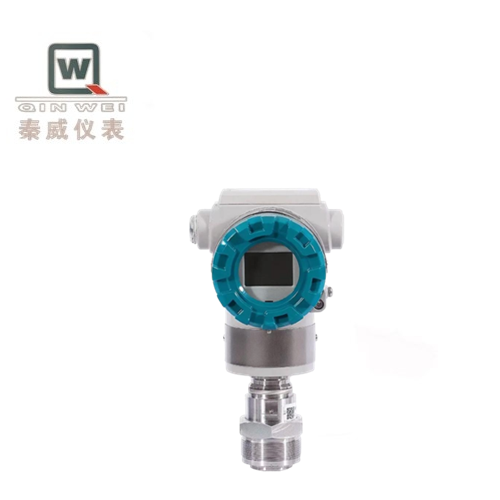
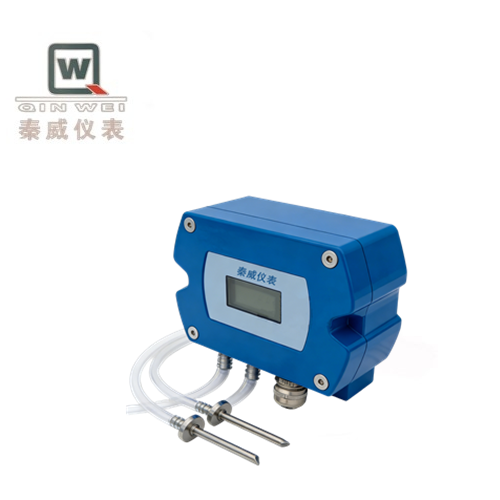
Non Intelligent Pressure Transmitter
The non-intelligent pressure transmitter is a device that linearly converts physical pressure signals (such as pressure, differential pressure, and absolute pressure) into standard analog current or voltage signals through pure analog circuits and mechanical structures.
Core Features
- Simple and reliable structure: Few components, relatively low failure rate, and strong anti-interference ability.
- Low cost: The price is usually significantly lower than that of intelligent transmitters.
- Easy to understand and maintain: The technical principle is intuitive and easy for maintenance personnel to master.
- Instant response: Pure analog circuit, no signal delay, and fast response.
- Wide compatibility: The 4-20mA standard is supported by all control systems.
The core differences from intelligent pressure transmitters
| Comparison dimension |
Non-intelligent (analog) pressure transmitter |
Intelligent pressure transmitter |
| Core chip |
No microprocessor, pure analog circuit |
Built-in microprocessor |
| Communication method |
Unidirectional analog signal (such as 4-20mA) |
Bidirectional digital communication (HART superimposed on 4-20mA or full digital fieldbus) |
| Output information |
Only process variable (PV) |
PV + device status + diagnosis + multiple variables |
| Configuration and debugging |
Manual on-site (adjust potentiometer with screwdriver) |
Local or remote digital configuration |
| Accuracy and compensation |
Fixed, primary analog compensation |
High-precision, full-condition compensation implemented by software |
| Maintenance mode |
Reactive, periodic |
Predictive, based on status |
| Asset management |
Difficult, relying on paper records |
Easy, integrated into software platform |
Typical application scenarios
Non-intelligent transmitters still hold an important position in the following scenarios due to their reliability and low cost:
- Measurement points in non-critical and stable working conditions:
- For example: general water tank liquid level, circulating water pressure, and non-core process compressed air pressure.
- Requirements: Low demands for accuracy and real-time diagnosis, and the environment is easy to access for maintenance.
- Cost-sensitive projects or old system renovations:
- When the budget is limited or the existing control system (such as old PLC/DCS) only supports analog input, they are selected to save costs.
- Extremely simple or high-reliability requirement situations:
- In some situations that only require "on/off" signals or simple control, the directness and anti-interference ability of analog signals are advantages. Some special safety fields also tend to use pure hardware devices without software to avoid software risks.
- As backup or redundancy for intelligent systems:
- In extremely few ultra-high reliability loops, a non-intelligent transmitter may be connected in parallel as a hardwired backup for the intelligent transmitter.
Non-intelligent pressure transmitters represent a classic, reliable and economical technical route. They solve the fundamental problem in the early stage of industrial automation of "reliably and remotely transmitting on-site pressure signals to the control room".