1260 Thermal Insulation Refractory Ceramic Fiber Blanket
Heating Furnace Roof Ceramic Fibre Blankets For High Temp Kilns
Product Overview
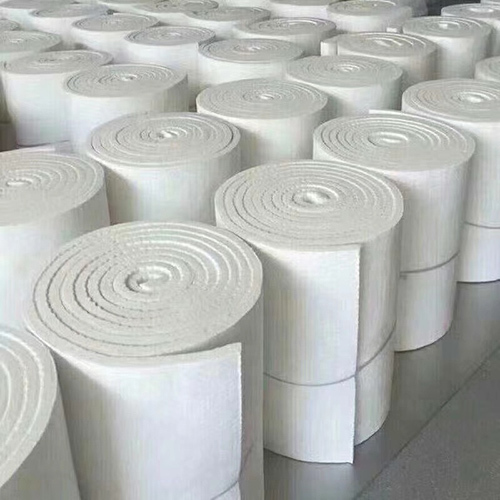
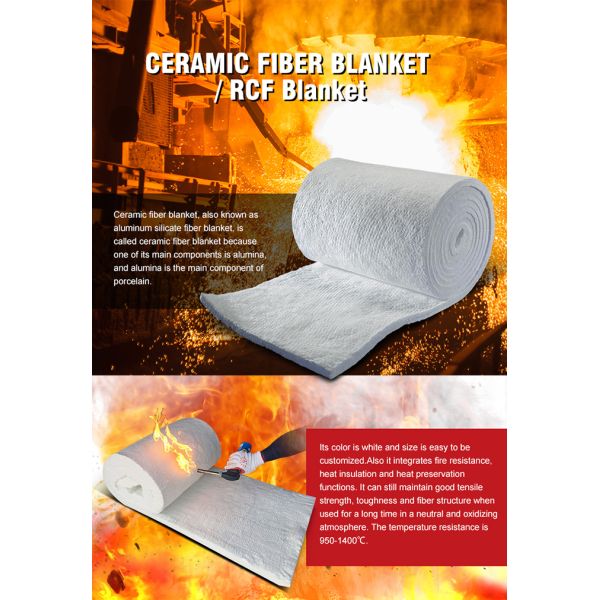
Ceramic Fiber Blanket is a lightweight, flexible, and high-performance thermal insulation material widely used in industrial and commercial high-temperature applications. Manufactured from high-purity alumina-silica fibers, this blanket is engineered to withstand continuous operating temperatures ranging from 1000°C (1832°F) to over 1600°C (2912°F), depending on the specific grade. It is the material of choice for applications where traditional refractory bricks or castables are too heavy, too slow to install, or thermally inefficient.
Manufacturing Process
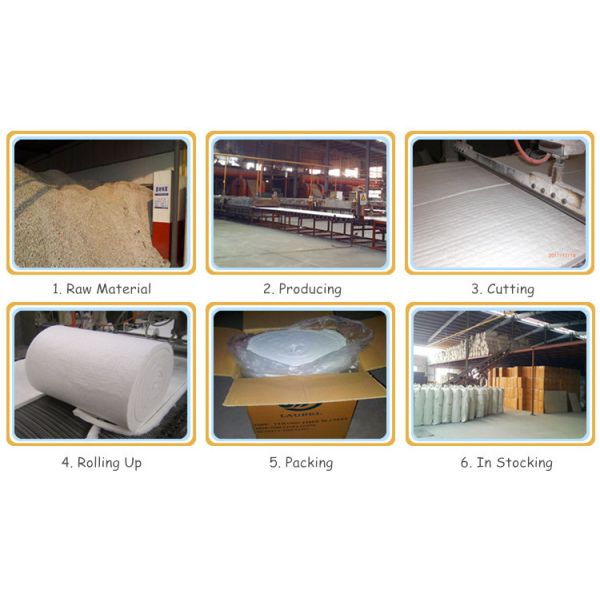
The production of ceramic fiber blankets begins with melting a precisely formulated mixture of alumina (Al₂O₃) and silica (SiO₂) in an electric arc furnace at temperatures exceeding 2000°C. The molten material is then transformed into fine fibers through either a spinning or blowing process, similar to how cotton candy is made. These fibers are immediately collected and "needled"—mechanically entangled using thousands of barbed needles—to form a cohesive, flexible blanket without the use of chemical binders. This needling process gives the blanket exceptional mechanical strength and handling durability while preserving its fibrous structure and thermal properties.
Key Properties
- Extremely low thermal conductivity (0.09-0.22 W/m·K at 400°C)
- Lightweight with densities from 64 to 200 kg/m³
- High resistance to thermal shock
- Excellent chemical stability
- Effective sound absorption and vibration damping
- Resistant to most corrosive atmospheres
Common Applications
Ceramic fiber blankets are used extensively as furnace linings, back-up insulation behind refractory bricks, expansion joint fillers, weld stress-relieving covers, fire protection barriers, and high-temperature gaskets. In the petrochemical industry, they insulate reformers and crackers. In power generation, they protect gas turbines and boiler systems. Forges, kilns, and incinerators also rely on these blankets to improve thermal efficiency and worker safety.
Installation and Safety
Installation is straightforward, typically involving mechanical anchoring or impaling pins. The blanket can be cut with a sharp knife or scissors. However, due to the respirable fiber content, appropriate safety precautions—such as wearing gloves, dust masks, and eye protection—should be followed to minimize skin irritation and avoid inhalation of airborne fibers.
Technical Specifications
| Description |
STD Blanket |
High Pure Blanket |
High Zirconium Blanket |
| Al₂O₃ (%) |
≥44 |
≥45 |
≥34 |
| Al₂O₃+SiO₂ (%) |
≥96 |
≥99 |
≥84 |
| Fe₂O₃+TiO₂ (%) |
≤1.0 |
≤0.5 |
≤0.5 |
| ZrO₂ (%) |
- |
- |
≥15 |
| K₂O+Na₂O (%) |
≤1.0 |
≤0.2 |
≤0.2 |
| Density (kg/m³) |
64 | 96 | 128 |
96 | 128 |
128 | 160 |
| Classification Temperature (°C) |
1260 |
1260 |
1430 |
| Fiber Diameter (μm) |
3.5 |
3.5 |
3.5 |
| Shot Content (%) |
≤15 |
≤15 |
≤15 |
| Shrinkage after Heating |
1000°C × 24h ≤ 2.5% |
1100°C × 24h ≤ 2.5% |
1350°C × 24h ≤ 3.5% |
Thermal Conductivity (W/m·K)
| Temperature |
STD 64 |
STD 96 |
STD 128 |
High Pure 96 |
High Pure 128 |
High Zirconium 128 |
High Zirconium 160 |
| 400°C |
0.090 |
0.095 |
0.124 |
0.114 |
0.101 |
0.138 |
0.122 |
| 500°C |
0.119 |
0.123 |
0.145 |
0.135 |
0.120 |
0.179 |
0.153 |
| 600°C |
0.152 |
0.158 |
0.202 |
0.191 |
0.175 |
0.233 |
0.184 |
Tensile Strength (MPa)
| Product Type |
Tensile Strength |
| STD 64 |
0.040 |
| STD 96 |
0.050 |
| STD 128 |
0.050 |
| High Pure 96 |
0.060 |
| High Pure 128 |
0.075 |
| High Zirconium 128 |
0.050 |
| High Zirconium 160 |
0.060 |