Applications
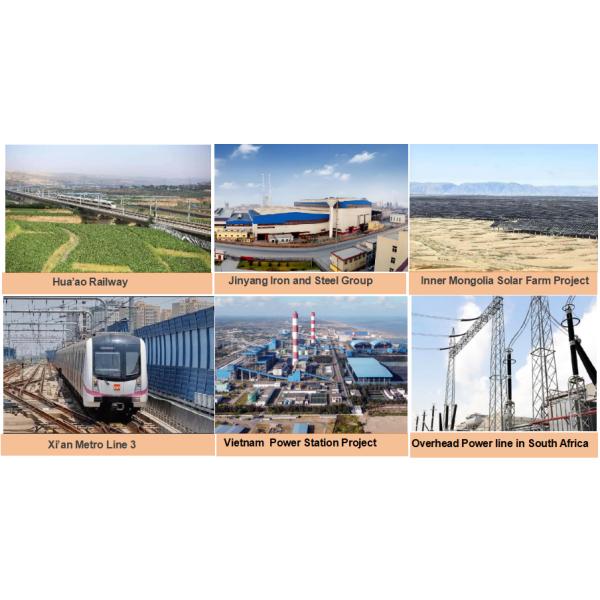
AAAC: Urban power networks, industrial settings, and areas requiring corrosion resistance
AAC: Residential and commercial wiring, fixed installations
ACSR: Long-span overhead lines, heavy mechanical stress areas, and harsh weather conditions


1. What is the main difference between AAC, AAAC, and ACSR conductors?
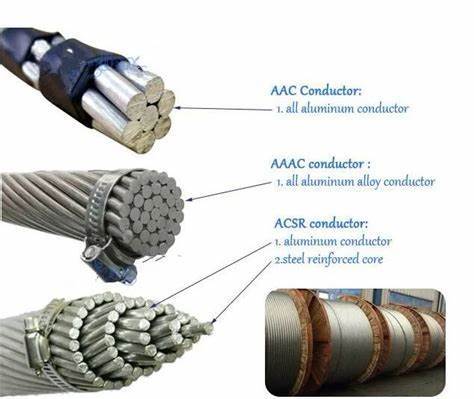
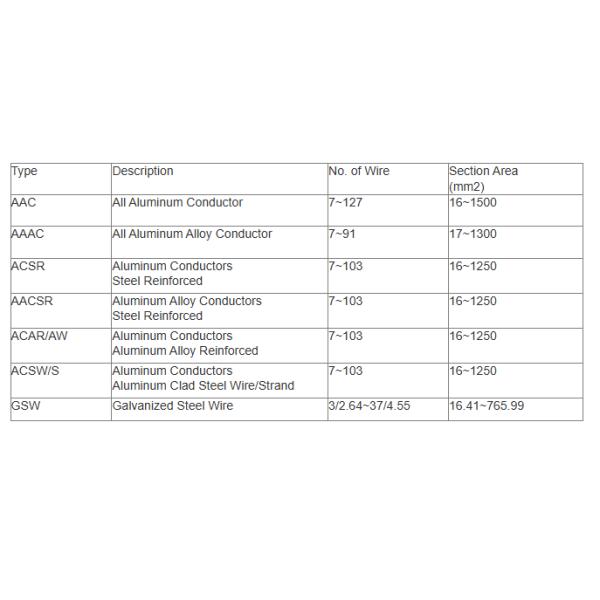
AAC (All Aluminum Conductor): Made of pure aluminum strands, offering high conductivity but lower strength.
AAAC (All Aluminum Alloy Conductor): Uses aluminum alloy strands, providing higher strength and corrosion resistance than AAC.
ACSR (Aluminum Conductor Steel Reinforced): Combines aluminum strands with a steel core for enhanced mechanical strength, ideal for long spans.
2. When should I use AAAC instead of ACSR?
AAAC is preferred in corrosive environments (e.g., coastal areas) due to its alloy composition, while ACSR is better for high-tension applications like river crossings or mountainous terrain.
3. What are the advantages of high-strength AAC?
High-strength AAC (e.g., with alloyed aluminum) offers improved durability and reduced sag compared to standard AAC, making it suitable for urban distribution networks.
4. Can AAAC conductors handle high temperatures?
Yes, AAAC conductors have excellent thermal stability and can operate at higher temperatures than AAC, reducing sag under heavy loads.4
5. Why is ACSR widely used in transmission lines?
ACSR’s steel core provides exceptional tensile strength, allowing longer spans and better resistance to wind and ice loads, which is critical for high-voltage transmission.
6. Are AAC conductors suitable for renewable energy projects?
AAC is commonly used in low-voltage distribution for solar farms, while AAAC/ACSR are preferred for high-voltage transmission lines in large-scale projects.
7. How do I choose between AAC and AAAC for a project?
AAC: Best for cost-sensitive, short-distance applications.
AAAC: Ideal for medium-voltage lines requiring higher strength and corrosion resistance.
8. What are the maintenance requirements for ACSR conductors?
ACSR requires periodic inspections for corrosion at the steel core, but its aluminum coating provides long-term durability in harsh environments.
9. Can AAAC conductors be used in seismic zones?
Yes, AAAC’s flexibility and strength make it suitable for regions prone to earthquakes, as it can withstand dynamic loads better than rigid materials.
10. Where can I find technical specifications for these conductors?
Manufacturers provide detailed datasheets covering electrical properties, mechanical ratings, and compliance with standards like IEC 61089 (AAAC) and ASTM B232 (ACSR).