Product Overview
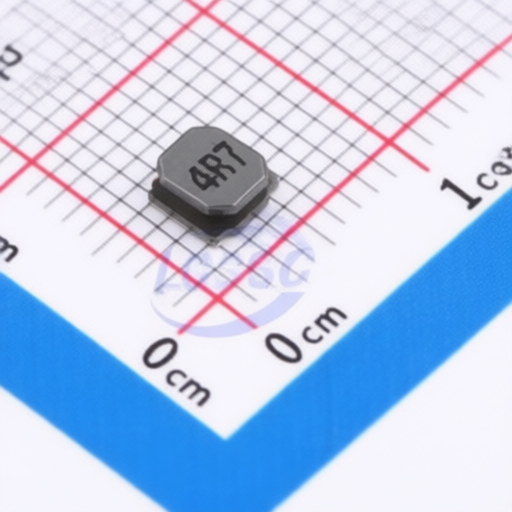
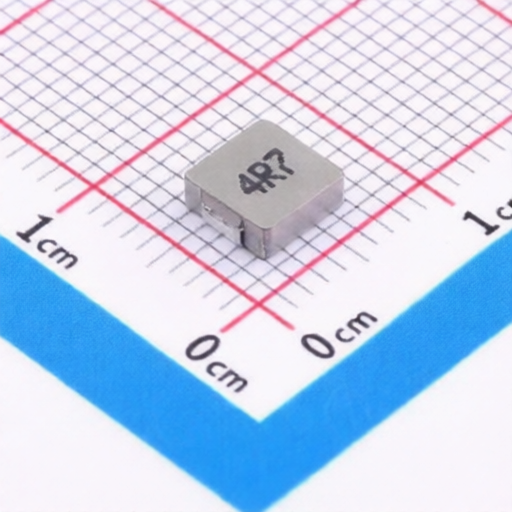
The SNR3015 Series are automatic assembly constructed power inductors featuring magnetic resin shielding. This construction significantly reduces buzz noise to ultra-low levels, offers a closed magnetic circuit design for reduced leakage flux and strong EMI resistance, and provides excellent shock resistance and durability due to metallization on the ferrite core. These inductors are designed for space and power saving, with small parasitic capacitance. They are widely used in applications such as LED backlights, flat-screen TVs, set-top boxes, notebooks, desktop computers, servers, graphic cards, portable gaming devices, personal navigation systems, multimedia devices, automotive products, and telecommunication base stations, as well as DC-DC converters.
Product Attributes
- Brand: SHENZHEN LANTU MICRO ELECTRIC TECHNOLOGY CO., LTD.
- Series: SNR3015
- Construction: Magnetic Resin Shielded SMD Power Inductors
- Certifications: RoHS, Halogen Free, REACH Compliance
- Assembly: Automatic assembly
Technical Specifications
| Part No | Inductance (H) | Inductance Tolerance | Test Frequency (KHz) | Test Voltage (V) | DCR () Typical | DCR () Max | Saturation Current (A) Max | Temperature Rise Current (A) Max | Dimensions (LWH) (mm) |
| SNR3015-R47M | 0.47 | 20% | 100 | 1.0 | 0.024 | 0.035 | 2.50 | 2.60 | 3.03.01.5 |
| SNR3015-1R0M | 1.0 | 20% | 100 | 1.0 | 0.030 | 0.039 | 2.32 | 2.35 | 3.03.01.5 |
| SNR3015-1R5M | 1.5 | 20% | 100 | 1.0 | 0.050 | 0.065 | 2.30 | 1.70 | 3.03.01.5 |
| SNR3015-1R8M | 1.8 | 20% | 100 | 1.0 | 0.050 | 0.065 | 1.75 | 1.70 | 3.03.01.5 |
| SNR3015-2R2M | 2.2 | 20% | 100 | 1.0 | 0.060 | 0.078 | 1.60 | 1.60 | 3.03.01.5 |
| SNR3015-3R3M | 3.3 | 20% | 100 | 1.0 | 0.080 | 0.104 | 1.32 | 1.36 | 3.03.01.5 |
| SNR3015-4R7M | 4.7 | 20% | 100 | 1.0 | 0.125 | 0.165 | 1.10 | 1.09 | 3.03.01.5 |
| SNR3015-6R8M | 6.8 | 20% | 100 | 1.0 | 0.200 | 0.260 | 0.85 | 0.85 | 3.03.01.5 |
| SNR3015-100M | 10 | 20% | 100 | 1.0 | 0.250 | 0.325 | 0.72 | 0.77 | 3.03.01.5 |
| SNR3015-150M | 15 | 20% | 100 | 1.0 | 0.350 | 0.455 | 0.66 | 0.65 | 3.03.01.5 |
| SNR3015-220M | 22 | 20% | 100 | 1.0 | 0.460 | 0.598 | 0.52 | 0.57 | 3.03.01.5 |
| SNR3015-330M | 33 | 20% | 100 | 1.0 | 0.820 | 1.066 | 0.44 | 0.43 | 3.03.01.5 |
| SNR3015-470M | 47 | 20% | 100 | 1.0 | 1.250 | 1.625 | 0.35 | 0.35 | 3.03.01.5 |
| SNR3015-680M | 68 | 20% | 100 | 1.0 | 2.700 | 3.510 | 0.28 | 0.31 | 3.03.01.5 |
| SNR3015-101M | 100 | 20% | 100 | 1.0 | 3.110 | 4.040 | 0.23 | 0.25 | 3.03.01.5 |
| Inductance Tolerance Codes: J:5%, K: 10%, L: 15%, M: 20%, P: 25%, N: 30% |
| Packing Codes: B: Bulk Package, T: Tape & Reel |
| Operating Temperature: -40 to +125 (Including coils self-temperature rise) |
| External Dimensions (LWH): 3.03.01.5 mm |
| Saturation Current: DC current at which inductance drops 30% from its value without current. |
| Temperature Rise Current: The actual value of DC current when the temperature rise is T 40 (Ta=25). |
| Rated DC Current: The lesser value of Isat or Irms. |
Packaging Specifications
| Part No. | Tape Dimension W (mm) | Tape Dimension P (mm) | Tape Dimension W1 (mm) | Reel Dimensions A (mm) | Reel Dimensions B (mm) | Reel Dimensions C (mm) | Reel Dimensions D (mm) | Reel (PCS) | Inside Box (PCS) | Outside Carton (PCS) |
| SNR3015 | 8 | 4 | 3.5 | 8.4 | 60 | 13 | 178 | 2000 | 20,000 | 80,000 |
Reliability Testing
| Item | Requirements | Test Methods and Remarks |
| Terminal Strength (SMT) | Meet requirements without any loose terminal. | Pulling test based on GB/T 2423.60-2008. Solder paste thickness: 0.12mm. Force applied gradually and maintained for 101s at 1.0mm/s. |
| Terminal Strength (DIP) | Meet requirements without any loose terminal. | Pulling test based on GB/T 2423.60-2008. Applied force: 5N to 40N depending on terminal diameter, maintained for 10 sec. |
| Resistance to Flexure | No visible mechanical damage. | Solder to test jig, apply force (2mm flexure) at 0.5mm/sec for 30 sec. (JIS C 5321:1997) |
| Dropping Test | No case deformation or change in appearance. No short and no open. | Drop packaged products from 1m high in 1 angle, 3 ridges, and 6 surfaces, twice in each direction. (GB/T 2423.7-2018) |
| Solderability | Wetting shall exceed 75% coverage. Terminals must have 95% minimum solder coverage. | Solder temperature: 2402, Duration: 3 sec. Solder: Sn/3.0Ag/0.5Cu. Flux: 25% Resin and 75% ethanol. (GB/T 2423.28-2005) |
| Vibration Test | No visible mechanical damage. Inductance change: Within 10%. Q factor change: Within 20%. | Solder to test jig. Subject to harmonic motion (1.5mm amplitude, 10-55 Hz) for 2 hours in 3 perpendicular directions. (GB/T 2423.10-2019) |
| Thermal Shock | No visible mechanical damage. Inductance change: Within 10% (Mn-Zn: Within 30%). Q factor change: Within 20%. | 100 cycles of temperature cycling (-55~40 to 85~125). Transforming interval: Max. 20 sec. (GB/T 2423.22-2012 Method Na) |
| Low Temperature Storage | No visible mechanical damage. Inductance change: Within 10% (Mn-Zn: Within 30%). Q factor change: Within 20%. | Temperature: -55~-402. Duration: 962 hours. (GB/T 2423.1-2008 Method Ab) |
| High Temperature Storage | No visible mechanical damage. Inductance change: Within 10% (Mn-Zn: Within 30%). Q factor change: Within 20%. | Temperature: 125~852. Duration: 962 hours. (GB/T 2423.2-2008 Method Bb) |
| Damp Heat (Steady States) | No visible mechanical damage. Inductance change: Within 10% (Mn-Zn: Within 30%). Q factor change: Within 20%. | Temperature: 602. Humidity: 90% to 95% RH. Duration: 962 hours. (GB/T 2423.3-2016) |
| Heat endurance of Reflow soldering | No significant defects in appearance. L/L10% (Mn-Zn: L/L30%). Q/Q30% (SMD series only). DCR/DCR10%. | Refer to reflow curve, undergo reflow twice. Peak temperature: 260+0/-5. (GJB 360B-2009) |
| Resistance to solvent test | No case deformation or change in appearance or obliteration of marking. | Dip parts into IPA solvent for 50.5Min, dry for 5Min, brush 10 times. (IEC 68-2-45:1993) |
| Overload test | During test no smoke, no peculiar smell, no fire. Characteristics normal after test. | Apply twice rated current for 5 minutes. (JIS C5311-6.13) |
| Voltage resistance test | During test no breakdown. Characteristics normal after test. | For parts with two coils: DC1000V, Current: 1mA, Time: 1Min. (MIL-STD-202G Method 301) |
Recommended Reflow Soldering Curve
The recommended reflow conditions are set according to the soldering equipment. Users should adjust and confirm conditions based on their specific environment and equipment.
Usage Reminders
- Storage: Within 12 months, under conditions of 5~40C and 35~65% RH. Exceeding this period may degrade terminal solderability.
- Environment: Avoid use and storage in gas corrosive environments (salt, acid, alkali, etc.).
- Handling: Avoid direct contact with terminals by bare hands due to oil secretions. Handle products carefully to prevent damage from dropping or improper removal.
- Terminal Bending: Do not bend terminals excessively to avoid wire fracture.
- Cleaning: Do not rinse coils. Contact the manufacturer if cleaning is necessary.
- Magnetic Fields: Do not expose products to magnets or magnetic fields.
- Preheating: Preheat components before soldering. The temperature difference between solder and chip temperature should not exceed 150C.
- Soldering Corrections: Post-mounting soldering corrections should be within specified conditions. Overheating may cause short circuits, performance degradation, or reduced lifespan.
- Self-Heating: Devices generate heat when powered on; ensure sufficient thermal design tolerance.
- Non-Magnetic Shield Type: Careful coil layout is required in PCB design to prevent malfunctions due to magnetic interference.
2410121442_LanTu-Micro-SNR3015-101MT_C5127546.pdf