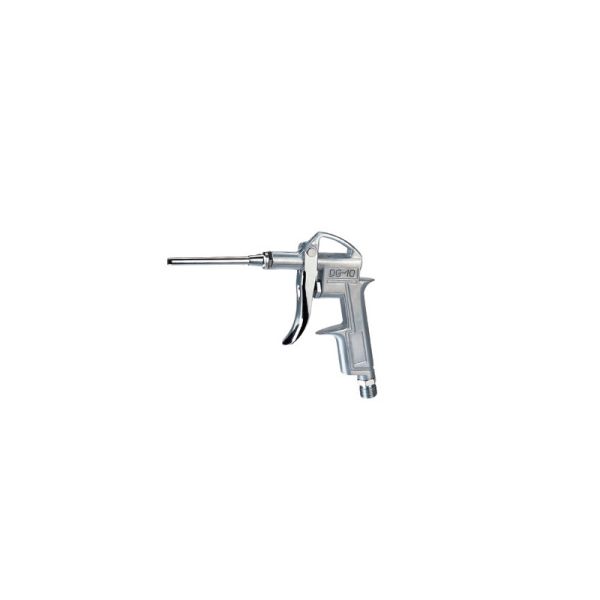
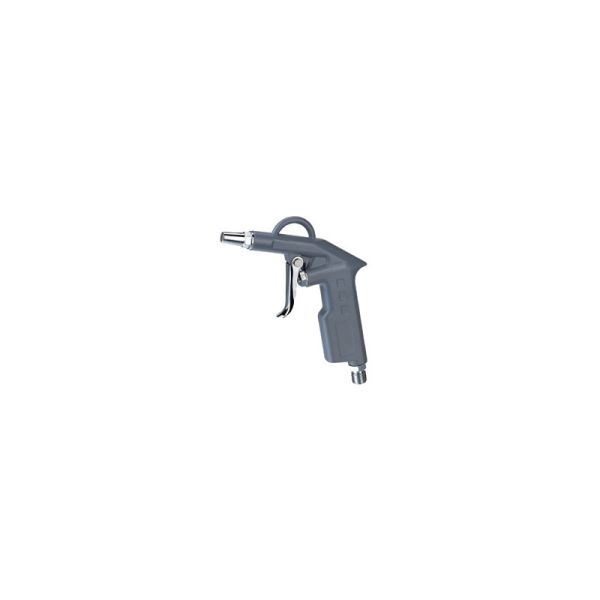
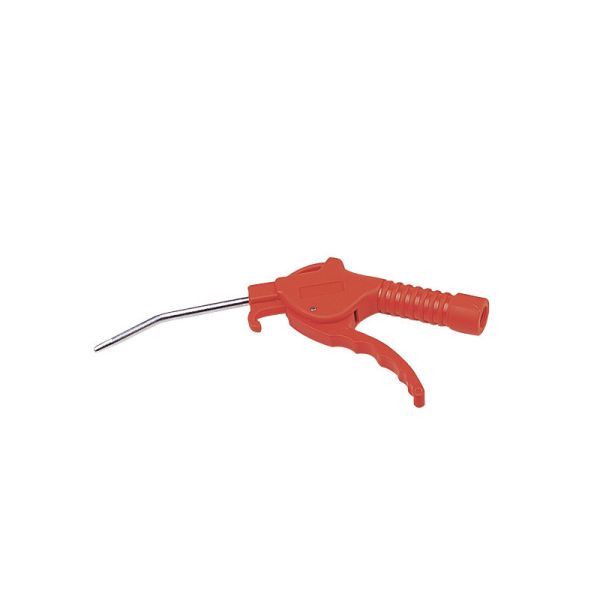
Centered on "scenario-specific nozzles + HVLP efficient atomization", the YD32-009 Series is designed differently for various spraying needs, with core advantages as follows:
- Long Nozzle Advantages: The 12cm long nozzle can reach deep-cavity areas (depth ≤15cm) such as furniture drawers and cabinet partitions, avoiding "missed spraying" and "thick paint" caused by hand blocking the view. For example, when spraying the inner side of wardrobe drawers, traditional short nozzles require repeated angle adjustments, while the 009-1 long nozzle can cover it in one pass, increasing efficiency by 60%;
- Durable Material: The 304 stainless steel nozzle is resistant to paint wear. Even when spraying primer with fine particles (e.g., furniture sealer primer), it will not scratch the inner wall, and its service life is twice that of ordinary long nozzles.
- Short Nozzle Advantages: The 6cm short nozzle is lightweight (20g lighter than the long nozzle), making it more flexible to hold. It is suitable for fine scenarios such as auto local touch-up and wooden door frames. For example, when touching up scratches on auto door handle grooves, the short nozzle can precisely control the spray pattern range (15-20cm in width), avoiding paint mist spreading to the surrounding paint surface without large-area masking;
- Dual-Model Adaptation: Both 009-2 and 009-3 are short nozzles. 009-2 focuses on "low-viscosity clear coat spraying" (atomized particles ≤35μm), and 009-3 focuses on "medium-viscosity colored paint spraying" (atomized particles ≤40μm), meeting fine needs of different coatings.
- Workpiece Protection Without Damage: Low-pressure atomization avoids high-pressure impact on vulnerable workpieces. For example, when spraying the surface of wooden furniture, it will not cause excessive expansion of wood pores (reducing the risk of later deformation); when touching up auto plastic parts, it will not damage the surface coating, reducing the workpiece damage rate by 30% compared with high-pressure spray guns;
- Material-Saving and Environmental Protection: With a paint utilization rate of over 75%, only 80mL of paint is needed for 1㎡ wall spraying (120mL for traditional high-pressure spray guns). Long-term bulk use can save 30% of paint costs, and paint mist spread is reduced by 50%, allowing use without professional ventilation equipment.
The built-in pressure regulating valve supports 45-50 PSi fine adjustment: reduce to 45 PSi for low-viscosity clear coat (e.g., furniture clear coat) for finer atomization, and increase to 50 PSi for medium-viscosity colored paint (e.g., auto topcoat) to prevent blockage. No additional equipment is needed—beginners can get started in 10 minutes by referring to the manual, and the spraying effect is comparable to that of professional technicians.
Compared with 300mL small cups, the 600mL cup reduces refueling frequency by 50%. Only one refuel is needed to spray a standard wooden door (2.5㎡), avoiding frequent shutdowns that affect spraying continuity, especially suitable for bulk operations in furniture factories.
The aviation-grade aluminum alloy gun body weighs only as much as a large bottle of mineral water, causing no hand soreness even after 2 hours of continuous spraying. The grip adopts an "ergonomic arc design" that fits the palm's force points, and the trigger pressing force is only 3N (equivalent to lifting a 0.3kg object), with no finger pressure during long-term operations.
Scenario Requirement: A furniture factory sprays polyurethane clear coat on 100 sets of wardrobes (including drawer deep cavities and cabinet surfaces) using YD32-009-1 (deep cavities) + YD32-009-3 (surfaces) with a 0.5m³/min industrial air compressor at 48 PSi pressure, and paint viscosity of 15s.
Operation Process:
- Division & Preparation: Work in groups of 2—one person sprays drawer deep cavities with 009-1 long nozzle (1.4mm caliber), and the other sprays cabinet surfaces with 009-3 short nozzle (1.5mm caliber). Add 480mL of clear coat to the cup;
- Bulk Spraying:
- Deep cavities (009-1): Reach the inner side of the drawer, keep 15cm nozzle distance, taking 3 minutes per drawer;
- Surfaces (009-3): Keep 20cm nozzle distance, taking 2 minutes per cabinet side panel; - Cleaning & Maintenance: Rinse the nozzles with clear coat thinner after spraying 10 sets of wardrobes (focus on rinsing the inner wall of the 009-1 long nozzle, taking 2 minutes).
Result: 100 sets of wardrobes are completed in 3 days (5 days with traditional spray guns), with no missed spraying in deep cavities and no orange peel on surfaces. The clear coat utilization rate is 78%, saving 1.5L of clear coat per day compared with traditional spray guns.
Scenario Requirement: An auto repair shop touches up an acrylic topcoat on a local scratch (10cm×5cm) of a family car rear bumper using YD32-009-2 short nozzle (1.5mm caliber) with a 0.3m³/min portable air compressor at 45 PSi pressure, and paint viscosity of 14s.
Operation Process:
- Pre-Treatment: Sand the scratch with 2000-grit sandpaper, mask the surrounding area, install the 009-2 short nozzle, and pour 100mL of topcoat;
- Fine Touch-Up: Keep 15cm nozzle distance, lightly press the trigger, and spray uniformly along the scratch direction. Apply 3 thin coats (5-minute interval between coats), with 8μm thickness per coat;
- Finishing: After drying, polish with 3000-grit sandpaper, and clean the gun body (rinse the nozzle with topcoat thinner, taking 1 minute).
Result: The color difference between the touch-up area and the original paint is ≤ΔE2.0 (hardly visible to the naked eye), with no blurring or sagging. Customer satisfaction reaches 99%, and the touch-up time is reduced from 40 minutes with traditional spray guns to 20 minutes.
Scenario Requirement: A DIY user renovates a 1.2m×0.8m solid wood dining table (surface + table leg grooves) using YD32-009-1 (table leg grooves) + YD32-009-3 (table surface) with a 0.3m³/min household air compressor at 47 PSi pressure, and water-based wood paint (viscosity 16s).
Operation Process:
- Preparation: Use 009-1 long nozzle to spray table leg grooves (1.4mm caliber) and 009-3 short nozzle to spray the table surface (1.5mm caliber). Add 300mL of wood paint to the cup;
- Spraying:
- Grooves (009-1): Keep 12cm nozzle distance when reaching the grooves, taking 5 minutes per table leg;
- Surface (009-3): Keep 20cm nozzle distance, spray uniformly with one pass, taking 8 minutes; - Cleaning: Rinse the gun body with clean water (water-based paint is easy to clean), and store after drying.
Result: The table surface is smooth with no brush marks, and no missed spraying in the grooves. The wood paint adhesion meets Grade 1 of GB/T 9286-1998 (no peeling), with a total cost of only 200 yuan (saving 80% compared with hiring a professional team).
A1: It is mostly due to too close nozzle distance or high paint viscosity. Solve it step by step:
- Adjust Nozzle Distance: Increase the nozzle distance from 15cm to 18cm to prevent the nozzle root from directly contacting the workpiece and causing paint accumulation. At the same time, keep moving at a uniform speed (30cm/s) to reduce local residence time;
- Dilute Paint: If the paint viscosity is >18s, add 5%-8% dedicated thinner (water for water-based paint, corresponding thinner for solvent-based paint) to reduce it to 15-16s and improve paint leveling;
- Nozzle Maintenance: Immediately rinse the inner wall of the long nozzle with thinner after spraying (use a dedicated slender brush if needed) to avoid paint drying and hardening at the root. Test paint output before next use.
A2: Distinguish based on coating type and precision needs to avoid affecting the effect due to wrong selection:
- Choose YD32-009-2: For spraying low-viscosity clear coat (e.g., furniture clear coat, auto clear coat), its stainless steel inner wall is smoother, with atomized particles ≤35μm, which can form a more transparent coating, suitable for scenarios pursuing "mirror effect";
- Choose YD32-009-3: For spraying medium-viscosity colored paint (e.g., wooden door colored paint, hardware topcoat), the brass nozzle is resistant to pigment wear and less prone to "color difference precipitation", suitable for scenarios requiring "uniform color";
- General Suggestion: For daily touch-up and mixed use of multiple coatings, prioritize 009-3 (stronger compatibility); for professional clear coat spraying, choose 009-2 (better effect).
A3: It is mostly due to improper operation of the feeding method or sealing issues. Troubleshoot quickly:
- Check Feeding Posture: Gravity feeding requires the gun body to be tilted at an angle ≥30° (not horizontal or inverted). If the gun body is too flat during deep-cavity spraying, paint is prone to backflow—when using the 009-1 long nozzle, slightly lift the gun tail to keep the cup higher than the nozzle;
- Check Cup Lid Sealing: A loose cup lid causes air pressure imbalance, and paint flows back with air flow—tighten the cup lid clockwise until a "click" sound is heard, and check if the sealing ring is aged (replace with an original sealing ring if aged);
- Emergency Treatment: If no spare sealing ring is available temporarily, apply a thin layer of petroleum jelly on the surface of the sealing ring to enhance sealing, which can be used temporarily for 2-3 times.
A4: A 0.25m³/min air compressor is only suitable for small-area emergencies; ≥0.3m³/min is recommended for large areas:
- Small-Area Emergency (e.g., one small drawer, area 1㎡): A 0.25m³/min air compressor can support 009-2/3 short nozzles. Use the "30s spraying + 20s pause" intermittent mode to avoid air pressure dropping below 45 PSi (which affects atomization);
- Large-Area/Deep-Cavity Spraying (e.g., whole-house furniture, auto touch-up): Must replace with an air compressor of ≥0.3m³/min. Otherwise, problems such as "unstable air pressure → larger atomized particles → uneven coating" will occur, and frequent start-stop of the compressor will shorten its service life;
- Adaptation Suggestion: When choosing an air compressor, prioritize models with "air tank ≥20L". The air tank can stabilize air pressure, ensuring stable output of 45-50 PSi even with slightly lower displacement, and avoiding atomization fluctuations.