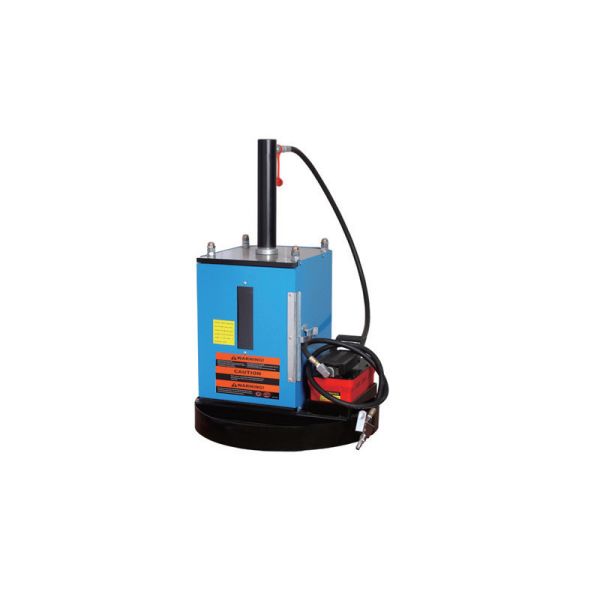
YD46-001 10 Ton Oil Filter Crusher addresses two critical pain points in waste oil filter handling: "large storage volume" and "residual oil pollution". With "10-ton high pressure + 95% oil extraction + air-operated safety" as core strengths, it optimizes waste management for workshops and recycling facilities, offering key advantages as follows:
- Extreme Compaction: The 10-ton hydraulic pressure compacts used oil filters or small oil cans to just 10% of their original size. For example, a standard 1L oil filter is reduced to 0.1L after crushing, cutting storage space by 90%. This is a game-changer for shops handling 50+ filters daily, as it reduces the frequency of waste disposal trips by 80%.
- Universal Fit: The 240mm diameter and 300mm stroke accommodate most standard oil filters (from passenger car to light truck sizes). Unlike small crushers limited to specific filter types, YD46-001 eliminates the need for multiple specialized tools.
- Efficient Oil Recovery: The integrated oil drain tray collects up to 95% of residual oil from crushed filters. This not only prevents oil leakage (a common cause of workshop floor stains) but also allows recovery of usable waste oil for recycling. For a shop crushing 100 filters monthly (each with 200ml residual oil), this translates to 19L of recoverable oil – a small but valuable resource.
- Clean Operation: The oil drain tray is designed to channel extracted oil directly into a waste oil drum (via a built-in outlet), no manual transfer required. This keeps the crusher and surrounding area clean, reducing post-operation cleanup time by 90%.
- Explosive-Proof Design: Being 100% air-operated means no electrical components, making it safe for use in environments with flammable oil vapors (e.g., fleet maintenance yards, oil recycling plants). It also eliminates the risk of electrical malfunctions in humid or dusty workshop conditions.
- Dual Safety Protection: The filter hatch air line cut-off is a critical safety feature – if the hatch is not fully closed, the crusher cannot start, preventing operator injury from moving parts. Additionally, the sturdy steel housing (supporting 10-ton pressure) ensures no deformation or leakage during operation, with a service life of 10+ years.
- Space-Saving Size: The 58×58×56cm (packaged) footprint fits in small workshop corners, no need for dedicated large spaces. Even when in use, it occupies ≤0.5㎡ of floor space, compatible with busy repair shop layouts.
- Heavy-Duty Build: The 64kg net weight (steel construction) resists vibration and impact during continuous use. The hydraulic components are sealed to prevent oil contamination, ensuring smooth operation for 5,000+ crushing cycles without maintenance.
Scenario Requirement: A busy auto repair shop handles 30 used oil filters daily (mix of passenger car and light truck sizes). The shop has limited storage space and needs to recover residual oil to avoid floor pollution.
Operation Process:
- Prep & Setup: Place YD46-001 near the waste oil drum, connect it to an industrial air compressor (80-120PSI), and position the oil drain tray outlet over the drum;
2. Crushing Operation: Open the filter hatch, place one filter inside, close the hatch (air line activates), and start the crusher. Each filter takes 15 seconds to crush, with 95% of residual oil draining into the drum;
3. Waste Management: Collect crushed filters (now 10% of original size) in a small bin – 30 filters occupy the same space as 3 uncrushed ones;
4. Completion: 30 filters processed in 7.5 minutes; 5.7L of residual oil recovered for recycling.
Effect: Saves storage space; eliminates oil stains; reduces disposal costs.
Scenario Requirement: A logistics fleet maintenance yard processes 200 used truck oil filters weekly. The yard needs to reduce waste volume for cost-effective disposal and ensure safe operation around flammable materials.
Operation Process:
- Batch Processing: Assign one technician to operate YD46-001 – load 2 filters at a time (when compatible with 240mm diameter), crush each batch in 20 seconds;
2. Safety Compliance: The hatch air line cut-off prevents accidents during fast-paced loading; no electrical components reduce fire risks;
3. Efficiency: 200 filters processed in 3.5 hours; crushed filters are transported to recycling in one small truck (vs. 3 trucks for uncrushed filters);
4. Oil Recovery: 40L of residual oil recovered weekly, sold to waste oil recyclers for additional revenue.
Effect: Lowers disposal costs; improves safety; generates extra income from oil recovery.
Scenario Requirement: An oil recycling facility receives 500 used oil filters daily from local shops. The facility needs to extract residual oil for refining and compact filters for efficient transport to metal recyclers.
Operation Process:
- Assembly Line Integration: Place 2 YD46-001 units in a processing line – one for passenger car filters, one for light truck filters;
2. Continuous Operation: Technicians load filters into the crushers, with extracted oil flowing into a central storage tank; crushed filters are conveyed to a metal recycling bin;
3. Output: 500 filters processed in 8 hours; 95L of residual oil extracted (for refining) and 50L of compacted filter waste (for metal recycling);
4. Compliance: Meets environmental regulations for oil waste handling, with no oil leakage during processing.
Effect: Optimizes recycling workflow; increases oil recovery yield; ensures regulatory compliance.
A1: Low pressure is usually caused by air supply issues or seal leaks. Solutions: 1) Check Air Compressor Pressure: Ensure the air compressor delivers 80-120PSI (the crusher needs sufficient air volume to build 10-ton hydraulic pressure); 2) Inspect Air Lines: Look for cracks or loose connections in the air hoses – replace damaged hoses or tighten fittings; 3) Check Hydraulic Seals: If air lines are intact, inspect the crusher’s hydraulic seals (wear or damage reduces pressure). Replace seals with original manufacturer parts if needed. After these steps, pressure should restore to 10 tons.
A2: No. The crusher is designed for filters with diameter ≤240mm and height ≤300mm. Large truck filters (often 300mm+ in diameter) will not fit in the 240mm chamber and may damage the crusher’s hydraulic components. For large truck filters, use a heavy-duty crusher with a larger chamber (e.g., 300mm diameter). Attempting to crush oversized filters will void the warranty and may cause safety hazards.
A3: Regular maintenance of the oil drain tray prevents clogging: 1) Daily Cleaning: After each use, wipe the tray with a rag to remove oil residue; if there is debris (e.g., filter fragments), use a brush to clear the drain outlet; 2) Weekly Deep Clean: Fill the tray with warm water and mild detergent, soak for 15 minutes, then scrub with a soft brush to remove stubborn oil buildup; 3) Monthly Inspection: Check the tray’s outlet for blockages – if clogged, use a thin wire to clear it. These steps ensure smooth oil flow and extend the tray’s life.
A4: Basic training is recommended to ensure safety and efficiency: 1) Safety Training: Teach operators to check the hatch air line cut-off (ensure it works before use) and never place hands near the crushing chamber; 2) Operation Training: Demonstrate proper filter loading (center the filter to avoid uneven pressure) and air pressure adjustment (80-120PSI); 3) Maintenance Training: Show how to clean the oil drain tray and inspect air lines. Most operators master the crusher in 30 minutes, but training reduces the risk of accidents and equipment damage.