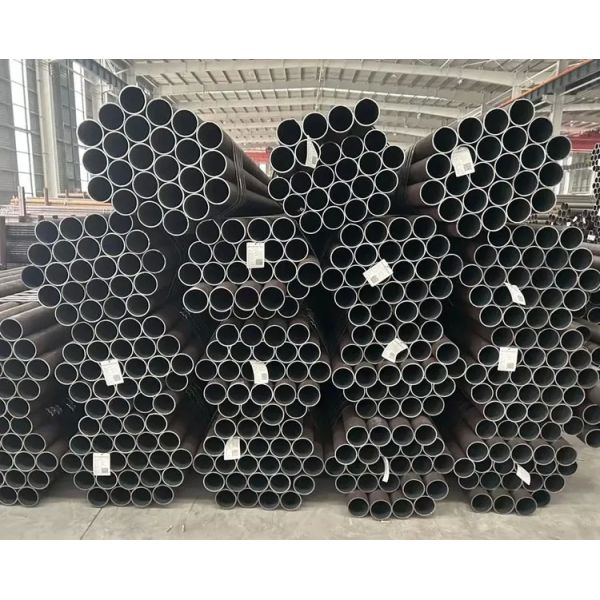
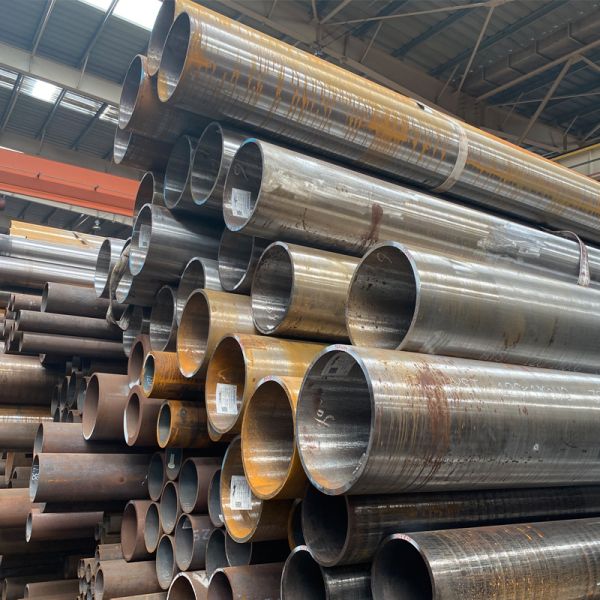
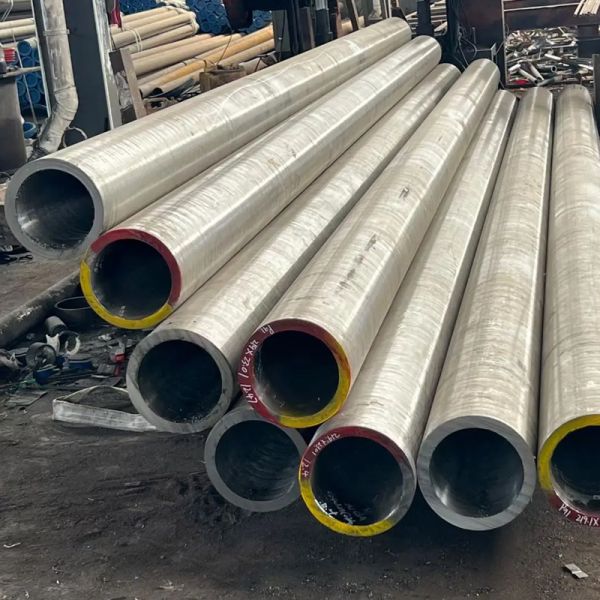
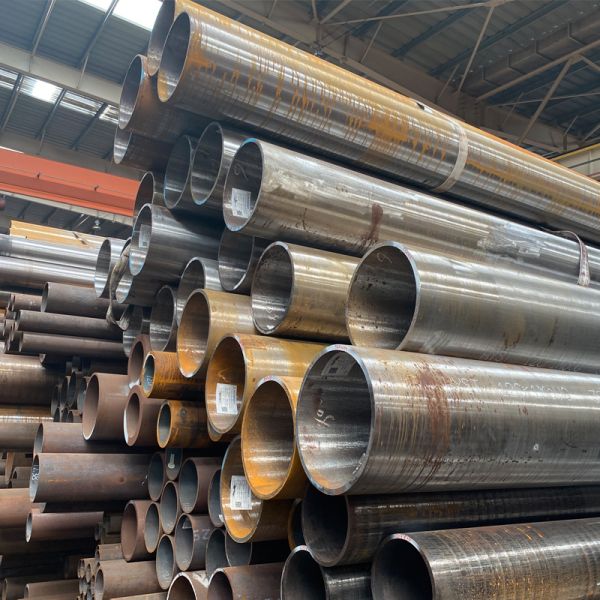
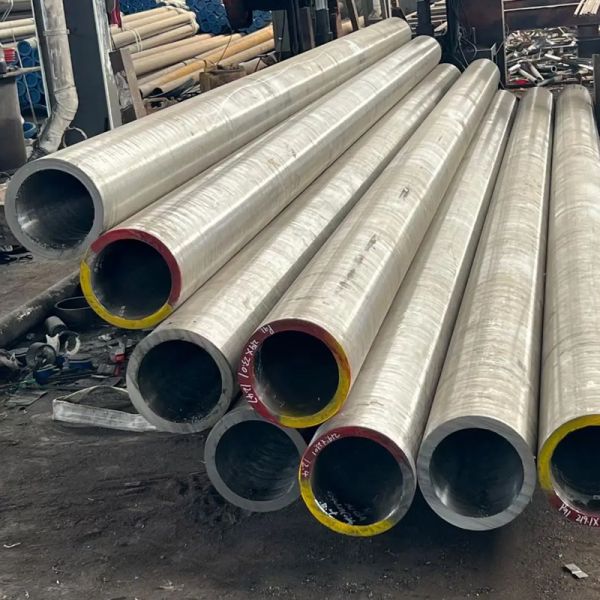
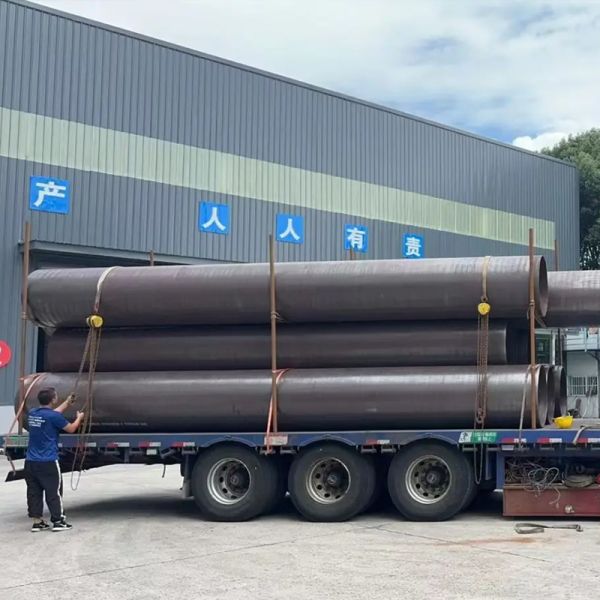
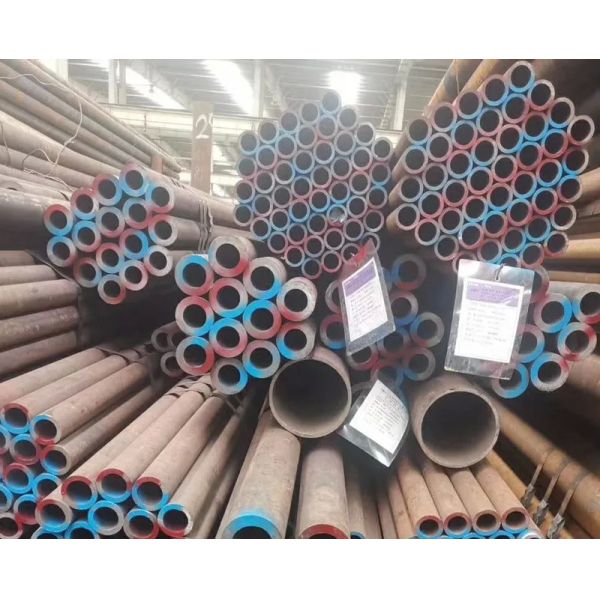
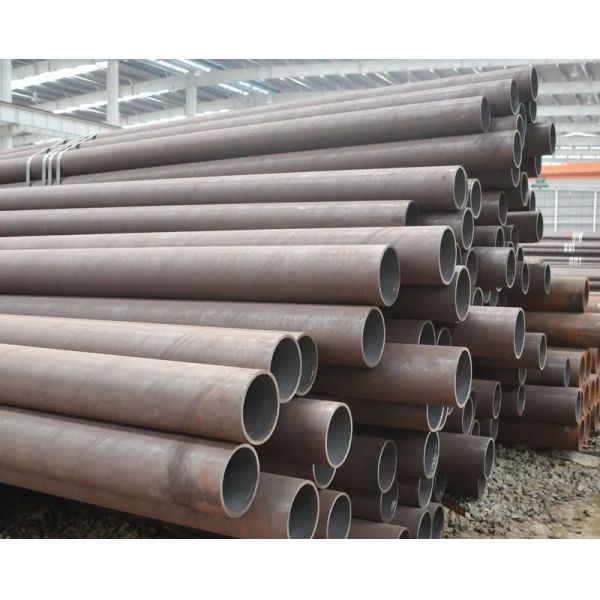
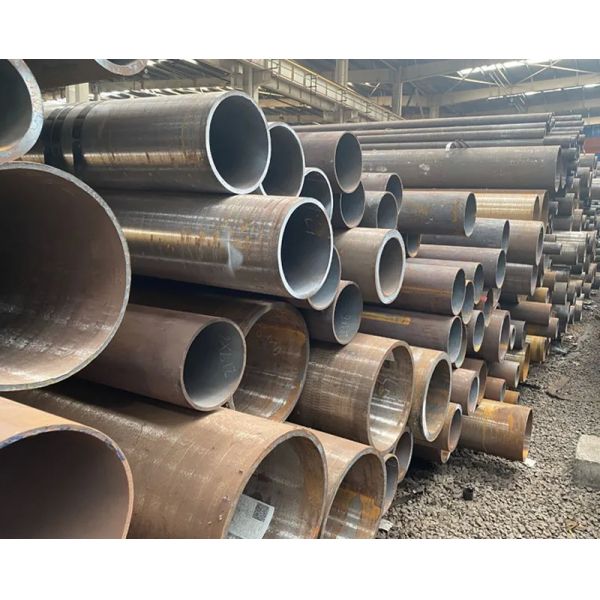
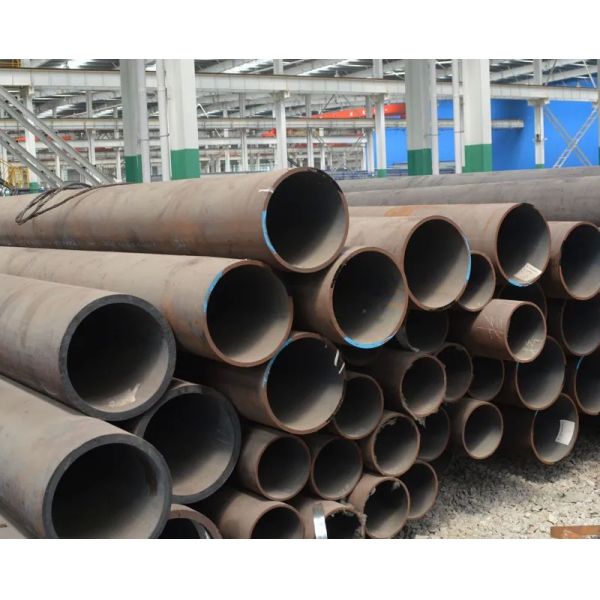
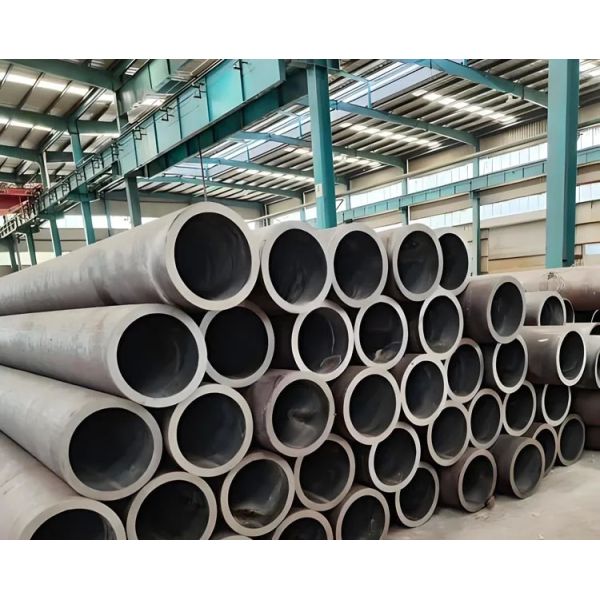
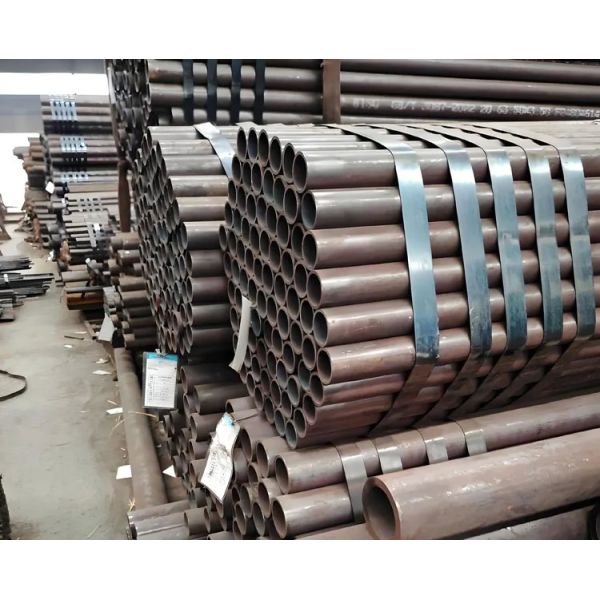
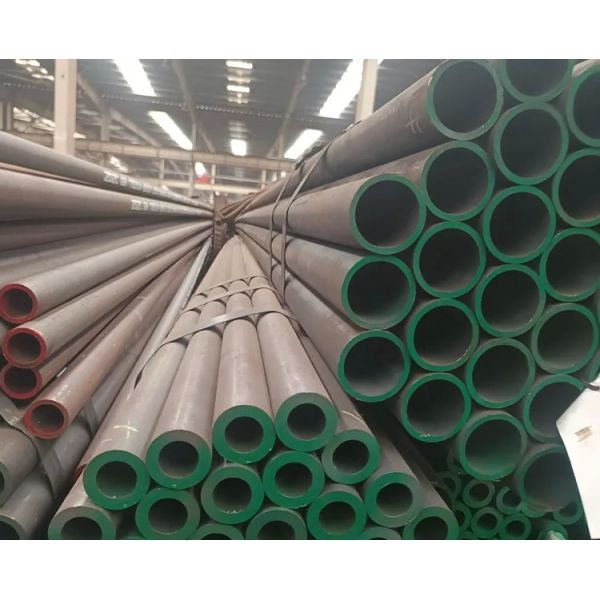
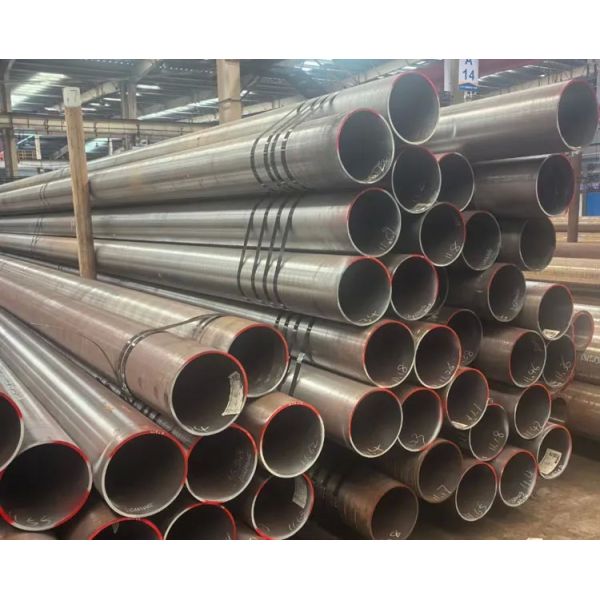
A106C Seamless Pipe
ASTM A106 Grade C seamless pipe is a high-temperature carbon steel pipe widely recognized for its reliability in critical pressure applications. This document provides a detailed overview of its specification, chemical and mechanical properties, manufacturing process, key applications, and advantages.
| Pipe types | Outer-caliber(D) | Thickness(S) | ||
| Pipe outer-caliber(mm) | Allowable warp(mm) | Pipe thickness(mm) | Allowable warp(mm) | |
| Hot-rolled pipes | >219~457 | ±1.0% | ≤20 | -10%,+12.5% |
| >20~40 | -10%,+10% | |||
| >457~1066 | ±0.9% | >40~70 | -7%,+9% | |
| >70~120 | -6%,+8% | |||
| Standards | Steel pipes No. | Tensile strength(MPa) | Bend strength(MPa) | Elongation(%) | Impact energy(J) | Hardness | |
| GB3087 | 10 | 335~475 | ≥195 | ≥24 | / | ||
| 20 | 410~550 | ≥245 | ≥20 | / | |||
| GB5310 | 20G | 410~550 | ≥245 | ≥24 | ≥35 | / | |
| 20MnG | ≥415 | ≥240 | ≥22 | ≥35 | / | ||
| 25MnG | ≥485 | ≥275 | ≥20 | ≥35 | / | ||
| 15CrMoG | 440~640 | ≥235 | ≥21 | ≥35 | / | ||
| 12Cr2MoG | 450~600 | ≥280 | ≥20 | ≥35 | / | ||
| 12Cr1MoVG | 470~640 | ≥255 | ≥21 | ≥35 | / | ||
| 10Cr9Mo1VNb | ≥585 | ≥415 | ≥20 | ≥35 | / | ||
| ASME SA106 | SA106B | ≥415 | ≥240 | ≥22 | ≥35 | / | |
| SA106C | ≥485 | ≥275 | ≥20 | ≥35 | / | ||
| ASME SA333 | SA333Ⅰ级 | ≥380 | ≥205 | ≥28 | -45≥18 | / | |
| ASME SA335 | SA335 P11 | ≥415 | ≥205 | ≥22 | ≥35 | ≤163HB | |
| SA335 P12 | ≥415 | ≥220 | ≥22 | ≥35 | ≤163HB | ||
| SA335 P22 | ≥415 | ≥205 | ≥22 | ≥35 | ≤163HB | ||
| SA335 P5 | ≥415 | ≥205 | ≥22 | ≥35 | ≤187HB | ||
| SA335 P91 | 585~760 | ≥415 | ≥20 | ≥35 | ≤250HB | ||
| SA335 P92 | ≥620 | ≥440 | ≥20 | ≥35 | 250HB | ||
| DIN17175 | ST45.8/Ⅲ | 410~530 | ≥255 | ≥21 | ≥27(DVM) | / | |
| 15Mo3 | 450~600 | ≥270 | ≥22 | ≥34(DVM) | / | ||
| 13CrMo44 | 440~590 | ≥290 | ≥22 | ≥34(DVM) | / | ||
| 10CrMo910 | 480~630 | ≥280 | ≥20 | ≥34(DVM) | / | ||
| EN10216-2 | 15NiCuMoNb5-6-4 (WB36) | 610~780 | ≥440 | ≥19 | ≥40 | / |
Chemical composition:
| Standards | Steel pipes No. | Chemical composition(%) | |||||||||||||
| C | Si | Mn | P | S | Cr | Mo | Cu | Ni | V | Al | W | Nb | N | ||
| GB3087 | 10 | 0.07~0.13 | 0.17~0.37 | 0.38~0.65 | ≤0.030 | ≤0.030 | 0.3~0.65 | / | ≤0.25 | ≤0.30 | / | / | |||
| 20 | 0.17~0.23 | 0.17~0.37 | 0.38~0.65 | ≤0.030 | ≤0.030 | 0.3~0.65 | / | ≤0.25 | ≤0.30 | / | / | ||||
| GB5310 | 20G | 0.17~0.24 | 0.17~0.37 | 0.35~0.65 | ≤0.030 | ≤0.030 | ≤0.25 | ≤0.15 | ≤0.20 | ≤0.25 | ≤0.08 | ||||
| 20MnG | 0.17~0.25 | 0.17~0.37 | 0.70~1.00 | ≤0.030 | ≤0.030 | ≤0.25 | ≤0.15 | ≤0.20 | ≤0.25 | ≤0.08 | |||||
| 25MnG | 0.23~0.27 | 0.17~0.37 | 0.70~1.00 | ≤0.030 | ≤0.030 | ≤0.25 | ≤0.15 | ≤0.20 | ≤0.25 | ≤0.08 | |||||
| 15CrMo | 0.12~0.18 | 0.17~0.37 | 0.40~0.70 | ≤0.030 | ≤0.030 | 0.80~1.10 | 0.40~0.55 | ≤0.20 | ≤0.30 | ||||||
| 12Cr2MoG | 0.08~0.15 | ≤0.50 | 0.40~0.70 | ≤0.030 | ≤0.030 | 2.00~2.50 | 0.90~1.20 | ≤0.20 | ≤0.30 | ||||||
| 12Cr1MoV | 0.08~0.15 | 0.17~0.37 | 0.40~0.70 | ≤0.030 | ≤0.030 | 0.90~1.20 | 0.25~0.35 | ≤0.20 | ≤0.30 | 0.15~0.30 | |||||
| 10Cr9Mo1VNb | 0.08~0.12 | 0.20~0.50 | 0.30~0.60 | ≤0.020 | ≤0.010 | 8.00~9.50 | 0.85~1.05 | ≤0.20 | ≤0.40 | 0.18~0.25 | ≤0.015 | 0.06~0.10 | 0.03~0.07 | ||
| ASME SA106 | SA106B | 0.17~0.25 | ≥0.1 | 0.70~1.00 | ≤0.030 | ≤0.030 | |||||||||
| SA106C | 0.23~0.27 | ≥0.1 | 0.70~1.00 | ≤0.030 | ≤0.030 | ||||||||||
| ASME SA333 | SA333Ⅰ | 0.09~0.12 | / | 0.7~1.00 | ≤0.020 | ≤0.010 | |||||||||
| SA333Ⅵ | 0.09~0.12 | ≥0.1 | 0.9~1.10 | ≤0.020 | ≤0.010 | ||||||||||
| ASME SA335 | SA335 P11 | 0.05~0.15 | 0.50~1.0 | 0.30~0.60 | ≤0.030 | ≤0.030 | 1.00~1.50 | 0.50~1.00 | |||||||
| SA335 P12 | 0.05~0.15 | ≤0.50 | 0.30~0.61 | ≤0.030 | ≤0.030 | 0.80~1.25 | 0.44~0.65 | ||||||||
| SA335 P22 | 0.05~0.15 | ≤0.50 | 0.30~0.60 | ≤0.030 | ≤0.030 | 1.90~2.60 | 0.87~1.13 | ||||||||
| SA335 P5 | ≤0.15 | ≤0.50 | 0.30~0.60 | ≤0.030 | ≤0.030 | 4.00/ 6.00 | 0.45/ 0.65 | ||||||||
| SA335 P91 | 0.08~0.12 | 0.20~0.50 | 0.30~0.60 | ≤0.020 | ≤0.010 | 8.00~9.50 | 0.85~1.05 | ≤0.40 | 0.18~0.25 | ≤0.015 | 0.06~0.10 | 0.03~0.07 | |||
| SA335 P92 | 0.07~0.13 | ≤0.50 | 0.30~0.60 | ≤0.020 | ≤0.010 | 8.50~9.50 | 0.30~0.60 | 0.30~0.60 | ≤0.40 | 0.15~0.25 | ≤0.015 | 1.50~2.00 | 0.04~0.09 | 0.03~0.07 | |
| DIN 17175 | ST45.8/Ⅲ | ≤0.21 | 0.10~0.35 | 0.40~1.20 | ≤0.040 | ≤0.040 | ≤0.30 | ||||||||
| 15Mo3 | 0.12~0.20 | 0.10~0.35 | 0.40~0.80 | ≤0.035 | ≤0.035 | 0.25~0.35 | |||||||||
| 13CrMo44 | 0.10~0.18 | 0.10~0.35 | 0.40~0.70 | ≤0.035 | ≤0.035 | 0.70~1.10 | 0.45~0.65 | ||||||||
| 10CrMo910 | 0.08~0.15 | ≤0.50 | 0.30~0.70 | ≤0.025 | ≤0.020 | 2.00~2.50 | 0.90~1.10 | ≤0.30 | ≤0.30 | ≤0.015 | |||||
| EN1021 6-2 | 15NiCuMoNb5-6-4 (WB36) | ≤0.17 | 0.25~0.50 | 0.80~1.20 | ≤0.025 | ≤0.020 | ≤0.30 | 0.25~0.50 | 0.50~0.80 | 1.00~1.30 | ≤0.05 | 0.015~0.045 | |||
1. Specification and Scope
ASTM A106 is a standard specification for seamless carbon steel pipe intended for high-temperature service. The "A106" designation is set by ASTM International (formerly the American Society for Testing and Materials), a globally recognized leader in developing voluntary consensus standards for materials. The "C" denotes the grade, with Grade C offering the highest strength among the three grades (A, B, C) defined in the standard.
This standard covers seamless pipes suitable for bending, flanging, and other similar forming operations. They are primarily designed for use in pressure systems, transporting gases, steam, water, and other fluids at elevated temperatures. The standard includes requirements for chemical composition, mechanical properties, hydrostatic testing, non-destructive electric testing, and dimensions.
Chemical Composition
The chemical composition of A106 Grade C is carefully controlled to ensure optimal strength, weldability, and performance at high temperatures. Key elements include:
Mechanical Properties
A106 Grade C is defined by its robust mechanical properties, which make it suitable for demanding environments.
Manufacturing Process
The "seamless" nature of this pipe is its defining characteristic. It is manufactured using a process that does not involve welding, creating a homogeneous structure around the entire circumference.
The common method is the Mandrel Mill Process:
Testing and Inspection
To guarantee integrity, every length of pipe undergoes rigorous testing: