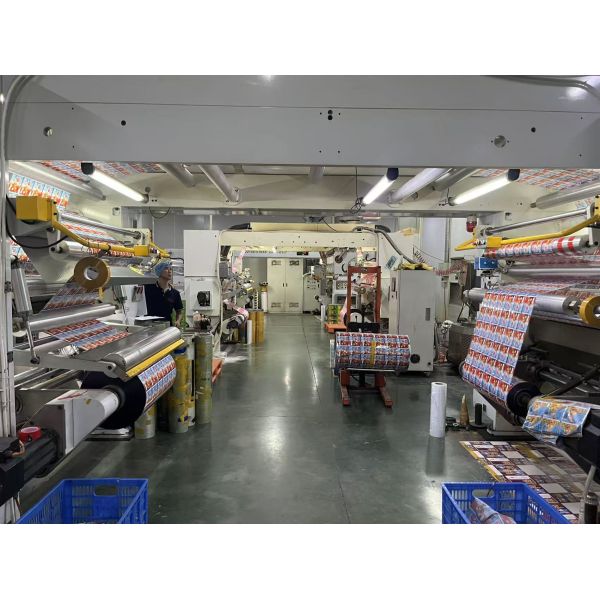
Film Structure: PET/PE & BOPP/PE
A Popsicle Packaging Pouch is a cost-effective, high-performance flexible pouch designed for single-serve frozen treats such as ice pops, freeze pops, and juice bars. Utilizing two widely adopted film structures—PET/PE and BOPP/PE—this pouch provides reliable moisture protection, excellent seal integrity, and good mechanical strength, ensuring popsicles remain fresh, intact, and visually appealing from production to consumption.
Outer Layer: PET (Polyethylene Terephthalate)
Thickness: 12–20 µm
Functions:
High gloss and clarity for vibrant printing and product visibility
Excellent tensile and puncture resistance
Dimensional stability across a wide temperature range
Key Properties:
Moisture barrier: Good
Oxygen barrier: Moderate
Surface energy: High (ideal for printing and lamination)
Inner Layer: PE (Polyethylene – LDPE or LLDPE)
Thickness: 40–70 µm
Functions:
Heat-sealable food-contact layer
Provides primary moisture barrier
Maintains flexibility at freezing temperatures
Key Properties:
Seal initiation temperature: ~110–130°C
Cold-crack resistance: Below –40°C
WVTR (Water Vapor Transmission Rate): ~5–10 g/m²/day
Bonding:
Laminated using solvent-based or solvent-free adhesives
Bond strength maintained from –40°C to 60°C
Outer Layer: BOPP (Biaxially Oriented Polypropylene)
Thickness: 20–30 µm
Functions:
Superior moisture barrier
High clarity and gloss
Stiffness for easy handling and stacking
Key Properties:
Moisture barrier: Excellent (WVTR ~3–7 g/m²/day)
Oxygen barrier: Low
Stiffness: Higher than PET at same thickness
Inner Layer: PE (Polyethylene)
Thickness: 40–70 µm
Functions and properties similar to PET/PE structure
These pouches are ideal for:
Water-ice / freeze pops – fruit-flavored tube pops
Juice bars – 100% fruit juice frozen bars
Simple cream pops – dairy or plant-based popsicles without high fat sensitivity
Value packs & multi-packs – family packs (6–24 pieces)
Foodservice & bulk packs – for schools, events, concessions
Short-to-medium shelf-life products – typically 12–18 months frozen
| Advantage | PET/PE | BOPP/PE |
|---|---|---|
| Moisture Barrier | Good | Excellent |
| Print Quality | Superior gloss, accepts up to 10 colors | Very good, high clarity |
| Stiffness & Handling | Moderate stiffness, good machinability | High stiffness, excellent runnability on high-speed lines |
| Cost Efficiency | Cost-effective for high-quality print | Often lower material cost, excellent yield |
| Temperature Resistance | Stable across –40°C to 60°C | Slightly lower heat resistance than PET |
| Environmental Footprint | Recyclability challenges due to multi-material | Similar challenge, but BOPP and PE are widely recycled in some streams |
Shared Benefits:
Strong Seals: Reliable heat seals prevent leakage
Freezer Burn Protection: Adequate moisture barrier for typical shelf life
Child-Safe Opening: Can be designed with easy-tear notches
Space Saving: Flat pouch design optimizes freezer space
Lightweight: Reduces shipping costs versus rigid packaging
| Threat | How the Pouch Protects | Protection Level |
|---|---|---|
| Freezer Burn | PE layer acts as moisture barrier | Good (BOPP/PE: Very Good) |
| Physical Punctures | PET/BOPP provides puncture resistance | Good for typical handling |
| Leakage | Strong PE seals contain syrup | Excellent |
| Temperature Fluctuations | Material flexibility maintained at low temperatures | Excellent |
| Light Exposure | Opaque or printed designs reduce light penetration | Moderate (can be enhanced with printing) |
| Odor Transfer | Basic barrier, suitable for typical freezer storage | Moderate |
| Parameter | PET/PE Typical Range | BOPP/PE Typical Range |
|---|---|---|
| Total Thickness | 50–90 µm | 60–100 µm |
| Seal Strength | 8–15 N/15 mm | 7–12 N/15 mm |
| WVTR | 5–10 g/m²/day | 3–7 g/m²/day |
| OTR (Oxygen Transmission) | 50–150 cm³/m²/day | 100–300 cm³/m²/day |
| Operating Temperature | –40°C to 60°C | –40°C to 50°C |
| Minimum Seal Temperature | 110°C | 105°C |
Easy-Open Features: Laser scoring, tear notches, pull-tabs
Printing: High-definition rotogravure or flexographic printing
Finishes: Gloss, matte, or soft-touch surfaces
Shape: Pillow pouches, gusseted bottoms, or shaped cuts
Special Features: Hanging holes, transparent windows, anti-fog coating
Material Reduction: Uses significantly less plastic than rigid clamshells
Lightweight: Lowers transportation emissions
Recyclability: Currently limited due to multi-material structure; mono-material PE alternatives emerging
Food Waste Reduction: Adequate shelf life reduces spoilage
Choose PET/PE when:
High-quality printing and glossy appearance are priorities
A balance of moisture barrier and cost is needed
Slightly higher temperature resistance is beneficial
Choose BOPP/PE when:
Maximum moisture barrier is critical
Lower material cost is a key driver
High stiffness and good machinability are required
The Popsicle Packaging Pouch in PET/PE and BOPP/PE structures offers a practical, economical solution for protecting frozen novelties. While not designed for extended shelf life or high oxygen-barrier needs, these pouches deliver reliable performance for most commercial popsicle products, combining essential protection with manufacturing efficiency and consumer appeal.
Best for: Mainstream popsicle brands, value segments, private label products, and applications where cost control and reliable basic protection are paramount.