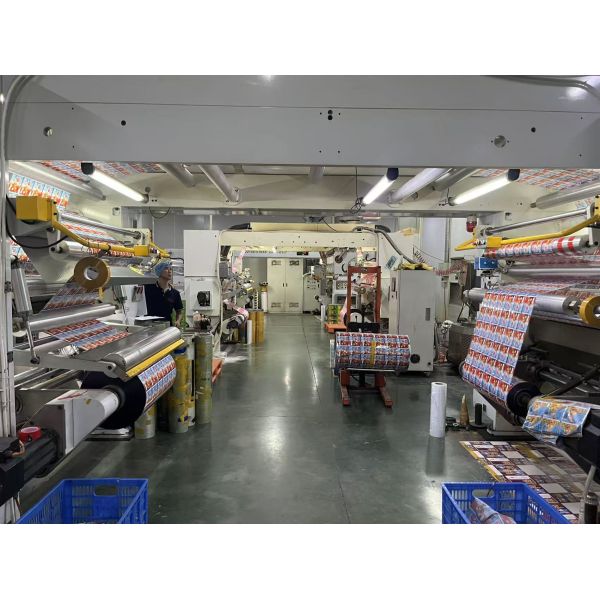
Flexible packaging film roll is a large continuous roll made of multiple layers of thin materials, which is the original and unconverted foundation for creating various packaging solutions. Imagine them as "fabrics" that were later printed, cut, and sealed into the final bags, pouches, and packaging paper you see on store shelves.
What materials were used?
No material is perfect, so they are combined into multiple layers, each with a key characteristic:
- PET (Polyethylene terephthalate): Provides excellent strength, stiffness, and transparency. As a durable outer layer.
- Biaxially oriented polypropylene (BOPP): Provides high gloss, transparency, and excellent moisture resistance at low cost. A common outer layer.
- PE (polyethylene): an excellent moisture-proof layer and sealant. Used as an inner layer to form a heat seal.
- CPP (Cast Polypropylene): Known for its excellent transparency and heat resistance, it has become a common sealant layer.
- PA (polyamide or nylon): Very tough, puncture resistant, commonly used as an intermediate layer in demanding products.
- EVOH (ethylene vinyl alcohol): Provides excellent oxygen barrier. It is sandwiched between other layers to prevent moisture.
- AL (aluminum foil): the ultimate barrier, impervious to gases, moisture, and light. Used as an intermediate layer to provide maximum protection.
- VMPET (Vacuum Metallized PET): A PET film with a thin aluminum layer. Compared to foil, it provides powerful gas and light barriers at lower cost and greater flexibility.
Common Film Structures
These materials are laminated or co extruded into a multi-layer structure. The typical three-layer structure works as follows:
- Outer layer: Provides strength, printability, and durability (such as PET, BOPP).
- Intermediate layer: Provides critical barriers (such as AL, VMPET, EVOH).
- Inner layer: Provides sealing and food safety (such as PE, CPP).
Example
Leisure food (potato chips): BOPP/VMPET/PE
- (Glossy appearance/Oxygen and light barrier/Reliable sealing)
Steaming bag (ready to eat meal): PET/AL/RCPP
- (Robust external/absolute barrier/heat stable seal for disinfection)
Liquid sachet (shampoo): PET/AL/PE
- (Durable exterior/leak proof barrier/seal)
Common applications
- Food and beverages: snack bags, coffee bags, frozen food bags, pet food bags, seasoning bags, and standing bags.
- Medical and pharmaceutical: sterile medical device packaging, pill blister packaging, and diagnostic kit bags.
- Personal and home care: shampoo and conditioner sachets, laundry detergent refill bags, and disposable wipe packaging.
- Industry: Protective packaging for fertilizers, chemical packaging bags, and electronic components.
key advantage
- Lightweight and resource efficient: using less material than rigid packaging such as glass or hard plastic, reducing weight and waste.
- Excellent product protection: The advanced barrier structure extends the shelf life by protecting the contents from moisture, oxygen, light, and pollutants.
- Cost effectiveness: Due to the reduction in weight and volume, material and transportation costs are lowered.
- Design multifunctionality and high impact: Provide excellent printing quality for brands, enabling the formation of convenient shapes (such as spray on, resealable bags).
- Consumer convenience: Features such as easy opening, resealing, and lightweight portability are highly valued.
- Supply chain and sustainable development advantages: occupying less space during transportation and storage, reducing carbon footprint. Although there are recycling challenges, reducing sources is a major environmental advantage.
In short, flexible packaging film roll is a multi-layer raw material designed through engineering, laying the foundation for modern, high-performance, and efficient packaging of various products.