Company Profile
Zibo Tongpu Vacuum Equipment Co., Ltd. is a national high-tech enterprise deeply engaged in the vacuum equipment and casting equipment industries. Founded in 2005 with a registered capital of 10 million RMB, the company is located in Zibo, Shandong, an important manufacturing base for the machinery industry in China.
The company focuses on the research, development, manufacturing, and sales of lost foam casting and V-process casting production lines, vacuum pumps, and vacuum systems. It is one of the earliest specialized manufacturers in this field in China, with solid technical accumulation and a comprehensive service capability across the entire industry chain. The company provides systematic solutions ranging from individual equipment to complete line engineering for its customers.
1)Scale and Capacity
The company occupies over 14,000 square meters, with a building area of more than 8,000 square meters. It has a dedicated R&D center, testing center, and fully equipped production workshops for mechanical processing, riveting and welding, and assembly, ensuring stable and controllable product quality.
2)Technology and Qualifications
The company holds 26 independent intellectual property patents. It has passed ISO9001 quality management system certification and has been recognized as a national high-tech enterprise, a technology-based small and medium-sized enterprise, and a provincial innovation-oriented small and medium-sized enterprise. The technical team comprises several senior engineers who independently develop vacuum pumps and lost foam casting and V-process casting production lines. The company also has experienced casting process engineers in the lost foam and V-process casting fields, with strong theoretical knowledge and rich on-site practical experience, providing services in lost foam and V-process vacuum casting.
Product Profile
The company's products cover two main core areas:
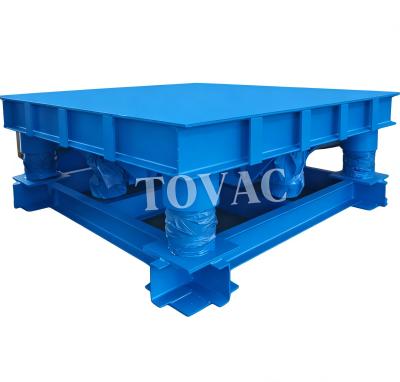
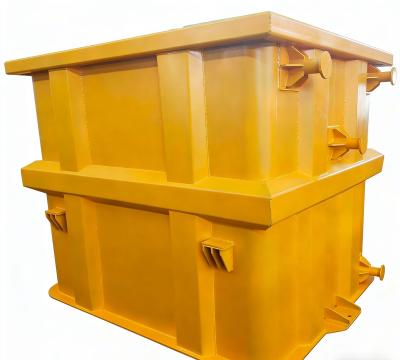
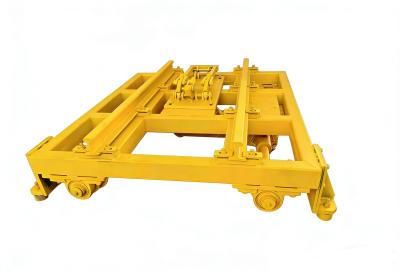
Casting Equipment Series: Fully automated, semi-automated, and customized simple lost foam casting production lines, V-process casting production lines, catering to different scale and process needs.
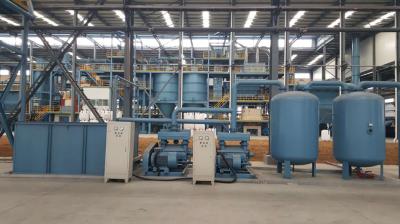
Vacuum Equipment Series: 2BV/2BE series water ring vacuum pumps, various vacuum units, and vacuum station systems.
Production and Scale Advantages
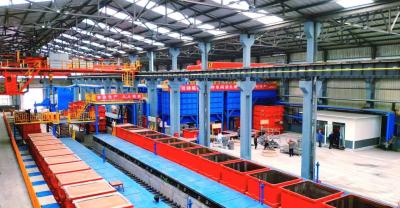
Modern Manufacturing Facilities: Standardized workshops, flexible production lines, and advanced processing equipment.
Production Capacity: Meets both mass production and customized production requirements, with controllable delivery cycles.
Full Process Production Capability: From parts processing, casting, welding, and assembly to machine debugging, forming a closed-loop production chain.
1. Product Overview
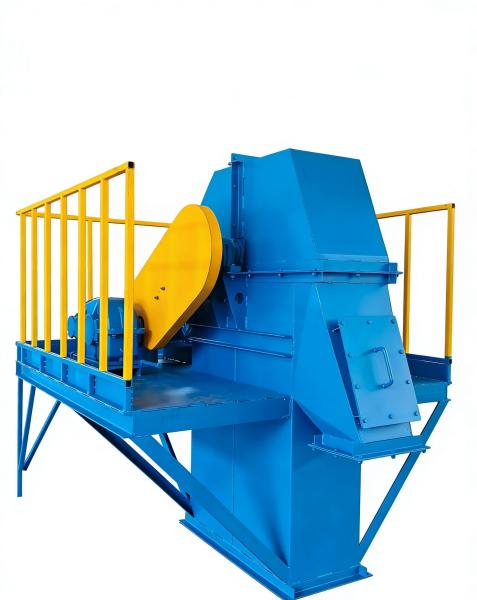
The plate chain lifter is a commonly used vertical conveying device in mechanized casting workshops. Its traction components use a plate chain, which not only lifts powdery, granular, and blocky materials, but also materials with high abrasiveness. It can be combined with other equipment like belt conveyors to create various forms of conveying systems.
2. Components
The equipment mainly consists of the head, tail, middle sections, chains, and chain buckets. The head is equipped with a motor and reducer, providing power for the entire system. The equipment is made up of several sections connected by bolts, with the connections sealed by asbestos rope. The tail of the equipment is equipped with springs to provide tension and cushioning, ensuring smooth operation of the chain.
3. Parameters
Below is the technical parameter table for the main plate chain lifter models:
|
Model |
Conveying Capacity (m³/h) |
Bucket Width (mm) |
Bucket Distance (mm) |
Bucket Speed (m/min) |
Motor Power (Kw) |
|
NE15 |
15 |
250 |
203.2 |
31 |
5.5/7.5 |
|
NE30 |
30 |
300 |
304.8 |
30.1 |
11 |
|
NE50 |
50 |
300 |
304.8 |
29.3 |
15 |
4. Main Functions and Advantages
The core function of the plate chain lifter is to achieve large-scale, continuous, and stable vertical or near-vertical transportation of materials.
Compared to other types of lifters (such as chain and belt types), the plate chain lifter has several distinct advantages, making it the preferred choice in heavy load and harsh working conditions.
High load-bearing capacity and strength
Extremely smooth and reliable operation
Long service life with relatively low maintenance costs
Wide adaptability
Excellent sealing and environmental performance
High lifting height and efficient transportation
5. Usage Notes
Perform an empty-load test run before use
Pay attention to the startup and shutdown sequence during use
Do not perform maintenance or touch moving parts while in operation
If abnormal noise occurs during operation, immediately stop and inspect
After use, perform regular maintenance and scheduled servicing