Company Profile
Zibo Tongpu Vacuum Equipment Co., Ltd. is a national high-tech enterprise deeply engaged in the vacuum equipment and casting equipment industries. Founded in 2005 with a registered capital of 10 million RMB, the company is located in Zibo, Shandong, an important manufacturing base for the machinery industry in China.
The company focuses on the research, development, manufacturing, and sales of lost foam casting and V-process casting production lines, vacuum pumps, and vacuum systems. It is one of the earliest specialized manufacturers in this field in China, with solid technical accumulation and a comprehensive service capability across the entire industry chain. The company provides systematic solutions ranging from individual equipment to complete line engineering for its customers.
1)Scale and Capacity
The company occupies over 14,000 square meters, with a building area of more than 8,000 square meters. It has a dedicated R&D center, testing center, and fully equipped production workshops for mechanical processing, riveting and welding, and assembly, ensuring stable and controllable product quality.
2)Technology and Qualifications
The company holds 26 independent intellectual property patents. It has passed ISO9001 quality management system certification and has been recognized as a national high-tech enterprise, a technology-based small and medium-sized enterprise, and a provincial innovation-oriented small and medium-sized enterprise. The technical team comprises several senior engineers who independently develop vacuum pumps and lost foam casting and V-process casting production lines. The company also has experienced casting process engineers in the lost foam and V-process casting fields, with strong theoretical knowledge and rich on-site practical experience, providing services in lost foam and V-process vacuum casting.
Product Profile
The company's products cover two main core areas:
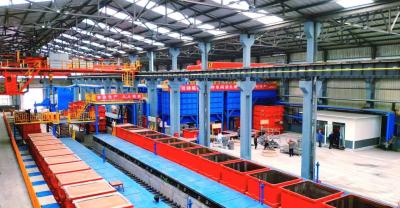
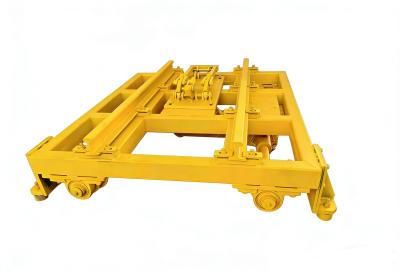
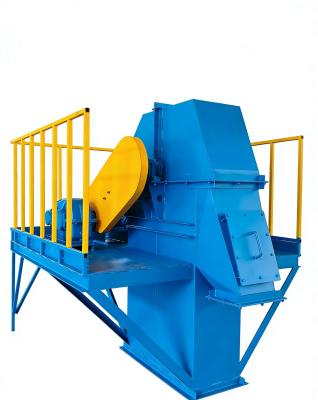
Casting Equipment Series: Fully automated, semi-automated, and customized simple lost foam casting production lines, V-process casting production lines, catering to different scale and process needs.
Vacuum Equipment Series: 2BV/2BE series water ring vacuum pumps, various vacuum units, and vacuum station systems.
Production and Scale Advantages
Modern Manufacturing Facilities: Standardized workshops, flexible production lines, and advanced processing equipment.
Production Capacity: Meets both mass production and customized production requirements, with controllable delivery cycles.
Full Process Production Capability: From parts processing, casting, welding, and assembly to machine debugging, forming a closed-loop production chain.
Vacuum System
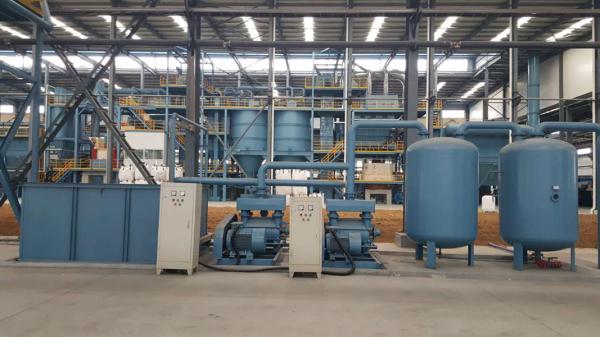
The vacuum system consists of vacuum pumps, pressure stabilization tanks, gas–liquid separators, and connecting pipelines. The vacuum pump generates a vacuum, which is then distributed to each sand box via a vacuum distributor, providing sufficient suction to prevent the mold sand from collapsing during pouring.
I. System Components and Functions
1. Vacuum Pump
The 2BE series water-ring vacuum pumps are high-efficiency, energy-saving products developed by our company based on years of research, production experience, and advanced imported technologies.
Function: Used to extract air or other non-corrosive, water-insoluble gases to create a vacuum or maintain process-required pressure in a sealed container.
Purpose in Casting: Provides the vacuum needed during pouring, ensuring a stable vacuum field in the sand boxes.
2. Pressure Stabilization Tank & Gas–Liquid Separator
Function: Filters solid particles from the extracted gas using water, stabilizes vacuum pressure, separates gas and water, and further removes solids from the air before discharge to prevent air pollution.
Benefits: Maintains a stable and reliable vacuum; the vacuum pump operates efficiently with low wear, high durability, and easy maintenance.
3. Application in Sand Boxes
Vacuum extraction removes air between sand grains, compacting the sand and forming a stable mold inside the sealed sand box.
During casting:
Accelerates gas evacuation and reduces total gas volume.
Lowers gas pressure at the metal–mold interface.
Speeds up the advancing metal flow front, improving mold filling.
Reduces surface carbon defects.
Suppresses combustion of foam pattern materials, promoting gasification.
Improves the environment, increases metal fluidity, moldability, and clarity of casting contours.
Higher vacuum levels further suppress foam pattern combustion, accelerate pyrolysis and decomposition, shorten residence time of pyrolysis products in high-temperature zones, and reduce the likelihood of deep pyrolysis.