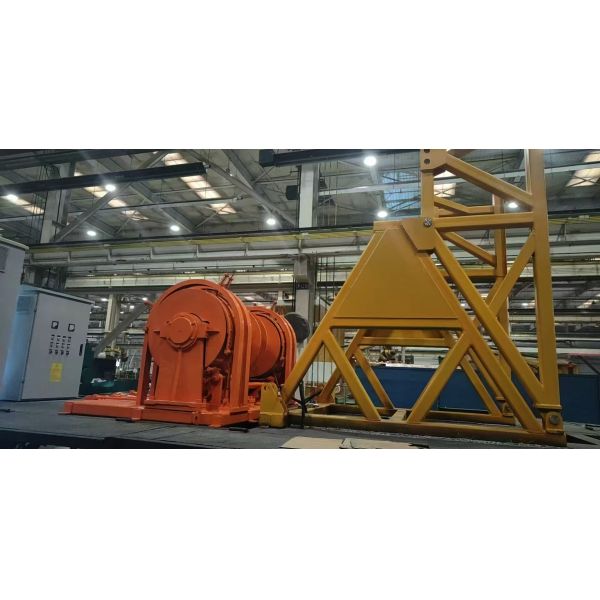
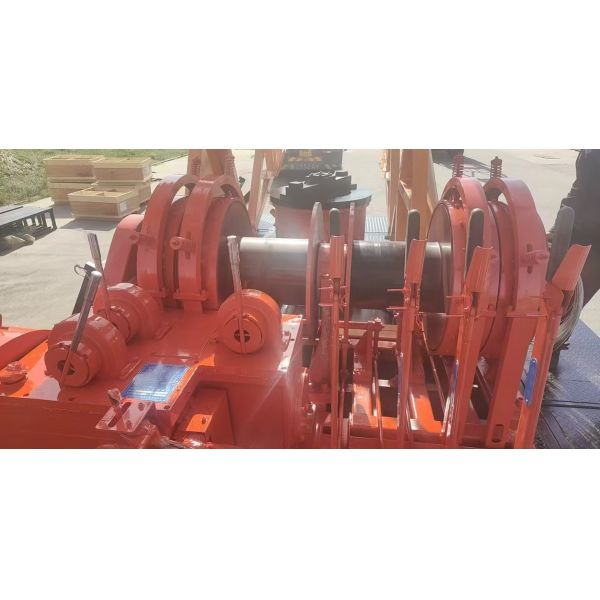
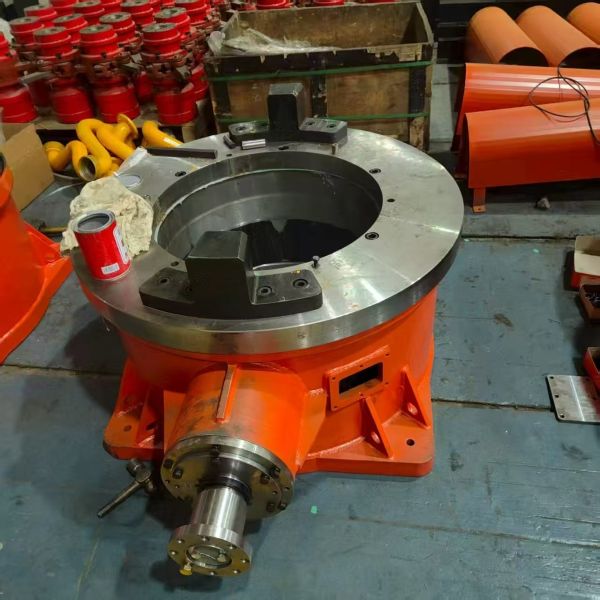
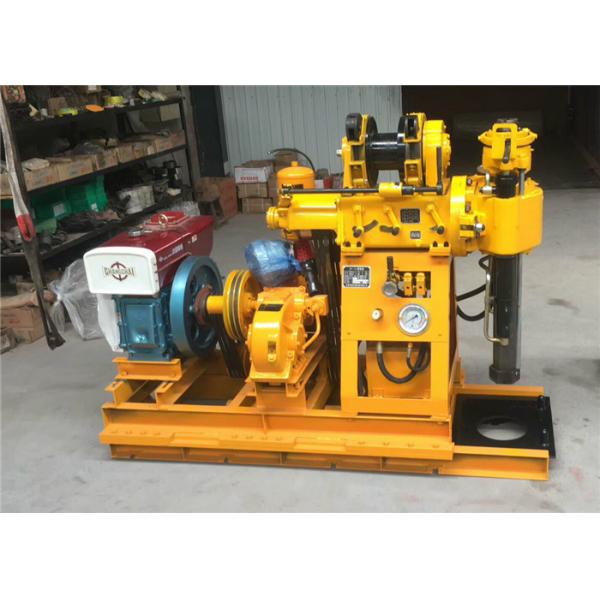
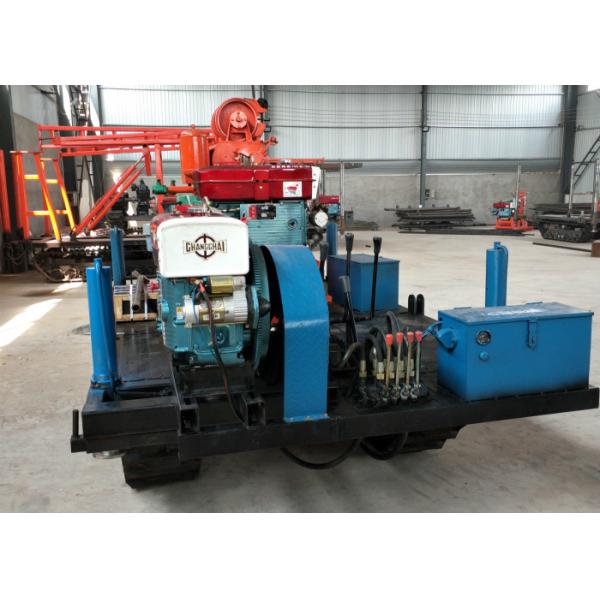
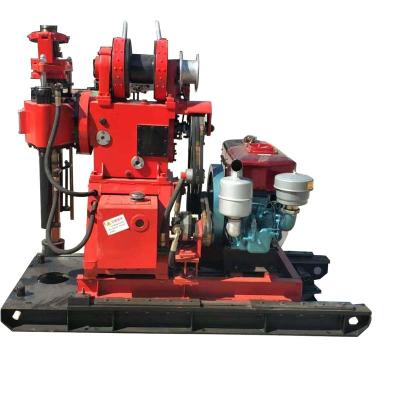
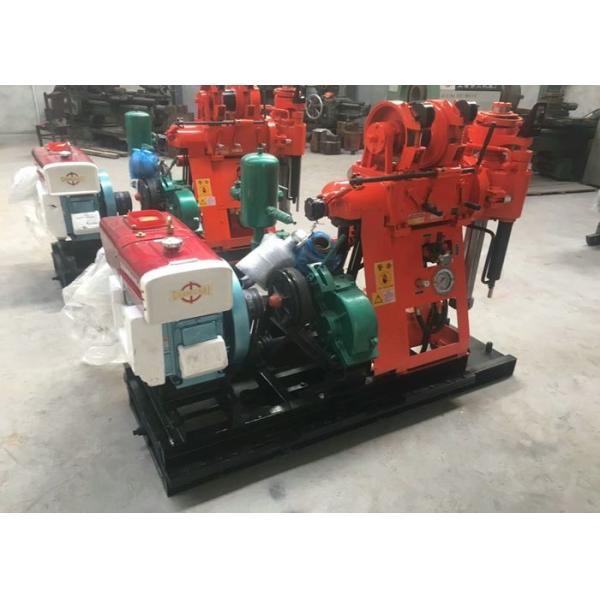
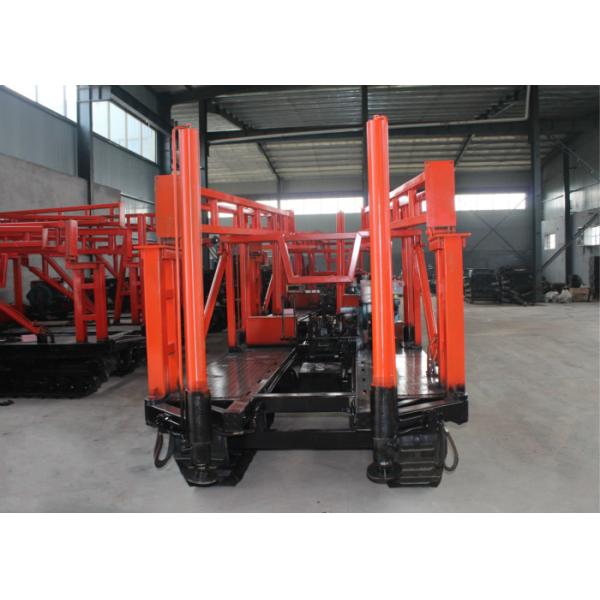
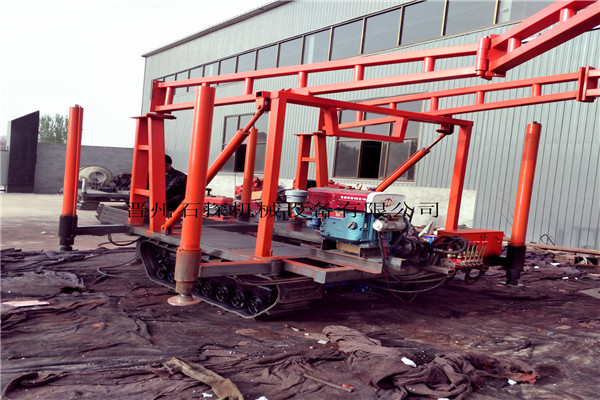
It is suitable for water source exploration, industrial, agricultural, and civil water well drilling and well construction, as well as underground tunnel ventilation hole drilling and foundation pile hole construction. The machine uses a rotary table to drive the drill rod to rotate and drill, and adopts two drilling processes of forward and reverse circulation for construction under various geological conditions. The whole machine is fully trailer type, mechanically driven, partially hydraulic controlled, integral drilling tower, and hydraulic take-off and landing. It has the characteristics of a large diameter through hole, deep drilling depth, high torque, high construction efficiency, convenient transportation, and high degree of mechanization.
| Test Item | Unit | Design Value | |
| 1 | Model | / | ST-1200 |
| 2 | Structure Type | / | Rotary Type |
| 3 | Supporting Power (Optional) | kW | 45-65 |
| 4 | Overall Dimension in Working State (L×W×H) | mm | 6000×4000×13500 |
| 5 | Structure Weight | kg | 9700 |
| 6 | Drilling Depth | m | 1000 |
| 7 | Drilling Diameter | mm | Φ325 |
| 8 | Active Drill Pipe/Drill Pipe | mm | 110×110×11000 / Φ89×9000 |
| 9 | Drill Bit | mm | Φ325 |
| 10 | Rotary Table Speed | r/min | 45; 70; 90; 130 |
| 11 | Winch | - | - |
| Drum Diameter | mm | Φ725 | |
| Single Rope Lifting Speed | m/s | 0.65; 1.0; 1.4; 2.08 | |
| Lifting Force | t | 60 | |
| Wire Rope Capacity | m | 240 | |
| Wire Rope Spec | mm | Φ18 | |
| 12 | Auxiliary Winch (Optional) | - | - |
| Drum Diameter | mm | Φ550 | |
| Single Rope Lifting Speed | m/s | 0.65; 1.0; 1.8; 2.08 | |
| Lifting Force | t | 32 | |
| Wire Rope Capacity | m | 150 |
The working principle of the rotary disc drill is a combination mode of "rotary cutting+circulating slag discharge+axial feeding".
The core process is as follows:
Power driven rotation: The matching motor/diesel engine drives the turntable (grinding disc) to rotate, and transmits torque to the drill bit through the drill rod, using the cutting/grinding effect of the drill bit (such as diamond drill bit) to break the rock layer;
Axial feeding pressure: The winch, in conjunction with the self weight/hydraulic feeding mechanism of the drilling tool, applies axial pressure to the drill bit to assist it in penetrating the formation;
Circulating slag removal and coring: carrying rock debris from the borehole to the surface through the circulation of drilling fluid (or air); At the same time, the core obtained by the drill bit will be stored in the drill rod, and the complete core will be extracted when the drill rod is lifted.
Advantages of tracked exploration and coring drilling rig
The core advantages of the tracked exploration and coring drilling rig are "all terrain adaptation+efficient operation+safety and stability", which are specifically reflected in the following points:
Strong terrain adaptability: The tracked chassis can easily pass through complex terrains such as mountains, mud, mining areas, etc., without the need for additional road repairs/lifting, and can directly reach exploration points;
Higher homework efficiency: Equipped with hydraulic support legs for quick leveling and track turning in place, saving time on site leveling; By using techniques such as rope core retrieval, the core retrieval process does not require repeated drilling, significantly reducing the operating cycle;
Good stability under heavy load: The track has a large grounding area and disperses the weight of the equipment (such as the ST-1200, which weighs nearly 10 tons). It is not easy to sink when working in soft formations, with less vibration during drilling and higher integrity of the rock core;
Excellent maneuverability: Compared to fixed drilling rigs, tracked drilling rigs can autonomously transfer short distances, resulting in lower transfer costs and shorter time consumption when operating at multiple exploration points.
It is a "mobile operation station" for deep hole exploration and coring under complex working conditions, which can solve the pain points of traditional drilling machines such as "inability to enter, unevenness, and slow transition".