Custom Metal Hydraulic Tanks for Fluid Storage in Industrial Equipment
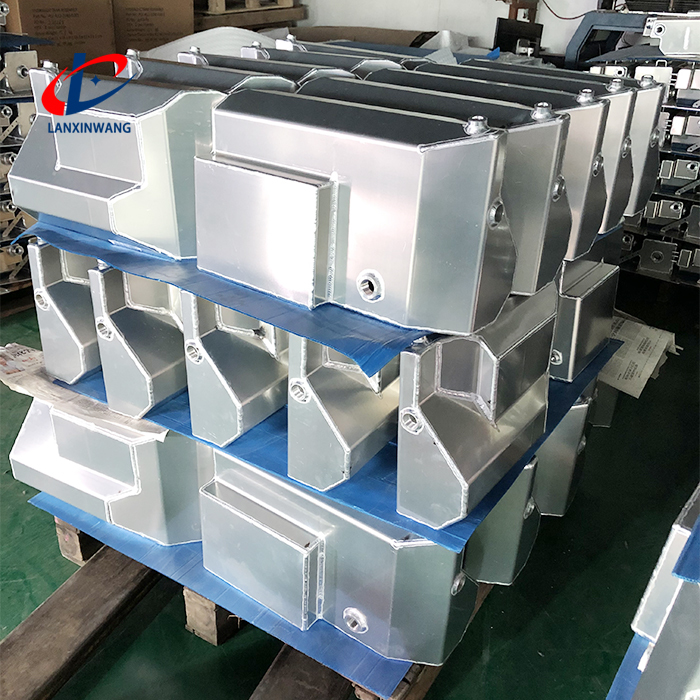
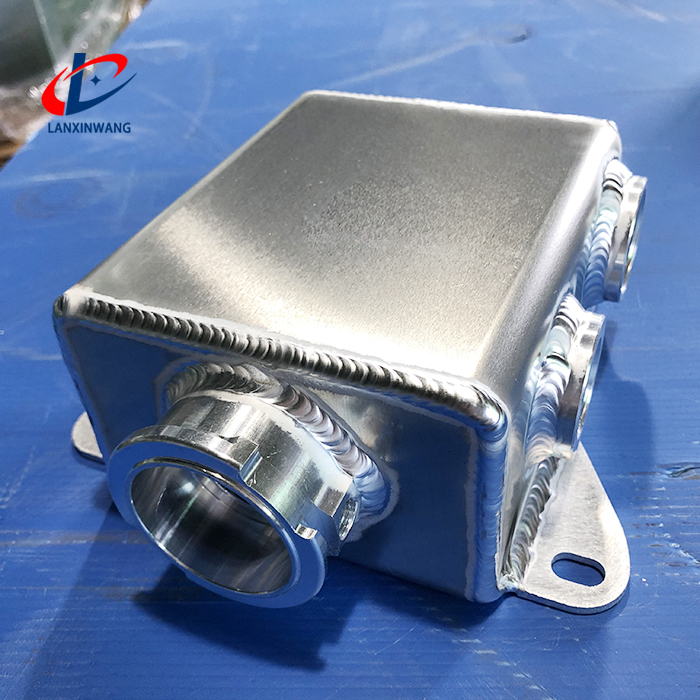
This hydraulic oil tank features a standard rectangular design with a compact overall layout, making it suitable for fixed installation inside equipment. The sides of the tank are designed with extended mounting flanges and pre-drilled mounting holes to facilitate secure attachment to the equipment frame. The top is equipped with a large square flange mounting area that integrates threaded connections to accommodate the installation of accessories; the sides feature an inspection window and a flanged oil outlet port for convenient maintenance and piping connections. The entire unit is manufactured from aluminum alloy, which ensures structural strength while reducing the overall weight of the equipment.
Technical Specifications
| Material Types | Carbon Steel / Stainless Steel / Aluminium / Iron, etc. |
| Fabrication Method | Laser Cutting / Metal Bending / Tube Bending / Stamping / Machining / Welding / Riveting, etc. |
| Surface Treatment | Wire Drawing / Surface Grinding / Polishing / Electroplating / Anodising / Powder Coating / Baking Finish / High-temperature Coating / Sand Blasting / Enamelling / Pickling & Passivation, etc. |
| Cutting Precision | ±0.1 mm (±0.004 in) |
| Bending Range | 0.3-10 mm (0.012 - 0.394 in) |
| Pressure Tonnage Range | 35T - 150T |
| Pipe Bending Diameter Range | 6-200 mm (0.236 - 7.87 in) |
| Acceptable Drawing Formats | PDF / DWG / DXF / STEP (.step/.stp) / IGES (.iges/.igs) / SolidWorks files (.sldprt/.sldasm) |
| Production Support | Prototype to Mass Production |
Uses
Suitable for stationary equipment requiring a separate fluid storage module, hydraulic control cabinets with maintenance access panels, integrated power units, and mechanical base mounting structures.
One-Stop Sheet Metal Solutions, From Concept to Production

FAQ
Q1: Why do hydraulic tanks need inspection ports?
A1: To facilitate internal inspection, cleaning, and future maintenance operations.
Q2: What are the advantages of flanged connections over standard pipe connections?
A2: They provide a more secure connection and make it easier to install and remove equipment accessories.
Q3: How do flanges benefit hydraulic tanks?
A3: They provide fixed mounting points, simplifying the equipment assembly process.
Q4: Why does the oil temperature in a hydraulic system tend to rise under high loads?
A4: This is primarily due to return flow surges and internal flow turbulence, which prevent heat from being dissipated in a timely manner.
Q5: How does the tank design affect the stability of a hydraulic system?
A5: The internal flow guidance and gas-liquid separation design determine whether the oil circulation is smooth.
Q6: Are cavitation and noise in a hydraulic system related to the reservoir?
A6: Yes, they are. Air entrainment in the return flow and turbulent conditions in the suction zone both directly affect the pump's operating condition.