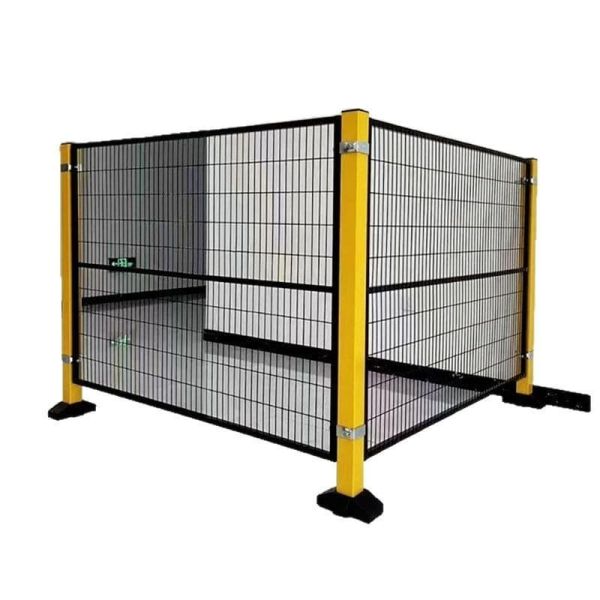
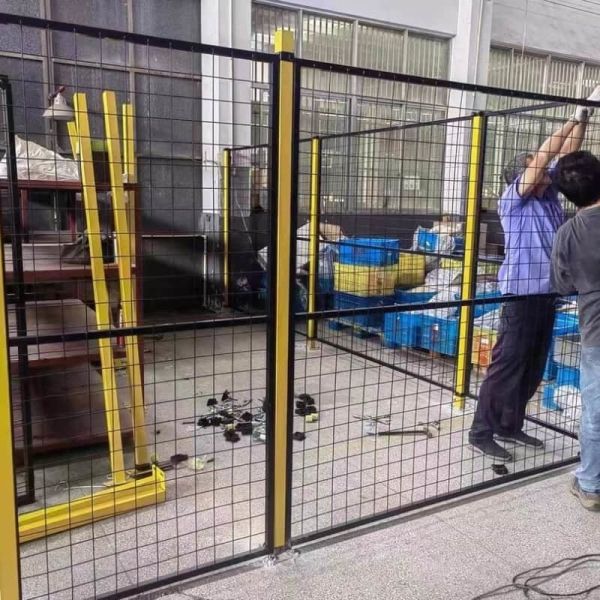
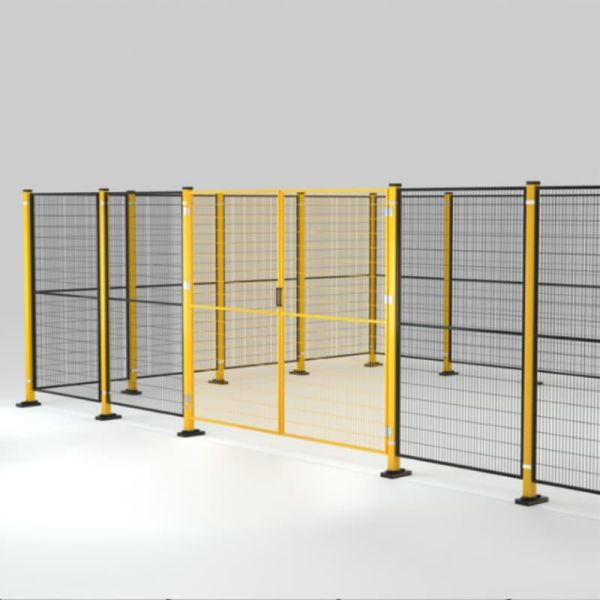
Bending Industrial Machine Safety Fencing System is a durable, high-visibility barrier that ensures worker safety by separating them from hazardous machinery and robotic operations in industrial environments.

Bending industrial machine safety fencing system advantages:
Enhanced Worker Safety – Provides a physical barrier to prevent accidental contact with dangerous machinery and robotic systems, reducing the risk of injuries.
Compliance with Regulations – Helps businesses meet safety standards such as OSHA, ISO, and ANSI, ensuring legal compliance and reducing the risk of fines or shutdowns.
Improved Productivity – By minimizing accidents and downtime, the system helps maintain a smooth workflow, allowing for greater operational efficiency.
Durable and Reliable – Built with strong materials like steel or reinforced plastics, the fencing system is designed to withstand harsh industrial environments and heavy use.
Customization – The system can be tailored to fit various machine types, production layouts, and safety needs, offering flexibility for different industrial applications.
Visibility and Awareness – Often brightly colored (like yellow), it enhances visibility in the workspace, making workers more aware of safety zones and preventing accidental entry.
Easy Installation and Maintenance – Modular design allows for quick setup and simple upkeep, reducing labor costs and operational disruptions.
Cost-Effective – Provides a cost-efficient safety solution by preventing accidents and reducing potential liability without the need for complex, expensive systems.
Typical Projects of Bending Industrial Machine Safety Fencing System
Automotive Manufacturing Lines
Used to enclose robotic arms and machinery for tasks like welding, painting, and assembly, ensuring worker safety while robots perform high-precision tasks.
CNC Machining and Metalworking
Installed around CNC machines, mills, and lathes to protect workers from moving parts, high-speed cuts, and flying debris in metalworking environments.
Robotic and Automated Systems
Fencing around automated material handling robots or robotic arms used for sorting, assembly, or packing, preventing human interference during operations.
Electronics Assembly
Provides safety barriers around machines that handle delicate assembly tasks for electronics, like soldering or component placement, reducing the risk of injury.
Food and Beverage Processing
Fencing separates automated systems for sorting, packaging, and processing food products, maintaining safety and hygiene standards in high-speed production environments.
Pharmaceutical Production
Installed around automated machinery for tasks like filling, capping, and labeling, protecting workers while maintaining strict cleanliness and safety standards.
Warehousing and Distribution
Used to secure automated sorting, picking, and palletizing robots in warehouses and distribution centers, ensuring safe human-robot interaction zones.
Plastic Injection Molding
Fencing around injection molding machines to keep workers safe from the high temperatures, pressures, and moving parts involved in molding plastic products.
3D Printing and Additive Manufacturing
Fencing is used around 3D printers and post-processing equipment to ensure safety around machinery that uses high temperatures and precision movements.
Packaging and Palletizing Lines
Fencing around robotic packaging and palletizing systems to prevent human interaction with heavy machinery while maximizing workflow efficiency.
Common specifications, standards, and parameters of the Bending industrial machine safety fencing system.
| Specification | Description | Example/Parameter |
| Material | Common materials used for durability and strength. | Steel, Aluminum, Reinforced Plastic (Polycarbonate, PVC) |
| Height | The height of the fence to accommodate various machine sizes and operations. | 1.2m to 2.5m (depending on application) |
| Mesh Size | Size of the mesh openings to prevent accidental entry while allowing visibility. | 50mm x 50mm, 75mm x 75mm, 100mm x 100mm |
| Strength/Impact Resistance | The ability of the fencing to withstand impacts and pressure from machinery or accidental collisions. | 400-600 kg per square meter |
| Compliance Standards | Regulatory safety standards to ensure legal compliance and worker protection. | OSHA, ISO 10218 (Industrial robots), ANSI B11.19 |
| Gate Design | Types of gates for access to the fenced area, ensuring secure entry while maintaining safety. | Manual or automatic gates, lockable, swing/sliding doors |
| Frame Type | The type of frame used for structure and stability of the fence. | Powder-coated steel, stainless steel, or aluminum |
| Color | Standard color used for high visibility and safety. | RAL 1023 (Traffic Yellow) |
| Load Capacity | The maximum weight the fence can safely bear, especially during collisions or impacts. | 400-600 kg per square meter |
| Gate Interlocks/Sensors | Features that control access and prevent operation when gates are open. | Safety interlock systems, light curtains, proximity sensors |
| Resistance to Environmental Factors | Resistance to chemical, temperature, or weather exposure in harsh environments. | UV-resistant, chemical-resistant coatings |
| Panel Thickness | Thickness of the mesh or panels to resist forces and provide a strong barrier. | 2mm to 5mm (depending on application) |
| Mounting Options | Methods to secure the fencing system in place, either to the ground or walls. | Floor-mounted, wall-mounted, or freestanding |
| Modularity/Customization | Ability to adjust or expand the system based on specific needs or layout changes. | Modular design for easy adjustment or expansion |
| Installation and Maintenance | Ease of installation and maintenance to reduce downtime. | Quick to install, minimal maintenance required |